In what many observers are already describing as a defining political moment ahead of Nigeria’s next general elections, major stakeholders within the African Democratic Congress have strongly urged the party to zone its 2027 presidential ticket to Southern Nigeria, a move they argue is critical to building a credible, balanced, and electable national coalition capable of unseating entrenched political structures.
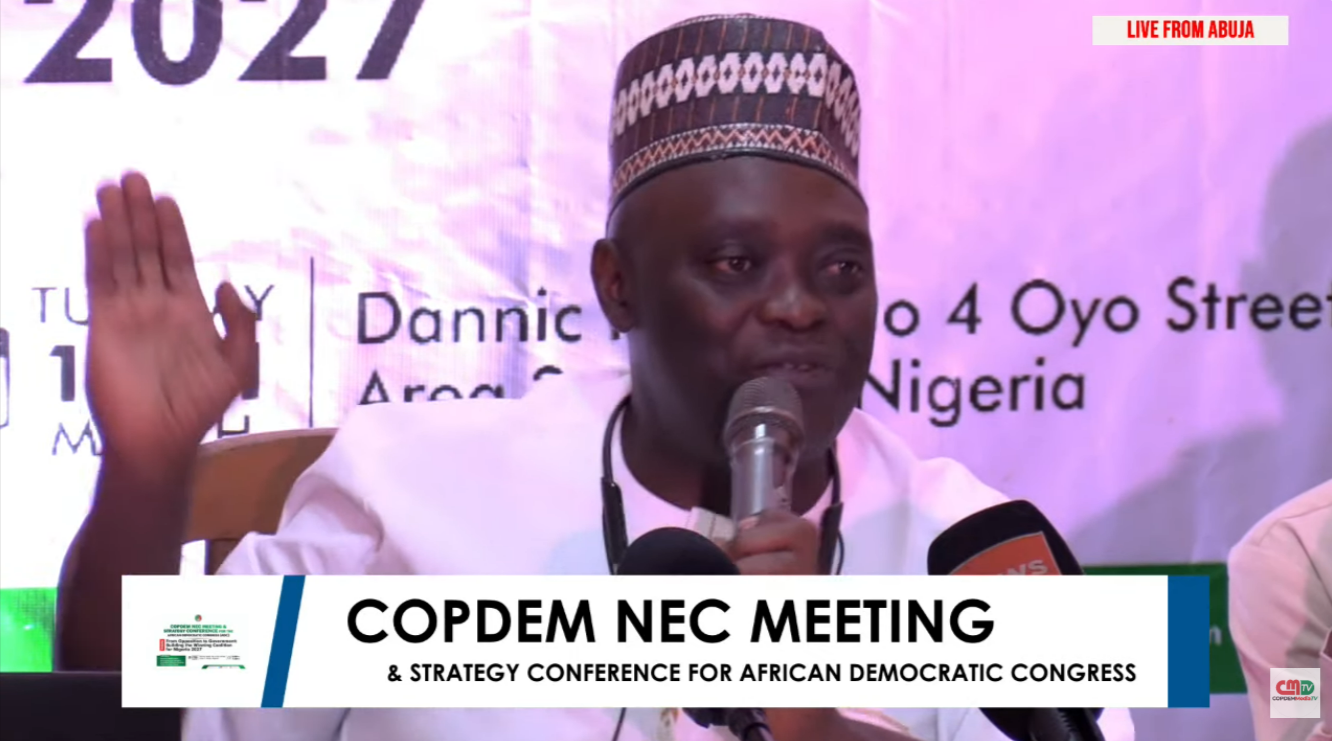
The call emerged from a high-level gathering convened in Abuja on Tuesday, March 17, 2026, where political leaders, civil society actors, reform advocates, and party stakeholders assembled under the platform of the Coalition for the Protection of Democracy National Executive Council Meeting and Strategy Conference held in collaboration with members of the ADC. The conference, themed “From Opposition to Government: Building the Winning Coalition for Nigeria 2027,” served as both a strategic planning session and a political statement of intent, signaling the seriousness with which emerging coalitions are approaching the next electoral cycle.
Throughout the deliberations, participants engaged in deep, wide-ranging discussions on Nigeria’s current political and socio-economic realities, noting that the country is facing mounting challenges that include economic instability, worsening insecurity, and a growing crisis of public trust in leadership. Speakers at the conference emphasized that these conditions have created an urgent need for a new kind of leadership—one rooted in competence, credibility, national unity, and inclusiveness.
DDM News gathered that one of the central themes that dominated the conference was the importance of building a winning electoral strategy that reflects Nigeria’s complex political dynamics. Delegates highlighted that electoral success in Nigeria is not merely about popularity but requires a calculated understanding of voting patterns, regional sentiments, and coalition-building across diverse demographic blocs. Particular emphasis was placed on the Middle Belt and Southern regions, which many participants described as critical battlegrounds where voters are increasingly seeking credible alternatives to the status quo.

The issue of national messaging also featured prominently during the conference, with participants stressing the need for a unifying narrative that resonates with Nigerians across ethnic, religious, and regional divides. According to deliberations, any serious political movement seeking to take power in 2027 must articulate a message anchored on fairness, justice, equity, and national cohesion. Delegates argued that such a message must not only inspire hope but also reflect practical solutions to Nigeria’s pressing challenges.
However, it was the debate around candidate selection and zoning that ultimately shaped the conference’s most consequential resolution. Participants noted that since Nigeria’s return to democratic rule in 1999, the principle of rotational leadership between the North and South has played a stabilizing role in the country’s political system. This unwritten but widely respected convention, they argued, has helped maintain a sense of balance and inclusion within the federation, even amid intense political competition.
Speakers at the event pointed out that no major political party in Nigeria has successfully secured presidential victory while completely disregarding the expectations of regional balance. From local government leadership to gubernatorial contests and national elections, zoning has remained a critical factor in ensuring political acceptability and national cohesion. Delegates therefore concluded that any attempt by a party to ignore this reality could significantly undermine its electoral prospects.
Against this backdrop, the conference reached a clear and unified position: the ADC’s presidential ticket for the 2027 general elections should be zoned to Southern Nigeria. According to participants, this recommendation is not merely a political calculation but a strategic necessity that aligns with Nigeria’s historical and political realities. They argued that zoning the ticket to the South would enhance the party’s ability to attract widespread support, particularly in regions where voters are actively seeking leadership that reflects inclusiveness and fairness.
DDM News reports that the resolution was also framed as part of a broader effort to reposition the ADC as a truly national party capable of representing the interests of all Nigerians. Delegates stressed that a party aspiring to govern must demonstrate its commitment to equity and inclusion not just in rhetoric but in concrete decisions such as candidate selection.
Beyond zoning, the conference also examined the internal structure of the ADC, with participants calling for significant institutional reforms aimed at strengthening party cohesion and internal democracy. It was widely agreed that for the party to transition successfully from opposition to government, it must build transparent and inclusive systems that allow for fair participation and representation at all levels. Delegates emphasized that leadership decisions must consistently reflect national diversity and promote a sense of belonging among party members across the country.
The meeting concluded with a renewed commitment among participants to work collectively toward building a disciplined, reform-driven political movement that can restore public confidence in governance. There was a strong sense of urgency in the tone of the discussions, with many stakeholders expressing the belief that Nigeria stands at a critical crossroads and that the 2027 elections present an opportunity to redefine the country’s political direction.
In their final communiqué, the conference called on all democratic forces, reform-minded leaders, and patriotic citizens to unite behind a common vision of national renewal. Participants stressed that the task ahead requires not just political ambition but a genuine commitment to the principles of good governance, accountability, and service to the people.
As the political landscape begins to take shape ahead of 2027, the outcome of the COPDEM-ADC strategy conference may well prove to be a significant milestone, setting the tone for future alliances and policy directions. With the call for Southern zoning now firmly on the table, attention is expected to shift toward how the ADC and its partners will translate these resolutions into actionable political strategies capable of reshaping Nigeria’s electoral future.
Read the Full Communique below: