


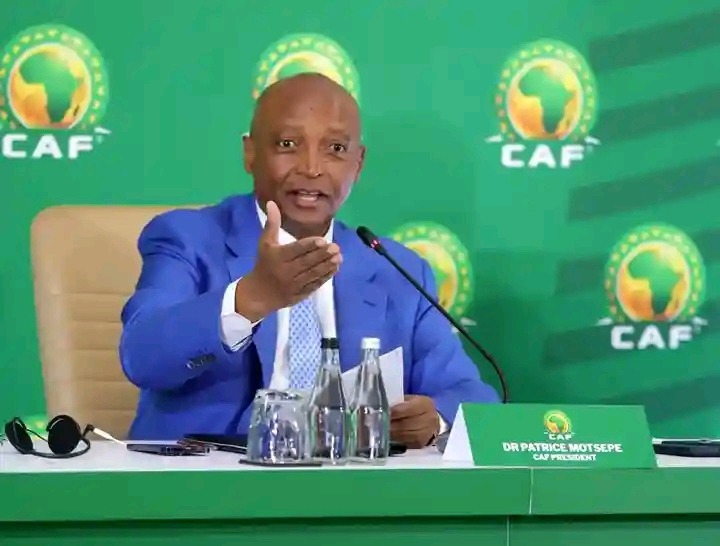
Confederation of African Football (CAF) president Patrice Motsepe has revealed that the governing body is considering a return to the traditional two-year Africa Cup of Nations (AFCON) cycle, raising fresh questions about the future of the continent’s biggest football tournament.
Motsepe made the disclosure on Friday during the CAF Strategy Conference in Santa Maria, Sal Island, Cape Verde, where football administrators, national association presidents and coaches gathered to discuss the development and future direction of African football.
The announcement comes just months after CAF announced plans to move AFCON from its traditional biennial schedule to a four-year cycle following the 2028 edition. The proposed restructuring marked a significant change for a competition that has long provided regular opportunities for African national teams to compete for continental honours.

Speaking at the conference, Motsepe said CAF had revisited the issue in recent discussions and was examining the possibility of restoring the tournament’s previous format.
“The AFCON, because this is one of the issues we’re talking about, we took a decision as Africa, because, and there were lots of issues, but I can guarantee you we have discussed it over the last few days to say we are looking at everything, including having the AFCON coming back every two years,” Motsepe said.
His remarks indicate that the governing body is reconsidering its earlier decision, although he did not announce a formal reversal or provide a timeline for a final decision.
The proposed return to a two-year cycle could represent a major shift in CAF’s competition strategy, particularly after the organisation began planning a new structure intended to ease pressure on the international football calendar.
In December 2025, CAF announced that AFCON would move to a four-year schedule after the 2028 tournament. The changes also included plans to introduce an African Nations League from 2029, creating another regular platform for national teams across the continent.
The restructuring was presented as part of efforts to improve the organisation of African football competitions and address scheduling challenges involving national teams and professional clubs.
However, moving AFCON to a four-year cycle generated debate about the tournament’s financial importance, sporting value and role in developing African football.
For many national associations, AFCON is more than a competition for continental supremacy. It provides opportunities to generate revenue, attract sponsorship, develop players and increase the visibility of national teams.
A return to a two-year schedule could therefore be welcomed by those who believe more frequent tournaments would benefit African football financially and competitively.
At the same time, maintaining an appropriate international calendar remains a challenge. African players compete across different leagues and continents, and frequent national team tournaments can create scheduling difficulties for clubs and players.
CAF must therefore consider the interests of its member associations, national teams, players, sponsors and other football stakeholders before making a final decision.
Motsepe also used his address to reject suggestions that CAF makes decisions primarily to satisfy European football authorities.
The CAF president insisted that protecting African football’s interests remained the organisation’s central responsibility, dismissing claims that decisions about the continent’s competitions were dictated by the Union of European Football Associations (UEFA) or FIFA.
“This nonsense, absolute rubbish, that CAF takes decisions because UEFA asks us, that it’s for the benefit of UEFA or the benefit of FIFA, absolute nonsense, absolute rubbish,” Motsepe said.
He acknowledged that CAF and European football authorities might disagree on certain issues but argued that cooperation remained important because many African footballers play for clubs in Europe.
“Our job is to look after the interests of Africa,” he said, stressing his responsibility to protect, promote and advance the continent’s interests.
The comments come amid continuing debate over the relationship between African football and the international calendar, particularly as major competitions expand and European clubs seek to manage the demands placed on their players.
The decision to move AFCON to a four-year cycle had attracted criticism from observers who feared that a longer gap between tournaments could reduce opportunities for African national teams and affect revenue for national football associations.
Critics have also argued that the tournament provides an important international stage for players based in African domestic leagues, many of whom rely on continental competition to gain wider recognition.
Supporters of a four-year cycle, meanwhile, have pointed to the need to reduce fixture congestion and establish a more predictable schedule for international football.
Motsepe’s latest comments suggest that CAF is willing to revisit the issue rather than treat the previous decision as final. Nevertheless, the governing body has yet to announce a confirmed change to the competition format.
The future of AFCON will remain an important issue for African football as CAF continues consultations with its member associations and other stakeholders.
For now, the possibility of returning to a two-year cycle has reopened a debate that appeared settled following last year’s announcement.
Whether CAF ultimately reverses its decision will depend on the outcome of its ongoing discussions and the organisation’s assessment of what best serves African football.
Until an official decision is announced, the existing plan to move to a four-year AFCON cycle after the 2028 edition remains subject to review rather than formally cancelled.




