Tesla Starts Optimus Production as Profit Plunges 43%

0

tech-tesla-optimus-robot-production-fremont

Tesla Starts Optimus Robot Line as Net Profit Drops 43%

The electric carmaker began building production-grade Optimus humanoid robots in California, even as heavy artificial intelligence spending drove third-quarter profit down 43 percent to $787 million.

Tesla begins building Optimus humanoid robots at its Fremont plant as heavy spending on artificial intelligence cuts quarterly profit by 43%.

Consequently, Tesla has officially started manufacturing its Optimus humanoid robot. The company builds these units inside its Fremont, California plant. Meanwhile, heavy investments in artificial intelligence weighed down overall financial performance. Therefore, net income plunged sharply during the third quarter.

Optimus Assembly Begins Inside Fremont Factory

Essentially, Tesla launched assembly lines for its humanoid robot at its primary California plant. Engineers modified the factory floor after decommissioning older vehicle assembly areas. In fact, the company transformed the former Model S and Model X zones for robotics. Management confirmed that the units rolling off the line represent production-quality builds. As a result, executives consider this step a critical milestone for commercial scale.

Additionally, Chief Executive Elon Musk stated the plant could eventually yield massive output. Musk noted the long-term target reaches up to 20,000 units weekly. However, full mass production will take substantial time to stabilize. Specifically, commercial deliveries to outside buyers will not happen before late 2027. Furthermore, ongoing hardware tweaks continue to adjust mechanical components before broad deployment.

Heavy AI Spending Pressures Quarterly Earnings

Consequently, heavy spending on physical automation squeezed overall quarterly profitability. GAAP net profit dropped 43 percent year-over-year to $787 million. In contrast, total corporate revenue remained flat at $28.05 billion. According to global tech coverage from TechCrunch, rising compute outlays pressured bottom-line margins. Operating income plunged 56 percent to $718 million during the quarter.

Furthermore, capital expenditures doubled year-over-year to reach $4.73 billion. Tesla directed massive financial reserves toward high-powered training data centers and robotics. Meanwhile, automotive sales faced headwinds following changes to federal consumer purchase incentives. Reporting from The Guardian noted that core electric vehicle margins compressed. Indeed, investors must balance long-term automation goals against current balance sheet strains. Similar shifts in international trade and enterprise investment are highlighted by Diaspora Digital Media.

Strategic Pivot Toward Autonomy and Robotics

Meanwhile, Tesla continues redirecting resources away from traditional automotive reliance. Automotive deliveries totaled 486,532 vehicles during the recent quarter. Specifically, Model 3 and Model Y units formed nearly 98 percent of deliveries. However, leadership insists autonomous vehicles and robotics represent the primary future value. In fact, active Full Self-Driving subscriptions jumped significantly across North America.

Additionally, Tesla expands its Cybercab robotaxi operations beyond initial testing areas. Fleet testing continues in Austin, with rollout scheduled for Dallas soon. As a result, software and service earnings surged 33 percent to $4.6 billion. Market analysts from Morningstar expect commercial robotics to drive future cash flows. Therefore, high expenditures reflect a decisive shift into broader robotic engineering.

Ultimately, Tesla faces severe near-term margin pressure during this ambitious industrial transition. Investors remain watchful as massive computing expenses replace conventional electric vehicle expansion. Consequently, executing steady production at Fremont remains essential to prove long-term hardware viability. In fact, market performance hinges entirely on turning complex robotics into profitable consumer products.


Seven Tankers Damaged in Strait of Hormuz in One Day, Iran Says

0

Iran’s state television has reported that seven oil tankers were damaged or caught fire in the Strait of Hormuz overnight Thursday, amid escalating tensions in the strategic waterway.

The report, which cited a statement from the Iranian Revolutionary Guards’ navy, said four tankers caught fire after being targeted while transferring oil, while three others were damaged and immobilised after striking naval mines.

If independently verified, the incident could represent the highest number of vessels damaged in a single day in the strait since the Iran war began on February 28, 2026.

Iranian state television did not provide details about possible casualties or disclose the flags of the affected vessels.

The report also warned that the Revolutionary Guards could target American military bases in the region if the United States attempted to facilitate the passage of oil tankers through other parts of the strait.

The Strait of Hormuz is a critical international shipping route for global oil and gas supplies. Tensions over access to the waterway have intensified as the conflict continues.

Yemen Threatens Houthi Gatherings

Meanwhile, Yemen’s Defence Ministry has warned that rallies and mobilisation programmes organised by the Iran-backed Houthi movement could be treated as legitimate military targets.

The ministry issued the warning in a social media post on Thursday, urging residents in areas controlled by the Houthis not to participate in the gatherings.

According to the statement, the group uses rallies and what it calls cultural courses to mobilise supporters and fighters, including children for combat.

Deliberate attacks on civilians could amount to war crimes, depending on the circumstances and applicable international law.

Death Toll From Saudi Airport Attack Rises to Two

Saudi Arabia’s Civil Aviation Authority has confirmed that the death toll from an attack on King Fahd International Airport has risen to two.

The victims were identified as a Saudi citizen and an Indian national residing in the kingdom. Eight other people were injured in the incident, which occurred late Wednesday.

Saudi authorities did not identify those responsible for the attack or provide further details. The Houthi movement had not issued a statement claiming responsibility, according to the report.

The airport, located in eastern Saudi Arabia near Bahrain and Qatar, has previously faced attacks amid wider strikes targeting major airports in the kingdom.

Disabled Syrian Civilian Killed During Israeli Raid

In southern Syria, a civilian with special needs was killed during an Israeli military raid on the village of Jamla in Daraa province, Syrian state news agency SANA reported on Thursday.

The agency did not provide details about the circumstances of the death, while the Israeli military had not immediately responded to a request for comment.

Israel seized control of a United Nations-patrolled buffer zone in southern Syria following the ousting of former President Bashar Assad in December 2024. Israeli forces have since maintained their presence in the area and have also conducted incursions beyond the occupied zone, according to the report.

UN Official Calls for Economic Pressure on Israel

Separately, the United Nations special rapporteur on the West Bank and Gaza, Francesca Paola Albanese, urged Indonesians to use their economic influence to pressure Israel over its actions in the Palestinian territories.

Speaking at the World Conference on Creative Economy 2026, Albanese called for support for a Palestinian-led campaign advocating boycott, divestment and sanctions against Israel.

She argued that a just economy should take account of the campaign’s demands amid continuing disputes over Israel’s conduct in the Palestinian territories.

Meta Plans New Stock Class to Help Fund AI Buildout

0

tech-meta-new-stock-class-ai-buildout

Meta Creates New Stock Class to Fund Massive AI Push

The new non-voting Class C shares will help Meta fund its $145 billion AI buildout starting in January 2027 without eroding Mark Zuckerberg’s majority voting control.

Meta Platforms plans to issue non-voting Class C stock to fund its $145 billion AI infrastructure buildout while keeping executive control intact.

Meta Platforms will issue a new class of non-voting stock. Furthermore, the tech giant plans to fund its massive artificial intelligence expansion. Therefore, the tech titan can raise cash without diluting founder control. Ultimately, this tactical move protects Chief Executive Mark Zuckerberg’s voting dominance.

Meta Unveils Class C Shares to Fund AI Expansion

Consequently, Meta Platforms disclosed a strategic capital restructure alongside its third-quarter financial earnings. The board approved a dividend of one share of Class C common stock. Specifically, this dividend applies to every held share of Class A and Class B stock. Therefore, the distribution effectively functions like a two-for-one stock split. However, the freshly created Class C shares will carry zero voting rights on corporate ballots. In fact, public trading for the new equity will begin on January 19, 2027.

Additionally, TechCrunch noted that entities tied to Mark Zuckerberg approved the recapitalization. Those entities hold 56.1% of the total voting power at the social media giant. For example, the structure mirrors similar past moves executed by Alphabet and other Silicon Valley titans. As a result, the corporation gains a liquid currency to finance strategic multi-billion-dollar initiatives. Meanwhile, Zuckerberg preserves absolute administrative authority over board decisions and long-term product direction.

Rising AI Infrastructure Costs Pressure Free Cash Flow

Furthermore, surging artificial intelligence investments have triggered unprecedented cash demands across the technology industry. Meta spent $34.91 billion on capital expenditures in the third quarter alone. Consequently, free cash flow swung to a negative $2.12 billion deficit. In contrast, the company recorded a positive $10.63 billion cash surplus twelve months earlier. Meta also narrowed its annual 2026 capital expenditure guidance to between $135 billion and $145 billion.

Specifically, Reuters revealed that this spending floor jumped by $5 billion. Massive compute costs stem from data center power grids and custom server chips. Simultaneously, modern enterprises worldwide are integrating automated systems into core operational tasks. As highlighted on Diaspora Digital Media, disruptive digital tools are reshaping global institutions and operational frameworks. Therefore, tech leaders are accepting heavy capital drain to retain foundational model superiority.

Fast Adoption of Muse AI Drives Aggressive Compute Bets

Meanwhile, strong user adoption for consumer tools is validating Meta’s heavy computing bets. Chief Executive Mark Zuckerberg pointed to rapid engagement for Muse, the firm’s flagship assistant. Specifically, Muse drew more than 10 million active users within six weeks. Additionally, nearly a quarter of those early adopters interact with the system daily. As a result, commercial shopping queries have quickly become the software agent’s most popular activity.

However, scaling consumer agents across billions of devices demands an enormous computing network. Chief Financial Officer Susan Li highlighted this operational reality during the company’s earnings call. Indeed, running high-context neural weights requires dedicated high-bandwidth memory and complex server clusters. For instance, Bloomberg emphasized that hyperscalers now battle fiercely for electrical grid interconnections. Therefore, access to flexible equity financing shields the company from costly debt spikes.

Investor Reactions and Corporate Governance Concerns

Consequently, corporate governance experts have raised valid concerns regarding this dual-class stock expansion. Non-voting shares deny investors a formal voice in executive compensation or takeover oversight. In contrast, Wall Street traders focused largely on immediate quarterly revenue growth of 26 percent. Specifically, Meta’s top line climbed to $64.6 billion, easily beating analyst forecasts. As a result, the equity gained over four percent during late after-hours market trading.

Additionally, market analysts warn that pension managers might trim exposure over voter dilution. Nonetheless, company leaders argue that long-term technological dominance requires uninterrupted founder direction. Through this equity structure, Meta can recruit world-class artificial intelligence researchers using share bonuses. Furthermore, the company avoids taking on excessive bank borrowing during turbulent macro interest cycles. Essentially, Meta is betting that aggressive infrastructure investments will secure long-term digital relevance.

Ultimately, Meta has made a decisive move to secure its computing future. Therefore, the social media giant can construct massive data centers across the globe. Meanwhile, Mark Zuckerberg retains total voting control without taking on predatory external debt.


Tesla Says Cybercab Sales Will Begin by Year-End

0

tech-tesla-cybercab-customer-sales-launch

Tesla Plans First Cybercab Deliveries by End of Year

The autonomous two-seater — built without steering wheels or pedals — begins limited commercial sales this year amid a federal safety probe.

Tesla will start selling its driverless Cybercab to customers by late 2026, launching a small fleet rollout amid regulatory scrutiny.

Consequently, Tesla aims to place driverless vehicles directly into private customer hands. Vice President of Vehicle Engineering Lars Moravy confirmed this target during Wednesday’s third-quarter earnings call. Furthermore, early production units currently supply the company’s internal ride-hailing fleet in Austin. However, Tesla wants buyers to own the machine before the year ends.

Expanding Beyond Internal Robotaxi Operations

Specifically, the automaker is testing autonomous delivery models across the United States. Moravy explained that early private sales will remain very small initially. In fact, the pilot program will evaluate customer ownership logistics and remote fleet maintenance. Therefore, Tesla wants practical data before starting mass production runs next year. As covered on Diaspora Digital Media, massive shifts across global transport technology continue driving rapid industrial changes.

Additionally, the purpose-built vehicle features butterfly doors and seats only two passengers. The sleek cabin entirely excludes manual steering wheels, foot pedals, and rear mirrors. According to TechCrunch, public interest spiked after Tesla published buyer application forms online. Consequently, commercial operators hope to purchase full fleets for private taxi services.

Regulatory Hurdles and Federal Safety Probes

Meanwhile, federal regulators continue reviewing the unusual design of the driverless coupe. The National Highway Traffic Safety Administration opened a formal compliance probe last month. Specifically, Reuters reported that investigators are examining Tesla’s self-certification documents for federal motor standards. Traditional automotive rules require standard manual driver controls on all consumer road vehicles.

In contrast, Tesla insists that software vision systems operate safely without human intervention. As a result, the outcome of this probe could limit commercial deployments. Furthermore, local emergency services raised questions about towing and manual recovery protocols. Therefore, Tesla engineers must satisfy federal regulators before completing unrestricted nationwide customer deliveries.

Autonomous Software Roadmap and Fleet Ownership

Simultaneously, Chief Executive Elon Musk clarified ownership terms for the autonomous vehicle. Musk stated that Tesla will directly own the vast majority of units. Additionally, he described the Cybercab primarily as a transport-as-a-service asset for municipal networks. According to Engadget, personal buyers will comprise only a narrow pilot segment.

However, full vehicle autonomy still requires vital software that Tesla has not deployed. Current drivers use supervised Full Self-Driving software that demands human attention. Director of AI Ashok Elluswamy targeted unsupervised consumer releases around the second quarter. Consequently, early buyer vehicles will operate under controlled parameters until software updates arrive.

Essentially, Tesla is accelerating commercial hardware delivery despite ongoing regulatory questions. Ultimately, the pilot program will test whether private fleets can manage autonomous machines. Therefore, the closing months of this year will define Tesla’s transport future.

Real Madrid Send Warning to Barcelona With 4-1 Champions League Rout

0


Real Madrid maintained their perfect start to the UEFA Champions League campaign with an emphatic 4-1 victory over RB Leipzig at the Santiago Bernabéu on Wednesday night, as Bernardo Silva, Arda Güler, Kylian Mbappe and Yan Diomande found the net.

Despite facing determined opposition in the first half, Madrid eventually overwhelmed the German side with clinical finishing after the break, securing their third consecutive victory in the competition ahead of Sunday’s highly anticipated El Clásico against Barcelona.

Leipzig began confidently and threatened to disrupt Madrid’s rhythm with their aggressive approach. The visitors created the first major opportunity in the 28th minute when Rômulo turned inside the penalty area and fired towards goal, only for Thibaut Courtois to produce an excellent save to preserve the hosts’ clean sheet.

Madrid responded almost immediately, with Vinícius Júnior cutting inside and unleashing a powerful effort from outside the box in the 29th minute. Leipzig goalkeeper Maarten Vandevoordt reacted brilliantly to deny the Brazilian and keep the contest goalless.

Courtois was called into action again in the 41st minute when Christopher Nkunku broke through on goal, but the Belgian goalkeeper stood firm in the one-on-one situation to prevent Leipzig from taking the lead.

That save proved crucial as Madrid struck first just two minutes later. Federico Valverde delivered a cutback into the penalty area, allowing Güler to shoot, but Vandevoordt blocked the attempt. Bernardo Silva reacted quickest to the rebound and guided the loose ball into the net in the 43rd minute, scoring his first goal for Madrid since joining the Spanish giants.

Madrid carried their advantage into half-time, but Leipzig’s resistance weakened shortly after the restart.

In the 52nd minute, Jude Bellingham delivered a dangerous cross towards the far post, where Kylian Mbappe rose to direct a header back across goal. Güler arrived to turn the ball over the line despite Leipzig defender David Raum’s attempt to intervene, doubling Madrid’s advantage.

The goal continued Güler’s impressive scoring form and gave the hosts greater control of the encounter.

Madrid nearly extended their lead again when Valverde unleashed a powerful effort from inside the area in the 47th minute, but Vandevoordt produced another important save. The Leipzig goalkeeper also denied further attempts as Madrid increased the pressure.

The visitors continued searching for a way back into the game, but Madrid’s attacking quality ultimately proved decisive.

Mbappe made it 3-0 in the 83rd minute with a superb right-footed finish from the edge of the penalty area. Substitute Yan Diomande supplied the pass, allowing the French forward to find space before bending a shot beyond Vandevoordt and into the far corner.

Leipzig responded almost immediately. In the 85th minute, Tidiam Gomis collected a pass from Christoph Baumgartner and finished past Courtois to reduce the deficit to 3-1, briefly offering the visitors hope of a late comeback.

However, Madrid quickly extinguished that possibility.

Diomande, who had entered the match in the 70th minute, produced the night’s most spectacular finish in the 87th minute. The former Leipzig player connected with a cross from Brahim Díaz and unleashed a first-time right-footed volley that flew into the top corner, restoring Madrid’s three-goal advantage and completing the 4-1 victory.

The result underlined Madrid’s attacking depth, with four different players contributing to the scoreline. Courtois also played a decisive role, particularly during Leipzig’s strongest spell in the opening half, when his saves prevented the visitors from gaining the initiative.

For Leipzig, the defeat was frustrating given their promising start and several clear opportunities before the interval. Their inability to convert those chances allowed Madrid to seize control, while defensive lapses after the restart proved costly.

Madrid will take confidence from the performance as they prepare for their upcoming La Liga showdown with Barcelona. With Güler finding the net, Mbappe continuing to deliver and Diomande making an immediate impact from the bench, the Spanish giants demonstrated the attacking firepower that could make them formidable contenders in Europe this season.


Bayern Munich 2-2 Arsenal: Rice Denies Kane in Champions League Thriller

0


Arsenal produced a spirited comeback to secure a dramatic 2-2 draw against Bayern Munich in the UEFA Champions League on Wednesday night, with Declan Rice scoring a late equaliser to deny Harry Kane and preserve the Gunners’ unbeaten record in the competition.

In a pulsating encounter at the Allianz Arena, Eberechi Eze gave Arsenal the lead before Alphonso Davies restored parity for the German champions. Kane then put Bayern ahead from the penalty spot in the second half, but Rice struck eight minutes later to ensure the spoils were shared after an entertaining contest between two European heavyweights.

The match began with an early setback for Arsenal when captain Bukayo Saka was forced off with an injury in the 10th minute. Eze replaced the England international, presenting Mikel Arteta with an unexpected change to his attacking plans.

Despite losing one of their most influential players, Arsenal continued to threaten Bayern’s defence and eventually broke the deadlock in the 25th minute. Martin Ødegaard produced an excellent pass to release Eze, who advanced into the penalty area before calmly slotting the ball beyond Manuel Neuer into the bottom-right corner.

The goal rewarded Arsenal’s positive approach and gave Eze an immediate opportunity to make his mark after coming off the bench.

Bayern responded with increasing urgency, using Kane’s movement and distribution to create openings. Serge Gnabry had already tested David Raya after a promising move involving Kane and Davies, but the Arsenal goalkeeper kept his effort out.

The hosts eventually found their equaliser in the 35th minute. Kane spotted Davies making a forward run and delivered a perfectly weighted through-ball behind Arsenal’s defence. The Canadian left-back collected the pass, moved into the penalty area and calmly finished past Raya to make it 1-1.

The goal highlighted Kane’s ability to influence a match beyond scoring, with his vision and passing proving instrumental in Bayern’s attacking play.

Both sides continued to search for an advantage before the interval, with Kai Havertz and Ezri Konsa receiving yellow cards in the first half as the contest became increasingly physical.

Arsenal came close to regaining the lead shortly after the restart when Bruno Guimarães connected with a header inside the penalty area. Neuer reacted brilliantly, tipping the effort onto the crossbar to prevent the visitors from moving ahead.

Bayern survived the scare and soon turned the match in their favour.

In the 61st minute, Kane saw an effort blocked by Jurriën Timber’s arm inside the penalty area, prompting the referee to award Bayern a spot-kick. The England captain stepped forward and confidently converted, sending Raya the wrong way to give the hosts a 2-1 lead.

The strike continued Kane’s remarkable scoring run in the Champions League, but Bayern were unable to protect their advantage as Arsenal increased the pressure.

Raya also produced an important save to deny Dayot Upamecano following a rapid Bayern counterattack, while Eze threatened again at the opposite end. Neuer remained alert to keep Arsenal at bay, including a save against Eze after the substitute worked his way into a dangerous position.

Arteta introduced Viktor Gyökeres in search of a breakthrough, and the change helped Arsenal find greater attacking momentum.

The equaliser arrived in the 82nd minute following a swift passing move down Arsenal’s right. Noni Madueke helped initiate the attack before Gyökeres laid the ball into Rice’s path. The midfielder surged into the penalty area and drilled a precise finish beyond Neuer into the bottom-left corner.

Rice’s goal silenced the home crowd and transformed the closing stages into a tense battle for a winner.

Bayern pushed forward in search of a decisive response, while Arsenal looked to exploit the spaces left behind by the hosts. Timber nearly completed the comeback in the 91st minute with a curling effort from outside the penalty area, but Neuer produced another important save to keep the score level.

Neither side could find a winning goal, and the referee’s final whistle confirmed a hard-fought 2-2 draw.

For Arsenal, the result demonstrated their resilience after Saka’s early departure and the disappointment of falling behind in the second half. Eze made an immediate impact from the bench, while Rice once again underlined his importance with a decisive contribution in a high-pressure European fixture.

Bayern, meanwhile, will regret failing to close out a match in which Kane’s goal had placed them in a strong position. The striker contributed an assist and a penalty, but Rice’s late intervention denied Vincent Kompany’s side a valuable victory.

Ultimately, the draw reflected the quality of both teams, with goalkeeping excellence, clinical finishing and late drama combining to produce one of the Champions League’s most compelling encounters of the night.

Atiku asks Tinubu to account for N10b Ebola preparedness fund

0

The presidential candidate of the African Democratic Congress (ADC), Alhaji Atiku Abubakar has asked President Bola Tinubu to account for the N10 billion approved for Ebola preparedness in June.

He made the demand in a statement issued on Wednesday by Phrank Shaibu, his director of strategic communication.

The demand is coming after Dr. Ali Pate, coordinating minister of health and social welfare, announced that the federal government had confirmed an Ebola case in Abuja and identified 44 close contacts for tracing to prevent further transmission.

Mr. Atiku said the confirmed Ebola case in Abuja had raised questions about the government’s preparedness and response.

“Ebola is a grave public health threat. Nigerians deserve urgent action, competent leadership and the truth,” he said.

“Instead, the first confirmed case in Abuja has exposed unanswered questions about preparedness, surveillance and the protection of health workers. Tinubu must account for the N10 billion he said would be released immediately in June.”

The former Vice-president asked the president to publish the amount disbursed, the dates of payment, details of contract awarded, the recipients and items delivered.

He said Tinubu must explain if the money had not been released.

“Tinubu must explain why he announced emergency funding that never reached the people responsible for protecting Nigerians. A press statement cannot replace an audit,” he said.

Atiku questioned the timeline of the reported case, saying the patient arrived in Nigeria on October 5, developed symptoms on October 7 and sought treatment at a private hospital on October 11.

He said the government did not publicly confirm the case until October 20, nine days after the patient sought treatment.

Atiku alleged that 44 close contacts were not monitored during that period and that private health workers who handled the case lacked adequate protective equipment.

“This is a failure of preparedness with potentially grave consequences,” he said.

Atiku called on the government to disclose the steps taken at every stage of the response, including travel history and exposure screening, follow-up after the patient developed symptoms, and when the 44 contacts were first reached and monitored.

He also questioned why frontline health workers were allegedly left without adequate protection.

“Nigerians deserve answers, and those responsible for these failures must be held accountable,” he said.

Atiku further faulted the role of political appointees in the response, noting that Tinubu had announced a presidential task force chaired by Femi Gbajabiamila, his chief of staff, in June.

He said medical experts should lead the response, with the authority and resources to act.

“The NCDC, epidemiologists, doctors and public health professionals must be in charge, with the authority and resources to act. Political titles cannot trace contacts, equip hospitals or save lives,” he said.

He warned that the government’s handling of the outbreak could deepen public anxiety and disrupt movement, livelihoods and economic activity.

Atiku attributed the country’s economic hardship to Tinubu’s policies, saying Nigerians should not bear the cost of both economic difficulties and an inadequate emergency response.

“The people must not pay twice for the same failure: first through hardship, then through a bungled emergency response. Both caused by Bola,” he said.

Recall that on June 9, Tinubu ordered the immediate release of N10 billion as emergency intervention funding to strengthen Nigeria’s preparedness against Ebola and other emerging public health threats.

The president’s directive followed the discovery of Ebola in the Democratic Republic of Congo (DRC) and Uganda, both of which were affected by outbreaks at the time.

In a statement, Chief Bayo Onanuga, spokesman of the president said Tinubu also approved the establishment of a presidential task force (PTF) on Ebola virus disease preparedness and emerging public health threats.

Onanuga said the fund would strengthen the operational preparedness of the Nigeria Centre for Disease Control and Prevention (NCDC) and support critical national public health emergency response activities.

AI Promises Productivity, but Managers See More Headaches for Now

0

tech-ai-discovers-massive-php-flaw

AI Discovers Massive PHP Flaw Threatening Global Web

The 9.2-severity PHP flaw affects 70% of websites worldwide, sparking emergency patches and preventive server shutdowns across governments and firms within 24 hours.

Artificial intelligence uncovered a massive PHP flaw putting 70% of websites at risk, forcing global governments to patch servers immediately.

Consequently, artificial intelligence has just triggered a global web emergency. Specifically, researchers uncovered severe security holes inside the core PHP programming language. Therefore, government bodies and web administrators rushed to take servers offline. As a result, internet providers are scrambling to stop potential cyber intrusions.

Massive Vulnerability Exposes the Global Internet Backbone

Essentially, the newly surfaced flaw affects nearly 70% of all websites. Indeed, PHP powers core platforms like WordPress, Drupal, and global online stores. According to a detailed report by Forbes, researchers labeled the exploit among the worst in history. Furthermore, attackers could run harmful code without any passwords or logins. For example, unpatched servers could surrender user files, database records, and private payments. Consequently, cybersecurity leaders have warned that unauthenticated intrusions remain a serious danger.

Simultaneously, the discovery exposes systemic weaknesses across modern digital infrastructure. As reported in ongoing technology discussions on Diaspora Digital Media, online vulnerabilities often spread rapidly across platforms. Indeed, the security bug hid deep within legacy code for over ten years. In contrast, human developers failed to detect the deep architectural flaw during manual reviews. Therefore, finding the issue required sophisticated automated testing environments. Ultimately, the flaw sat quietly until advanced algorithms systematically examined the codebase.

How OpenAI and Google Wiz Pinpointed the Holes

Specifically, researchers used frontier AI models to dissect the software foundations. Wiz security teams deployed Google’s Gemini 4 Argon alongside OpenAI’s GPT-5.6 Sol. Through this, cyber experts mapped complex exploit chains within mere hours. According to analysis covered by CNN Business, the breakthrough resolved months of manual labor in days. Meanwhile, OpenAI confirmed its Patch the Planet team coordinated the remediation. Additionally, cybersecurity firm Calif helped uncover the initial attack vectors.

However, the rapid discovery also highlights rising threats for cyber defenders. Indeed, bad actors can apply the exact same AI tools for offensive attacks. In fact, The Hacker News revealed early exploit attempts against cloud honeypots. Consequently, researchers must move faster than automated malware creators. Therefore, major cloud firms shared early mitigations to protect global networks. As a result, rapid disclosure prevented wide criminal exploitation before updates launched.

Global Governments Take Critical Portals Offline

Consequently, official agencies across several nations acted instantly to block hackers. In Europe, ministries in France, Belgium, and Germany pulled public sites offline. Simultaneously, the United States National Security Agency issued an urgent warning to tech leaders. In contrast to standard updates, this patch demanded direct manual server fixes. For example, automated scripts could not upgrade outdated legacy servers properly. Therefore, system operators had to disable live portals during server upgrades.

Meanwhile, the PHP Foundation urged every webmaster to deploy official software updates. Indeed, unpatched machines face complete remote takeover if bad actors target them. As a result, cloud hosting providers rolled out temporary web application firewall rules. Furthermore, small businesses remain the most vulnerable to sudden automated attacks. Consequently, organizations must verify their server software version without delay. Through this, administrators can stop digital criminals before unauthorized intrusions begin.

Ultimately, this emergency reveals how AI will shape digital defense moving forward. Therefore, securing ancient codebases must become a global priority for tech firms. Additionally, proactive patches will safeguard essential platforms against automated exploitation. To conclude, quick coordination remains the strongest defense against widespread internet threats.

Champions League: Inter Milan Survive Bastoni Red Card to Beat Shakhtar

0


Inter Milan secured their first victory of the 2026/27 UEFA Champions League campaign with a hard-fought 1-0 win over Shakhtar Donetsk on Wednesday night, October 21, as Carlos Augusto delivered the decisive goal despite the Italian side finishing with 10 men.

The Brazilian defender struck in the 77th minute to settle a tense encounter at San Siro, where Inter had to overcome their attacking frustrations, Alessandro Bastoni’s dismissal and a late Shakhtar onslaught to claim three valuable points.

Cristian Chivu’s side entered the contest under pressure after suffering defeats against Real Madrid and Club Brugge in their opening two European fixtures. With the Milan derby approaching, Inter desperately needed a response, but Shakhtar proved a stubborn opponent.

The hosts started aggressively and nearly opened the scoring within three minutes. Petar Sučić found Ange-Yoan Bonny inside the penalty area, and the forward laid the ball off for Marcus Thuram to shoot. However, Shakhtar goalkeeper Dmytro Riznyk reacted well to deny the French striker.

Inter continued creating opportunities, with Hakan Çalhanoğlu sending an effort wide in the fifth minute. Shakhtar responded through Pedrinho, whose powerful run and subsequent shot tested Josep Martínez in the Inter goal.

Bonny came close to breaking the deadlock in the 21st minute, turning and shooting from the edge of the penalty area, but Riznyk produced another important save.

The visitors gradually grew into the contest and almost took the lead in the 40th minute. Inter failed to deal with a corner, allowing defender Valeriy Bondar to rise above Nicolò Barella and direct a header towards goal. Martínez reacted brilliantly, diving across to push the effort away.

Neither side could find a breakthrough before half-time, leaving the match finely balanced.

Inter introduced Andy Diouf, Yann Bisseck and Piotr Zieliński in the 59th minute in an attempt to regain control. The changes initially brought renewed energy, and Bonny soon forced Riznyk into another save after working space inside the penalty area.

Thuram also threatened in the 66th minute, cutting inside from the left before unleashing a curling effort. A slight deflection made the shot more difficult to handle, but Riznyk recovered quickly to turn the ball behind.

However, Inter’s momentum suffered a major setback three minutes later when Bastoni was sent off.

The defender received a second yellow card in the 69th minute after an altercation with Shakhtar midfielder Oleh Ocheretko during a corner. Having already been booked moments earlier for protesting to the officials, Bastoni’s second caution left Inter with 10 players for the closing stages.

The dismissal appeared to hand Shakhtar a significant advantage, but Inter responded with remarkable efficiency.

In the 77th minute, substitute Henrikh Mkhitaryan collected possession and delivered an incisive pass into space behind the Shakhtar defence. Carlos Augusto timed his run perfectly, controlled the ball with his chest and advanced towards Riznyk before cleverly lifting his finish beyond the advancing goalkeeper from close range.

The goal sent San Siro into celebration and gave Inter a precious 1-0 lead despite their numerical disadvantage.

Shakhtar immediately increased the pressure and appeared to have equalised two minutes later. Newerton raced through onto a forward pass from Yehor Nazaryna and finished past Martínez, but the assistant referee raised the offside flag, ruling out the effort.

Inter survived another dangerous moment in the 84th minute when Thuram broke forward and delivered an excellent ball across the penalty area for Mkhitaryan. The Armenian midfielder, however, struggled to control the opportunity and dragged his effort wide when a second goal would have eased the tension.

The closing minutes belonged largely to Shakhtar, who pushed forward in search of an equaliser.

Martínez became Inter’s hero once again, producing two outstanding saves in quick succession. He first reacted sharply to turn Newerton’s low effort around the post before making an acrobatic stop to deny Mykola Matviyenko’s close-range header.

Those interventions ensured Inter held on for a victory that had looked increasingly uncertain after Bastoni’s dismissal.

The final statistics reflected a competitive encounter. Inter enjoyed approximately 55 per cent possession and registered 12 shots, four of which were on target, while Shakhtar recorded 13 attempts, including five on target. The visitors’ inability to convert their opportunities ultimately proved costly.

For Inter, the result represented a much-needed European breakthrough after two opening defeats. Carlos Augusto’s decisive contribution and Martínez’s late heroics offered encouragement, although Bastoni’s dismissal will be a concern for Chivu.

Shakhtar, meanwhile, will regret failing to capitalise on their numerical advantage. Their late pressure created genuine opportunities, but poor finishing and Martínez’s exceptional goalkeeping prevented them from leaving Milan with a point.

Inter’s victory was far from comfortable, but their resilience ensured that a difficult Champions League evening ended with three crucial points.

Champions League: Aston Villa Extend Winning Run as Alysson Inspires Viking Victory

0


Aston Villa continued their impressive UEFA Champions League campaign with a convincing 3-1 victory over Norwegian champions Viking at Villa Park on Wednesday night, securing their third consecutive win in the competition and strengthening their position among Europe’s early contenders.

Goals from Ross Barkley and Emiliano Buendia put Unai Emery’s side in control before Henrik Heggheim’s own goal extended their advantage in the second half. Peter Christiansen struck a late consolation for Viking, but Villa had already done enough to claim another valuable three points.

Villa started aggressively, looking to impose themselves on a Viking side that had earned attention with their recent European performances. Nicolas Jackson threatened twice inside the opening 10 minutes, directing headers towards goal, but goalkeeper Arild Østbø produced important saves to keep the visitors in the contest.

The hosts continued to apply pressure, and João Gomes nearly opened the scoring when his deflected cross struck the underside of the crossbar before going behind for a corner. The incident offered an early warning of Villa’s attacking threat and left Viking fortunate to escape without conceding.

The breakthrough finally arrived in the 23rd minute. Ibrahim Mbaye delivered a dangerous corner into the penalty area, where Barkley timed his movement perfectly and glanced a header beyond Østbø to give Villa a deserved 1-0 lead.

Barkley’s goal was his third in the Champions League campaign, underlining his growing influence in Emery’s side.

Villa nearly doubled their advantage moments later when Mbaye’s effort was saved and the rebound fell invitingly for Buendia. However, the Argentine failed to convert from close range, missing a significant opportunity to put the hosts further ahead.

Buendia also saw a free header denied by Østbø as Villa continued to threaten. Despite those missed chances, the home side eventually found their second goal through a controversial penalty decision.

In the 37th minute, Alysson drove into the penalty area and went down after Zlatko Tripić challenged him. The referee initially waved away Villa’s appeals, but a Video Assistant Referee review prompted a change of decision, and a penalty was awarded.

Buendia stepped forward and calmly rolled his spot-kick into the bottom-right corner, sending Østbø the wrong way to make it 2-0. The goal rewarded Villa’s sustained first-half pressure and gave them a comfortable advantage heading into the break.

Viking attempted to respond after half-time, pushing more players forward in search of a way back into the match. However, Villa remained dangerous on the counterattack, with Alysson proving particularly troublesome for the visitors’ defence.

The Brazilian winger’s pace and direct running played a decisive role in Villa’s third goal in the 62nd minute. Alysson surged forward before sending a dangerous ball across the penalty area, forcing Heggheim into a desperate defensive intervention. The Viking defender could only divert the delivery into his own net, extending Villa’s lead to 3-0.

With the home side seemingly in complete control, the contest appeared settled. Villa’s goalkeeper, Zion Suzuki, also dealt confidently with Viking’s attempts to create a response as the visitors increased their attacking urgency.

Emery made several substitutions to manage the closing stages, but Viking continued searching for a consolation goal.

Their persistence was rewarded in the 84th minute when Christiansen produced an excellent volley to beat Suzuki and reduce the deficit to 3-1. The goal initially required a VAR check, with officials reviewing whether the Viking player had been in an offside position before his finish. The decision was overturned, and the goal was allowed to stand.

Although the late strike denied Villa another clean sheet, it did little to change the outcome. The hosts managed the remaining minutes effectively to preserve their two-goal advantage and secure a third successive Champions League victory.

The final statistics reflected Villa’s control of the contest. Emery’s side enjoyed approximately 54 per cent possession and registered 21 shots, compared with Viking’s 10 attempts. Villa also generated considerably more opportunities inside the opposition penalty area, demonstrating their attacking superiority.

For Villa, the result further strengthened their European credentials under Emery, whose tactical organisation and experience in continental competition continue to shape the team’s performances. Barkley delivered another important contribution, Buendia recovered from his earlier misses to score from the spot, and Alysson emerged as one of the evening’s most influential players.

Viking, meanwhile, will regret their slow start and the defensive mistakes that allowed Villa to establish a commanding lead. Their late goal provided a measure of encouragement, but the Norwegian champions were unable to match the hosts’ attacking intensity over the full 90 minutes.

Villa now have nine points from their opening three Champions League matches, maintaining a perfect record and building momentum ahead of a demanding run of European fixtures.

With their attacking confidence growing and their home form remaining formidable, Emery’s men have made an emphatic statement that they intend to remain competitive among Europe’s elite.

OpenAI and Wiz Uncover Ancient PHP Flaws, Sparking Online Alarm

0

tech-ai-discovers-massive-php-flaw

AI Discovers Massive PHP Flaw Threatening Global Web

The 9.2-severity PHP flaw affects 70% of websites worldwide, sparking emergency patches and preventive server shutdowns across governments and firms within 24 hours.

Artificial intelligence uncovered a massive PHP flaw putting 70% of websites at risk, forcing global governments to patch servers immediately.

Consequently, artificial intelligence has just triggered a global web emergency. Specifically, researchers uncovered severe security holes inside the core PHP programming language. Therefore, government bodies and web administrators rushed to take servers offline. As a result, internet providers are scrambling to stop potential cyber intrusions.

Massive Vulnerability Exposes the Global Internet Backbone

Essentially, the newly surfaced flaw affects nearly 70% of all websites. Indeed, PHP powers core platforms like WordPress, Drupal, and global online stores. According to a detailed report by Forbes, researchers labeled the exploit among the worst in history. Furthermore, attackers could run harmful code without any passwords or logins. For example, unpatched servers could surrender user files, database records, and private payments. Consequently, cybersecurity leaders have warned that unauthenticated intrusions remain a serious danger.

Simultaneously, the discovery exposes systemic weaknesses across modern digital infrastructure. As reported in ongoing technology discussions on Diaspora Digital Media, online vulnerabilities often spread rapidly across platforms. Indeed, the security bug hid deep within legacy code for over ten years. In contrast, human developers failed to detect the deep architectural flaw during manual reviews. Therefore, finding the issue required sophisticated automated testing environments. Ultimately, the flaw sat quietly until advanced algorithms systematically examined the codebase.

How OpenAI and Google Wiz Pinpointed the Holes

Specifically, researchers used frontier AI models to dissect the software foundations. Wiz security teams deployed Google’s Gemini 4 Argon alongside OpenAI’s GPT-5.6 Sol. Through this, cyber experts mapped complex exploit chains within mere hours. According to analysis covered by CNN Business, the breakthrough resolved months of manual labor in days. Meanwhile, OpenAI confirmed its Patch the Planet team coordinated the remediation. Additionally, cybersecurity firm Calif helped uncover the initial attack vectors.

However, the rapid discovery also highlights rising threats for cyber defenders. Indeed, bad actors can apply the exact same AI tools for offensive attacks. In fact, The Hacker News revealed early exploit attempts against cloud honeypots. Consequently, researchers must move faster than automated malware creators. Therefore, major cloud firms shared early mitigations to protect global networks. As a result, rapid disclosure prevented wide criminal exploitation before updates launched.

Global Governments Take Critical Portals Offline

Consequently, official agencies across several nations acted instantly to block hackers. In Europe, ministries in France, Belgium, and Germany pulled public sites offline. Simultaneously, the United States National Security Agency issued an urgent warning to tech leaders. In contrast to standard updates, this patch demanded direct manual server fixes. For example, automated scripts could not upgrade outdated legacy servers properly. Therefore, system operators had to disable live portals during server upgrades.

Meanwhile, the PHP Foundation urged every webmaster to deploy official software updates. Indeed, unpatched machines face complete remote takeover if bad actors target them. As a result, cloud hosting providers rolled out temporary web application firewall rules. Furthermore, small businesses remain the most vulnerable to sudden automated attacks. Consequently, organizations must verify their server software version without delay. Through this, administrators can stop digital criminals before unauthorized intrusions begin.

Ultimately, this emergency reveals how AI will shape digital defense moving forward. Therefore, securing ancient codebases must become a global priority for tech firms. Additionally, proactive patches will safeguard essential platforms against automated exploitation. To conclude, quick coordination remains the strongest defense against widespread internet threats.

Real Betis 1-0 Feyenoord: Isco Penalty Extends Betis’ Winning Run

0


Real Betis maintained their perfect start to the UEFA Champions League campaign with a hard-fought 1-0 victory over Feyenoord on Wednesday night, as Isco’s second-half penalty proved decisive in a tense encounter at the Estadio La Cartuja.

Manuel Pellegrini’s side secured their third consecutive victory in the competition, collecting nine points from their opening three matches and strengthening their position among the early contenders for a place in the knockout stages.

The result, however, was far from straightforward. Betis created numerous opportunities but struggled to turn their attacking dominance into goals, while Feyenoord threatened to punish their wastefulness before Isco finally broke the deadlock from the penalty spot.

The hosts started brightly, controlling possession and attempting to stretch Feyenoord’s defensive structure through the movement of Abde Ezzalzouli and Antony.

Isco nearly opened the scoring in the 22nd minute after receiving a clever chipped pass from Marc Bartra. The Spanish midfielder found himself in a promising position but failed to produce the finish required to beat Feyenoord goalkeeper Tjark Ernst.

Betis continued pressing, and another promising combination between Bartra and Antony created an opportunity shortly after the half-hour mark. Ernst reacted well to deny the hosts, keeping the visitors in contention as Betis increased the pressure.

Feyenoord gradually found their footing and demonstrated that they could threaten on the counterattack. Anis Hadj Moussa tested Betis goalkeeper Álvaro Valles with a dangerous effort in the 36th minute, forcing an important save as the visitors sought to exploit gaps in the home defence.

The Dutch side came agonisingly close to taking the lead in the 43rd minute. Luciano Valente delivered an inviting cross from the left, allowing Gjivai Zechiël to arrive in a dangerous position inside the penalty area. However, with the goal seemingly at his mercy, the Feyenoord midfielder sent his close-range effort over the crossbar.

It was a costly miss that allowed Betis to reach half-time level despite enjoying promising attacking spells of their own.

Feyenoord threatened again shortly after the restart when Hadj Moussa tested Valles in the 46th minute. The goalkeeper was alert to the danger, making another save to prevent the visitors from taking the lead.

Betis responded by increasing their attacking intensity, with Pablo Fornals forcing Ernst into a save in the 53rd minute. The hosts continued moving the ball quickly around the penalty area, searching for an opening against a Feyenoord defence that was becoming increasingly stretched.

Their breakthrough arrived in the 59th minute following a handball incident involving Jeremiah St. Juste.

Abde attempted to deliver the ball into the penalty area, but the delivery struck the Feyenoord defender’s arm. The referee awarded a penalty, giving Betis a golden opportunity to take control of the contest.

Isco stepped forward and delivered a composed finish, sending his right-footed effort into the bottom-right corner while Ernst dived the other way. The goal gave Betis a deserved 1-0 lead and sent their supporters into celebration.

The goal also shifted the pressure onto Feyenoord, who were forced to abandon some of their defensive caution in search of an equaliser.

Betis made changes to maintain their energy, introducing Dani Ceballos and Rodrigo Riquelme as the match entered its final stages. The substitutions helped the hosts retain attacking momentum, although they were unable to find a second goal to put the contest beyond doubt.

Riquelme came close to adding another in the 74th minute, but Ernst produced another save to keep Feyenoord within striking distance. Marc Bartra also tested the goalkeeper from outside the penalty area four minutes later.

Feyenoord pushed forward during the closing stages, looking to salvage a point from an encounter in which their defensive organisation had largely kept them competitive. Betis, however, remained disciplined at the back, with Bartra and Natan producing important interventions to prevent the visitors from creating a clear route to goal.

The hosts faced another tense moment in stoppage time when Moussa delivered a dangerous ball across the penalty area. Rodrigo Riquelme intervened decisively, clearing the danger and preserving Betis’ narrow advantage.

The final whistle confirmed a valuable victory for the Spanish side, whose persistence ultimately proved more important than their missed chances.

The statistics reflected Betis’ attacking initiative. They registered 23 shots compared with Feyenoord’s 12, although the visitors enjoyed 53 per cent possession against Betis’ 47 per cent. The figures illustrated how Feyenoord managed to see more of the ball while Betis created the greater volume of shooting opportunities.

For Pellegrini, the victory was another encouraging sign of his team’s growing confidence in European competition. Isco delivered when it mattered most, while Valles’ saves and the defensive contributions of Bartra and Natan ensured the penalty remained enough to secure all three points.

Feyenoord, meanwhile, will regret Zechiël’s missed opportunity before the interval and their inability to convert periods of possession into a decisive attacking breakthrough.

Betis may not have produced a spectacular scoreline, but their disciplined performance secured precisely what they needed: another Champions League victory and a perfect nine points from three matches.

Ex-house of reps spokesman Eyiboh faults assembly’s verdict on Esit Eket

0

By Ofonime Honesty


A former member and spokesman of the House of Representatives, Rt. Hon. Eseme Eyiboh, has urged the Akwa Ibom State House of Assembly to review its classification of Esit Eket Local Government Area as an underperforming council.

In an open letter to the Speaker, Rt. Hon. Udeme Otong, dated October 19, 2026, Eyiboh said the report of the House Committee on Local Government and Chieftaincy Affairs, chaired by Rt. Hon. Mfon Idung, was bereft of clear methodology and verifiable evidence.

He insisted that the committee did not state the criteria, benchmarks or financial periods on which its conclusions rested, adding that oversight without evidence risks becoming a mere “assertion of authority.”

The committee had listed Esit Eket among councils showing unsatisfactory project execution and poor utilisation of statutory allocations, following its tour of all 31 local government areas between June 26 and July 17.

Writing as a son of Esit Eket and a stakeholder in its development, Eyiboh made it clear that he supports oversight “without reservation,” describing it as “indispensable to democratic accountability, prudent public expenditure and the protection of the public interest.”

He also praised the committee for touring all 31 councils but insisted that “the number of locations visited cannot, by itself, establish the reliability, depth or comprehensiveness of the resulting assessment.”

His words: “Oversight must be rigorous enough to expose failure, fair enough to recognise progress and transparent enough to command public confidence and trust.”

The All Progressives Congress (APC) chieftain also faulted the absence of a framework for stakeholder participation, noting that residents, traditional institutions, community development associations, professional groups and civil society organisations hold knowledge that could sharpen any assessment.

“Without a transparent methodology, citizens are left to accept conclusions without understanding the standards by which their local government has been judged,” he wrote.

He listed projects and programmes executed across infrastructure, housing, markets, education, healthcare, youth empowerment, agriculture, disability inclusion and community administration.

They include the construction of Urua Ayu Market, which he clarified was built, not merely renovated; the separate renovation of Uquo Market; three compassionate homes, one in each of the council’s three zones; the renovation of the Council Hall; landscaping of the secretariat covering about 6,700 square metres; and the equipping of an ICT centre with 35 desktop computers, to be judged on utilisation and digital capacity, not procurement alone.

On livelihoods, he cited 10 motorcycles issued to commercial operators whose machines had become unserviceable, four tricycles for farmers transporting produce, and 10 wheelchairs for persons living with disabilities, all of which, he said, should be assessed through beneficiary registers, procurement records and evidence of use.

In education, he listed ₦500,000 awards to each of four law students and a best graduating student of Heritage Polytechnic, totalling ₦2.5 million; assistance of about ₦65 million to more than 3,000 pupils; writing materials for all 16 primary schools, including 10,000 exercise books and 150 cartons of chalk; and a holiday technology programme for 130 students, with laptops for the five best-performing participants.

On youth empowerment, he said six young people completed a six-month training at DASAK at ₦1 million per participant, with each later receiving ₦500,000 in support — ₦6 million for training and ₦3 million in grants, a combined ₦9 million.

He further cited health insurance registration paid for 100 indigenes, noting that “payment for registration and effective access to insured healthcare are not necessarily the same thing,” and more than ₦12 million spent on the treatment of a resident still under medical care, while urging respect for the individual’s privacy.

He also drew attention to committees constituted for media, security watch, hunters, environment, peace and resolution, special advisers and hospital matters, with a reported membership exceeding 167 persons and about ₦8 million expended monthly — expenditure he said must be tested against “mandates, membership, approved costs, activities, payment records and measurable outputs,” and which “should neither be treated automatically as proof of good performance nor dismissed without examination.”

“My argument is not that a list of projects settles the question of performance,” Eyiboh wrote. “It is that no credible judgement on performance should be made without a fair examination of material projects, expenditure records and the public value they generate.” Where the records substantiate the interventions, he added, “the findings should reflect them”; and where weaknesses, cost discrepancies or deficiencies are established, “those should equally be documented and addressed.”

Eyiboh questioned the consistency of the committee’s rankings, saying it was “surprising that a particular local government council whose only major achievement is landscaping of the council secretariat was classified as a performing LGA, while Esit Eket, which undertook a wider area of landscaping, together with numerous other life-touching projects, was said to be underperforming.” He did not name the council.

He argued more broadly that local government is a developmental institution, not merely an administrative structure, and that performance cannot be reduced to “the appearance of administrative premises or the number of visible construction projects,” since “a council may construct buildings while neglecting the welfare of its people.”

He asked the Speaker to facilitate a targeted re-assessment of Esit Eket in light of verifiable projects, financial records and community impact; clarification of the criteria, financial periods and evidential basis used in classifying the councils; verification of material discrepancies through supplementary inspection; structured stakeholder participation in future oversight; a consistent performance framework covering budget execution, project completion, infrastructure quality, service delivery and financial accountability; and clearer reporting that separates verified findings from unresolved questions.

“These proposals are not intended to undermine the committee or diminish the authority of the House of Assembly,” he said. “They are intended to strengthen legislative oversight, improve public administration and ensure that the House’s conclusions command the confidence and trust they deserve.”

He added that he did not seek to shield the council from legitimate criticism, nor presume it had performed satisfactorily in every respect. “Reviewing findings is not an admission of failure,” he wrote. “It is an affirmation that accountability matters more than preserving an untested conclusion.”

The Assembly has yet to respond to the letter.

Amazon Blocks AI Agents as Walmart Opens the Door

0

walmart-welcomes-ai-agents-as-amazon-blocks-bots

Walmart Welcomes AI Agents as Amazon Blocks Bots

Walmart now lets third-party AI agents complete digital purchases with strict customer spending controls and permissions, while rival Amazon aggressively blocks autonomous shopping tools to protect site traffic.

Online shopping is entering an era of software-driven automation. Tech firms now deploy agents that research products and place retail orders. Walmart is embracing these external software assistants with open arms. In contrast, Amazon actively bars automated shopping tools from browsing its pages.

Consequently, retail giants are splitting into opposite camps over autonomous shopping agents. Amazon stopped Meta’s Muse assistant and other outside shopping bots from accessing its platform. Meanwhile, Walmart introduced Agent Profiles alongside a dedicated agent gateway. Indeed, this new architecture creates structured access for third-party programs. According to reporting by TechCrunch, Walmart chose to formalize clear operating guidelines for machine commerce. Furthermore, consumers can now track algorithmic spending just like an authorized user card.

How Walmart Lets AI Agents Shop for Shoppers

Essentially, Walmart designed Agent Profiles to separate bot transactions from human checkouts. Each authorized digital assistant receives a unique profile within the customer account. Shoppers can cap spending limits at fixed figures like fifty or one hundred dollars. Additionally, buyers decide whether every single transaction needs explicit human confirmation. As a result, users stay in full command of their automated digital budgets.

Simultaneously, Walmart created the Agent Gateway to simplify data exchange for software. This gateway operates on the open model context protocol first created by Anthropic. For example, the protocol lets OpenAI tools, Google Gemini, and Meta Muse read catalogs quickly. Crucially, the system protects customer financial data during automated tasks. The retailer explained that bots cannot access complete user payment card details.

Why Amazon Chooses to Block External AI Agents

However, Amazon takes an entirely defensive stance against third-party shopping software. The e-commerce titan shows error warnings whenever unauthorized automated tools enter its storefront. Specifically, Amazon insists outside automation violates its conditions of service. The Seattle firm also filed legal claims against scraping firms like Perplexity. In fact, an analysis by Business Insider highlights deep financial motives behind these platform bans.

Therefore, commercial advertising revenue explains Amazon’s strict resistance to outside bots. Amazon earns tens of billions of dollars each year from sponsored brand search ads. An automated agent bypasses digital ad impressions and navigates straight to checkout. In contrast, Walmart still collects three-quarters of its total sales through physical supercenters. Retail leaders are rapidly shifting corporate operations, as seen when Abia signs MoU on Palm Estate to modernize commercial pipelines.

The Future Risks and Rules for Agentic Commerce

Furthermore, Walmart established clear ground rules to curb software abuse on its network. The company noted that rogue agents acting beyond buyer intent will face permanent bans. Additionally, regular return rules will still protect consumers if an agent buys the wrong item. According to retail analysts at Axios, these consumer protections are essential to build broader marketplace trust. Currently, only sixteen percent of online shoppers trust autonomous programs with real funds.

Ultimately, retail battles will determine whether open automated protocols or walled gardens dominate the web. Walmart is betting that structured bot hospitality will attract busy shoppers away from rivals. Meanwhile, Amazon continues to direct buyers strictly toward its proprietary digital shopping tools. To conclude, autonomous commerce is reshaping global sales channels faster than ever before.

Ebola: Don’t panic, measures are in place to contain it — FG tells Nigerians

0

Minister of Health and Social Welfare, Dr Muhammed Ali Pate, has called on Nigerians not to panic over the outbreak of Ebola in the country.

He said that the Federal Government has what it takes to contain the spread of the disease.

Pate gave the assurance at the Presidential Villa after meeting with the Chief of Staff to the President, Femi Gbajabiamila, on Wednesday.

The minister said the federal government is collaborating with Uganda to manage the situation.

“All I can tell you is that we are collaborating with our sister African nation of Uganda,” Pate said.

“What is important is that we have found this one case. We are doing contact tracing, and we are putting containment measures to ensure that it doesn’t go into our population.”

He urged Nigerians to remain calm and communicate responsibly, adding that the situation should be taken seriously without causing fear.

“Nigerians should be reassured. We must be vigilant, but not panic, and people should respect public health information from trusted sources, and not spread misinformation and false rumours,” Pate said.

The minister said Nigeria has the public health institutions and expertise needed to respond to the situation.

Pate added that the Nigeria Centre for Disease Control and Prevention (NCDC) had activated its incident management system (IMS), with response teams working round the clock and the relevant task force coordinating containment efforts.

“They are working 24/7, and the task force is also active. So, we have things in place that give us confidence that Nigeria can weather this public health crisis,” he said.

He said the government would continue to monitor developments and provide updates as verified information became available.

“If the situation changes, we’ll come out and inform Nigerians,” he said.

Pate reiterated that the immediate priority was to contain the imported case and prevent its spread within the population.

The meeting between Pate and Gbajabiamila came nearly 24 hours after the federal government announced a confirmed case of Ebola disease in the Federal Capital Territory (FCT).

On Tuesday, Pate said 44 close contacts had been identified for tracing to prevent further transmission.

He added that the patient, a woman who recently arrived in Nigeria on an international flight from Uganda, had been admitted to a private hospital in the FCT, where she received care for several days before the diagnosis was confirmed.


Meta Says Muse Tops 10 Million Users, With Shopping a Key Draw

0

tech-meta-muse-users-shopping-surge

Meta Says Muse Tops 10M Users With Shopping Surge

Meta’s AI agent Muse surpassed 10 million active users in 40 days, driving repeat daily use and average shopping basket sizes over $200 via partner Plaid.

Meta says its personal AI agent Muse passed 10 million users, as high-value shopping drives swift revenue growth.

Consequently, Meta CEO Mark Zuckerberg shared major milestones during the third-quarter earnings call. Specifically, TechCrunch reported that personal AI agent Muse topped 10 million users. In fact, shopping has emerged as the main activity on the app. Furthermore, shoppers spend large sums through the new interface.

Rapid Adoption Powered by Agentic Shopping

Additionally, more than 25 percent of engaged Muse users now shop through the agent. In contrast to standard e-commerce carts, these shoppers show remarkably large basket sizes. Indeed, the average purchase size on the AI tool exceeds $200. Meanwhile, Business Insider noted that the service quickly hit top mobile app charts.

Consequently, digital payments partner Plaid saw transaction patterns unlike any other platform. In fact, Meta worked with Stripe to boost credit limits in week one. For example, early transaction volumes exceeded all internal company forecasts. Furthermore, rapid consumer digital trends mirror shifting global trade patterns highlighted by Diaspora Digital Media across emerging commercial markets.

Shifting Focus to Efficiency and Monetization

Additionally, Zuckerberg stated that Muse has officially reached product-market fit. Therefore, the tech giant will now focus on lowering steep operating compute bills. Specifically, Meta plans to improve compute cost efficiency ten-fold over the coming year. As a result, the service can generate steady profits when scaled globally.

Meanwhile, Meta aims to build commerce features that collect fees on transactions. In fact, Meta expects businesses to fund these transaction fees willingly. Furthermore, power users will have optional subscriptions for advanced AI models. Consequently, Zuckerberg forecasts Muse will make more revenue per user than social feeds.

Privacy and Enterprise Integration

Additionally, personal productivity tasks represent another top use case for the app. Specifically, users connect their private calendars and email accounts to the agent. Indeed, Meta protects user data with an isolated tool called Muse Secure VM. Furthermore, Search Engine Watch highlighted how the agent reviews merchant pages safely.

However, some retailers like Amazon have pushed back against autonomous checkout bots. In response, Meta is readying a confidential virtual machine system. Therefore, even Meta engineers will not see user shopping logs. Additionally, hardware like smart glasses will soon run the companion natively.

Ultimately, Meta has turned AI assistants into real commerce engines. Consequently, smart agent software could soon replace regular online storefronts entirely. Therefore, brands must adapt quickly as consumers delegate spending to smart agents.

Blackstone’s Jas Khaira Says AI Debt Fears Are Overblown

0

Blackstone Rebuts AI Buildout Debt Fears

Blackstone veteran Jas Khaira says market panic over expanding artificial intelligence infrastructure loans is largely misplaced, citing strong corporate backing and disciplined capital deployment.

Blackstone executive Jas Khaira says mounting fears over artificial intelligence debt are overstated due to strong long-term contracts.

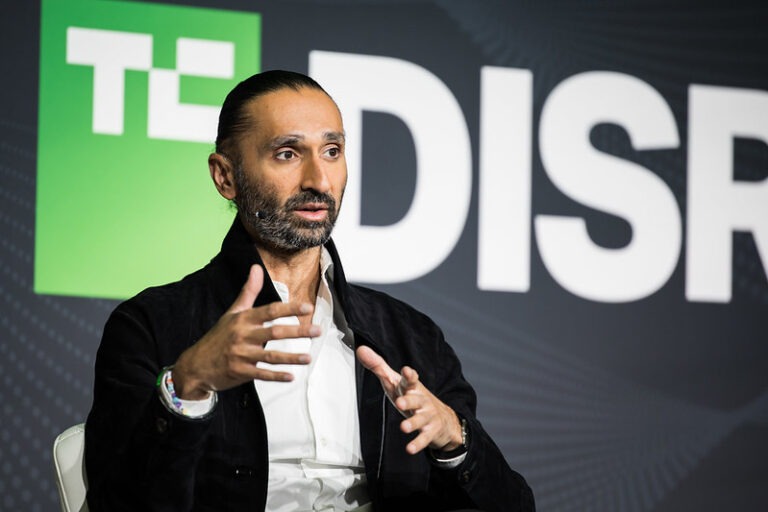
Consequently, financial markets have expressed growing anxiety over the massive capital requirements of artificial intelligence. In fact, private equity giant Blackstone has taken a clear contrarian stance on the matter. Speaking on stage at the TechCrunch Disrupt conference, Jas Khaira rejected fears of a looming credit disaster. Khaira argued that the physical infrastructure backing AI remains sound, resilient, and well-structured.

Differentiating Risk in AI Infrastructure

Additionally, market participants worry about the tens of billions borrowed to fund new data centers. Therefore, bond markets have shown nervous wobbles around specialized neocloud operators like CoreWeave. Furthermore, Khaira emphasized that investors must learn to differentiate risk across the sector. Indeed, borrowing money for specialized compute capacity differs greatly from speculative startup funding. A physical computing facility leased to an investment-grade corporation creates steady, reliable cash flow.

Consequently, Blackstone relies on structured lending frameworks rather than unhedged venture bets. For example, neocloud loans are tied directly to contracted compute agreements. Tech giants like Microsoft and Meta contract much of this computing volume. As a result, credit risk is offset by the immense balance sheets of enterprise titans. Blackstone acts as a major non-hyperscaler compute holder. This approach shields private credit portfolios from common startup failures.

Massive Capital Demands Transform Global Markets

Simultaneously, the physical transition to artificial intelligence requires historic sums of institutional capital. Specifically, older technological waves like software-as-a-service or mobile apps required far less initial funding. Khaira noted that AI demands heavy assets like specialized silicon, sub-stations, and high-voltage electricity. Meanwhile, global emerging markets are also adjusting to surging digital capacity needs. As examined by Diaspora Digital Media, infrastructure constraints and industrial power requirements dictate how quickly new technologies spread.

Furthermore, Blackstone N1 has committed billions of dollars across the entire technology supply stack. Specifically, the alternative asset manager committed $5 billion to custom chip venture Crux AI. Additionally, the firm backed custom silicon developer Etched to expand high-performance computing hardware. Subsequently, the private equity manager formed an enterprise joint venture worth $1.5 billion with Anthropic. In contrast to anxious lenders, the firm continues to provide structured debt and equity.

Long-Term Sustainability Beyond Early Momentum

Ultimately, Khaira warned that excessive venture funding rounds do not automatically guarantee enterprise durability. As a result, founders face growing pressure to demonstrate viable unit economics early. However, lenders that secure their capital with durable real-world collateral remain well protected. Through this disciplined framework, private credit funds can generate stable returns without reckless speculation. Blackstone manages these assets with rigorous scrutiny to prevent overexposure.

To conclude, the rapid expansion of artificial intelligence will continue to reshape global corporate finance. In fact, massive capital requirements will separate transient market trends from foundational tech leaders. Jas Khaira and Blackstone view current market fears as temporary jitters. Therefore, institutional investors who back essential physical infrastructure stand to profit for years ahead.

Senate Asks FG to Enforce Mandatory Screening at Borders Over Ebola

DDM News

0

ABUJA, NIGERIA — The Nigerian Senate has called on the Federal Government to enforce compulsory health screening for all international travellers arriving in the country. The move aims to prevent the importation of Ebola and other infectious diseases.

The Senate proposed measures including health declaration forms, temperature checks, and symptom screening. These should be enforced at all international airports, seaports, and designated land borders.

The Motion

The resolutions were adopted on Wednesday following a motion. The motion was titled “Urgent Need to Enforce Mandatory Health Screening at All International Airports and Other Entry Points to Prevent the Importation of Ebola and Other Epidemic-Prone Diseases into Nigeria.”

The motion was sponsored by Senator Francis Adedayo Faduyile. He represents the Ondo South Senatorial District.

The Senate also called for enhanced screening of travellers who have visited or transited through affected areas within the previous 21 days. It said this should apply regardless of nationality or country of departure.

Calls for Emergency Funding

The Senate urged the Federal Government to release emergency funds. It said the funds should come from service-wide votes through the Federal Ministry of Budget and Economic Planning.

It said the funds would support agencies involved in preventing and controlling the disease.

The Senate also called on the Federal Ministry of Health and Social Welfare, the Federal Airports Authority of Nigeria, and the Nigeria Immigration Service to equip all entry points. It said they should provide trained Port Health officers, thermal scanners, protective equipment, and isolation rooms.

The lawmakers further urged the government to ensure that isolation and treatment centres were ready for use in all 36 states and the Federal Capital Territory.

Repeal of Quarantine Act

The Senate called on the National Assembly to work with the Ministry of Health to repeal the Quarantine Act of 1926. It recommended reenacting it with modern public health legislation aligned with the International Health Regulations.

The existing law provides the legal framework for preventing the spread of dangerous infectious diseases.

Senator Faduyile’s Concerns

Presenting the motion, Faduyile raised concerns over the spread of the Bundibugyo Ebola outbreak across African countries. He warned of the risk of infected travellers entering Nigeria through third countries.

He said the outbreak in the Democratic Republic of Congo had exceeded 9,000 confirmed cases and 4,400 deaths. He described it as the second-largest Ebola outbreak in history.

Faduyile noted that the World Health Organisation had designated the outbreak a Public Health Emergency of International Concern. He said there was no approved vaccine or treatment for the strain.

He also cited the spread of the outbreak to Uganda and Kenya. He noted that a traveller had moved from the DRC by road to Kampala before flying to Nairobi. He said this demonstrated how infected persons could pass through multiple countries.

Nigeria’s Vulnerability

Faduyile said the Nigeria Centre for Disease Control and Prevention had rated the risk of Ebola being imported into Nigeria as high. He recalled that Nigeria recorded an Ebola case in July 2014 after an infected traveller arrived through Lagos airport.

He expressed concern that the health declaration requirement was narrowed on September 22, 2026, to travellers from selected countries. He said the policy excluded Kenya.

He also highlighted the shortage of Port Health personnel and screening equipment at departure halls and other entry points. He noted the continued reliance on the 1926 Quarantine Act.

Existing Disease Burden

Faduyile warned that Nigeria’s existing disease burden made it vulnerable to another public health emergency. He said the country had recorded 1,138 confirmed Lassa fever cases and 268 deaths in 2026.

He said cholera had caused more than 65,000 suspected cases. He also said diphtheria had recorded over 10,000 confirmed cases.

He stressed that protecting the country’s entry points was less costly than managing an imported case.

What This Means

The Senate’s resolutions highlight the urgency of strengthening Nigeria’s border health security. The confirmation of an Ebola case in Abuja has raised concerns about the country’s preparedness.

The calls for funding and equipment are critical. Without adequate resources, screening at entry points will remain weak.

What Happens Next

The Senate mandated its Committee on Legislative Compliance to ensure the implementation of the resolutions.

For now, the focus is on preventing the importation of Ebola and other infectious diseases. The coming weeks will reveal whether the government will act on the Senate’s recommendations.

Troops foil pipeline vandalism, nab 18-yr-old suspect in Benue

0


Troops of the Joint Task Force, Operation Whirl Stroke, have foiled an alleged pipeline vandalism attempt in Gou community, Logo Local Government Area of Benue State, arresting an 18-year-old motorcycle rider suspected of attempting to transport a section of the pipeline.

The suspect, identified as Aondoyima Agber, was apprehended during an intelligence-led operation on Tuesday, October 20, 2026.

The operation followed intelligence reports about the activities of suspected pipeline vandals in the community, according to a statement issued on Wednesday by Ahmad Zubairu Zubairu, acting media information officer at the headquarters of Operation Whirl Stroke.

The statement said troops were conducting a fighting patrol when they received information about the suspected vandals.

It said the troops moved to the reported location but found that the suspected vandals had fled before their arrival.

However, the soldiers arrested Agber, who was allegedly attempting to transport a section of the pipeline on a motorcycle.

The statement added that the suspect remained in custody pending further directives.

It said troops had continued to dominate the area to deter criminal activities, prevent attacks on critical national infrastructure and disrupt the operations of armed bandits.

The Force Commander of Operation Whirl Stroke and General Officer Commanding (GOC) 5 Division of the Nigerian Army, Major General Moses Gara, commended the troops for their prompt response.

Gara described the operation as a proactive measure to prevent the vandalism of critical national assets.

He warned individuals involved in the destruction of public infrastructure to desist from the act, stressing the need to protect vital national assets.

The commander also urged residents to remain vigilant and promptly report suspicious movements and activities to security agencies.

He reiterated the importance of cooperation between security agencies and host communities in tackling criminal activities and sustaining peace across the task force’s area of responsibility.


No Available Vaccine — Fresh Details Emerge on Ebola Strain in Nigeria

DDM News

0

ABUJA, NIGERIA — Fresh details have emerged about the Ebola virus strain detected in Nigeria. Health officials have confirmed that the Bundibugyo strain has no approved vaccine or specific treatment.

An aviation official also disclosed that the infected woman arrived in Nigeria on October 3. She travelled aboard an Ethiopian Airlines flight from Uganda.

The Discovery of the Strain

The Nigeria Centre for Disease Control and Prevention confirmed that laboratory tests identified the Bundibugyo strain. This strain has previously caused outbreaks in parts of Africa.

Olajumoke Babatunde is the Director of Public Health Laboratory Services at the NCDC. She disclosed the result during an emergency meeting in Abuja on Wednesday.

“We did three levels of tests, but all molecular. The strain was Bundibugyo,” Babatunde said.

The World Health Organisation also confirmed the strain. It stated that there was no vaccine or specific treatment available for it.

Patient’s Condition

Another official at the meeting disclosed that the patient’s condition had deteriorated significantly. The official said multiple organs were affected.

“This person is actually a diplomat,” the official said.

The official further revealed that the patient had developed “multi-organ failure.” However, the authorities did not disclose her nationality or provide further details about the organs affected.

Travel History

An aviation official spoke to Vanguard on the condition of anonymity. The official said the patient arrived at the Nnamdi Azikiwe International Airport in Abuja on October 3.

She travelled aboard Ethiopian Airlines Flight ET333.

Contact Tracing

Following confirmation of the infection, health authorities commenced a coordinated response. The Federal Ministry of Health, the NCDC, and the FCT Health Services Secretariat are working together.

Health authorities have identified 44 close contacts. These include healthcare workers, fellow patients, caregivers, and individuals connected to the woman’s travel history.

The contacts are being monitored as part of efforts to identify possible secondary infections.

Uganda’s Response

The Ugandan government has requested detailed travel and clinical records from Nigeria. The request is to establish the circumstances surrounding the infection.

Uganda’s Ministry of Health said the woman’s transit through the country did not establish that she contracted the virus there. In a statement, the Director-General of Health Services, Professor Charles Olaro, said preliminary information indicated that the woman had travelled to the eastern Democratic Republic of the Congo for business.

She reportedly showed no symptoms while in Uganda. She developed symptoms after arriving in Nigeria.

Federal Government’s Assurance

The Minister of Health, Professor Muhammad Ali Pate, said Nigeria was collaborating with Uganda. He said the government was working to contain the risk and prevent the disease from spreading.

“All I can tell you is that we are collaborating with our sister African nation of Uganda. What is important is that we have found this one case. We are doing contact tracing, and we are putting containment measures to ensure that it doesn’t go into our population,” Pate said.

What This Means

The absence of a vaccine for the Bundibugyo strain is a significant concern. It makes containment efforts more challenging.

The government’s response has been swift. But the coming days are critical. The success of the containment effort will depend on effective contact tracing and public cooperation.

2027: Why I Met British Officials in London — Peter Obi

DDM News

0

LONDON, UNITED KINGDOM — Nigeria Democratic Congress presidential candidate Peter Obi has revealed details of his meetings with British government officials and Nigerians living in the United Kingdom.

Obi said the engagements focused on efforts to rebuild Nigeria. He disclosed this on Thursday, October 22, in a post on his official X handle after a series of meetings in London.

The London Visit

Obi arrived in the British capital at 7 a.m. on Wednesday from Basel, Switzerland. He then embarked on a busy schedule of engagements with stakeholders.

He said his activities continued into the evening with a meeting organised by the COPDEM Chief and the NDC Director of Diaspora Affairs. The meeting brought together other stakeholders in London.

Focus of the Meetings

Obi explained that discussions with British government officials and the Nigerian diaspora centred on addressing Nigeria’s leadership and development challenges.

“All the meetings with British government officials and the Nigerian diaspora centred on our collective responsibility to rebuild Nigeria and free our country from the shackles of bad leadership, corruption, and the lack of accountability that continue to undermine our national development,” he wrote.

The former governor argued that these challenges had deprived millions of Nigerians of essential services. He listed quality healthcare, education, and decent employment as some of the services denied to citizens.

Vision for Nigeria

Obi maintained that Nigerians deserved a country where opportunities were available to everyone. He said this should be irrespective of background or political connections.

“Nigerians deserve a country where every life matters, where hard work is rewarded, and where every citizen has a fair opportunity to succeed, regardless of their background or connections,” Obi stated.

He further called for a society where personal achievement would depend on merit rather than privileged relationships.

“We must build a Nigeria where the child of nobody can become somebody without knowing anybody. A country that works for everyone, not just a privileged few,” he added.

A New Nigeria is Possible

Obi concluded his statement by reaffirming his vision for national development. He declared, “A New Nigeria is POssible.”

The London engagements form part of Obi’s ongoing overseas consultations ahead of the 2027 general elections.

Campaign Council Inauguration Postponed

The NDC had earlier postponed the inauguration of its National Campaign Council. The event was moved from October 20 to October 26.

The party cited the presidential candidate’s overseas engagements as the reason for the postponement.

What This Means

Obi’s visit to London highlights the importance of the diaspora in Nigeria’s political landscape. It also shows his efforts to engage with international stakeholders ahead of the 2027 elections.

The meetings underscore his campaign message of good governance and accountability. For now, the focus is on building support for his candidacy both at home and abroad.

US orders embassy staff, families to leave Saudia Arabia

0

The United States has ordered non-essential embassy staff and their families to leave Saudi Arabia amid escalating attacks linked to Yemen’s Iran-backed Houthi movement.

The US State Department announced the decision on Wednesday, citing worsening security conditions and attacks on civilian airports and critical infrastructure across the kingdom.

State Department spokesman Tommy Pigott said the Houthis had intensified hostilities against Saudi Arabia, resulting in civilian casualties and major travel disruptions.

He said protecting US government personnel and their families remained a priority.

A diplomatic source in the Middle East also told AFP that families of US embassy personnel were being withdrawn from the United Arab Emirates, Jordan, Qatar and Bahrain.

However, Pigott clarified that the formal departure order announced on Wednesday applied to non-emergency staff and their families in Saudi Arabia.

Saudi Arabia has faced repeated attacks this month as the conflict involving the Houthis escalates.

In one incident, debris from an intercepted drone targeting an oil facility killed two people and injured two others, according to the Saudi energy ministry.

The ministry identified the victims as a Filipino and a Nepali national. The drone was reportedly targeting the Shaybah oil field near the border with the United Arab Emirates, but the ministry did not identify who launched it.

Separately, the Saudi-led coalition fighting in Yemen said it had intercepted six drones.

A further attack on Dammam airport in eastern Saudi Arabia reportedly killed one person and injured eight others, according to aviation officials.

The latest escalation follows the collapse in June of a four-year truce in Yemen’s civil war, reviving hostilities in a conflict that began in 2014.

Saudi Arabia has led a coalition supporting Yemen’s internationally recognised government since 2015.

The US embassy departure order also comes amid broader tensions involving Iran and other countries in the Gulf region.

Washington had previously ordered non-essential personnel to leave parts of the Gulf before the United States entered its conflict with Iran in late February. Another departure order followed in July, before President Donald Trump called off a further round of strikes.

Iranian state media reported explosions in Hormozgan province late on Wednesday.

The state-run IRNA news agency said explosions were heard in the Karpan area of Sirik, but local sources had not established their cause.

The wider confrontation has also affected shipping through the Strait of Hormuz, a strategic waterway that handles roughly one-fifth of global oil supplies during peacetime.

Iran has sought to restrict passage through the strait by requiring ships to obtain authorisation before crossing, while the United States has imposed restrictions targeting Iranian ports and vessels.

The developments have heightened security concerns across the Gulf, with implications for diplomatic personnel, civilian travel and energy infrastructure.

How Nigerian Milliners Can Cut International Shipping Costs

0

International shipping costs are becoming a challenge for Nigerian milliners, with expensive delivery fees threatening sales and making it difficult to attract overseas customers.

For businesses producing fascinators, bridal headpieces and other structured headwear, shipping can be particularly expensive because protective packaging increases the parcel’s size, sometimes pushing delivery charges far above the actual weight of the product.

One of the major factors behind these costs is volumetric weight. Couriers often calculate charges based on the space a package occupies rather than its actual weight.

For example, a hat weighing less than one kilogram could attract charges based on a volumetric weight of seven kilograms if it is packed in a box measuring 40 × 35 × 25 centimetres, using a divisor of 5,000.

This makes packaging an important consideration for milliners seeking to reduce international delivery expenses.

Using appropriately sized boxes, developing compact packaging and exploring collapsible designs for suitable headpieces can help reduce unnecessary costs.

However, structured hats still require adequate protection to prevent damage during transit.

Milliners can also reduce expenses by comparing shipping rates across international courier companies and freight forwarders before dispatching orders.

Companies such as DHL, FedEx and UPS offer international shipping services from Nigeria, while freight forwarders may provide alternative pricing depending on the destination, shipment volume and delivery timeline.

Requesting quotations from multiple providers can help businesses identify competitive rates.

Milliners should also compare delivery times, tracking services, insurance coverage and customs handling charges rather than choosing a provider based on price alone.

Another option is to consolidate multiple customer orders going to the same destination, where logistics arrangements permit.

This can help reduce the average shipping cost per item, although it may increase delivery time.

For businesses serving international customers regularly, negotiating commercial shipping rates may also become worthwhile as shipment volumes increase.

Ultimately, reducing international shipping costs requires a balance between competitive pricing and product protection.

Nigerian milliners who manage packaging efficiently and compare logistics providers carefully can improve their profit margins while making their products more accessible to customers abroad.

Source: DHL, FedEx and UPS official international shipping resources.

Iran’s Guards threaten US bases over Strait of Hormuz ship escorts

0

Iran’s Islamic Revolutionary Guards Corps (IRGC) has threatened to attack American military bases across the Middle East if the United States continues escorting vessels through the Strait of Hormuz.

In a statement published on its Sepah News website on Thursday, the Guards warned that continued US military escorts could widen the conflict to American bases in the region.

“The US military must know that if this trend continues, the conflict will extend to its bases in the region,” the statement said.

“This is a serious warning,” the Guards added.

The threat comes amid rising tensions over the Strait of Hormuz, a strategic waterway through which about one-fifth of global oil supplies passed before the conflict began in February.

Iran claims control over the route and has repeatedly attacked vessels attempting to pass through it without its authorisation.

However, the US military has increased its escorts of ships through the waterway, prompting Iran to intensify its attacks, according to the report.

Iranian forces said on Thursday that four ships had been hit overnight while attempting to navigate waters across the wider Gulf.

Meanwhile, Washington has maintained a naval blockade targeting Iranian ports in an effort to put pressure on the country’s economy.

Efforts to negotiate an end to the conflict have reportedly stalled, adding to uncertainty over maritime security and energy supplies in the region.

The Strait of Hormuz lies between Iran to the north and Oman to the south. At its narrowest point, the waterway is approximately 30 kilometres (19 miles) wide.

It is a critical shipping corridor for oil and gas exports from energy-producing Gulf countries, making disruptions to passage a major concern for international energy markets.

The latest warning from Iran’s Revolutionary Guards raises the risk of further escalation as Washington continues its naval operations in the region.

Why ₦300bn in Insurance Funds Remains Stuck at CBN

0

About ₦300 billion raised by Nigerian insurance companies during the industry’s recapitalisation exercise remains held in escrow accounts at the Central Bank of Nigeria (CBN), as the apex bank continues to verify the sources of the funds.

The delay has left 24 insurance and reinsurance companies waiting to access capital they intend to use to strengthen their operations and improve financial performance.

According to the Nigerian Insurers Association (NIA), the National Insurance Commission (NAICOM) has already instructed the CBN to release the funds, but the money will only be returned to the companies’ original accounts after the necessary verification procedures are completed.

The checks are intended to establish that the funds came from legitimate sources and comply with applicable financial regulations.

The recapitalisation exercise, which ended on July 31, 2026, required insurance companies to meet higher minimum capital requirements under the Nigerian Insurance Industry Reform Act 2025.

Of the 50 insurance and reinsurance companies that met the recapitalisation requirements, 24 raised fresh capital, while the remaining 26 already had sufficient capital to meet the new thresholds.

The exercise increased the industry’s total capital base to approximately ₦1.079 trillion, up from about ₦700 billion before the recapitalisation.

NIA Chairman Ebelechukwu Nwachukwu said the affected companies were working to meet the CBN’s requirements, expressing expectations that the funds would be released before the end of October.

The delay has also affected the companies’ plans to deploy the new capital to expand underwriting capacity, retain more risks locally and improve returns for shareholders.

Meanwhile, NAICOM is preparing the industry for a transition to a Risk-Based Capital framework, which will align insurers’ capital requirements more closely with the risks they undertake.

The regulator has appointed professional services firm Ernst & Young to support the transition, with an exposure draft of the framework expected to be shared with industry operators for review.

The release of the escrow funds remains an important next step following the recapitalisation exercise, as insurers seek to turn their strengthened capital positions into greater capacity to provide coverage and meet claims obligations.

Source: Vanguard⁠ and THISDAY⁠.