
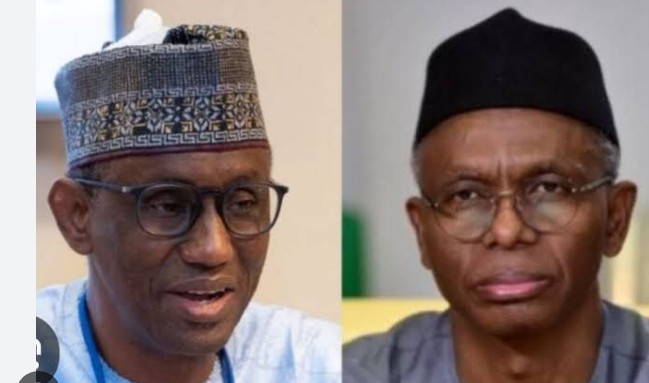
In a dramatic political upheaval that has sent shockwaves from Abuja to the grassroots, Nigeria has been plunged into one of its most explosive controversies in recent memory — a saga that lays bare the fault lines within the nation’s political and security establishments. At the center of this storm is former Kaduna State Governor and veteran political strategist, Nasir El-Rufai, whose televised assertions that he and his associates accessed wiretapped communications of the nation’s National Security Adviser (NSA), Nuhu Ribadu, have sparked intense scrutiny, official outrage, and nationwide debate over national security, legality, and political rivalry.
The tension ignited when El-Rufai, speaking live on national television, claimed that he became privy to intercepted phone calls involving the NSA, including what he described as direct evidence of a plot to have him detained at the Abuja airport by state security agents. While detailing the incident, he insisted that purported intercepted communications revealed Ribadu’s alleged order to arrest him — a claim that has now become the flashpoint of a national scandal.
From an Airport Fracas to National Headlines
The controversy began in earnest at Abuja’s Nnamdi Azikiwe International Airport, where El-Rufai was reportedly stopped by security personnel upon arrival and his passport was temporarily seized. According to El-Rufai, confusion reigned as operatives sought to detain him without presenting the formal invitation letters that are a procedural necessity before arrest or questioning. “All I asked for was a letter of invitation, and I would have honoured it,” he told reporters, painting the episode as unlawful and politically motivated.
He alleged that what initially appeared to be an approach by the Economic and Financial Crimes Commission (EFCC) was actually orchestrated under the influence of the Independent Corrupt Practices and Other Related Offences Commission (ICPC), procuring operatives of the Department of State Services (DSS) to take him into custody — a move he claimed stemmed directly from a call made by the NSA. And how, he asserted, did he know that? He said the NSA’s phone had been tapped and he heard the instructions. “The government thinks that they’re the only ones that listen to calls. But we also have our ways,” he said on live television.
Wiretap Allegations Elicit Presidential Storm
The presidency reacted with palpable fury. Presidential spokesperson Bayo Onanuga promptly called for a full investigation, describing El-Rufai’s remarks as tantamount to a confession of illegal wiretapping and a direct challenge to national security protocols. Onanuga warned that no individual, regardless of status or influence, is “above the law,” and suggested that if El-Rufai indeed had access to clandestine surveillance tools, the nation’s security apparatus must probe and hold him to account.

On social media, press aides argued that El-Rufai not only admitted to listening in on intercepted calls — an act considered illegal without proper judicial order — but that he may face severe repercussions once the identity of the person behind the alleged interception is established. Some presidential aides even cautioned that the former governor might label any arrest or inquiry into his actions as political persecution of President Bola Tinubu’s administration.
Son’s Contradictory Statement Adds Complexity
In a twist that has added further confusion to an already volatile situation, El-Rufai’s son, Bashir El-Rufai, took to social media to insist that his father did not tap anyone’s phone. According to Bashir, the claim has been widely misconstrued, arguing that his father merely relayed information shared with him by a third party and did not personally conduct any surveillance activities. This clarification has done little to quell skepticism but has provided an unexpected new angle in the dispute.
Wider Allegations: Abuse of Agencies and Political Targets
Beyond the wiretap allegation, El-Rufai’s interview spiraled into broader accusations — most notably that Nigeria’s security and anti-corruption agencies are being misused for personal or political vendettas. While denouncing the ICPC’s conduct, he offered praise for the EFCC’s professionalism, indicating he would comply with its invitation for questioning, even as he lambasted the ICPC for allegedly leveraging the DSS against him without due process.
The claims have drawn condemnation and support in equal measure. Civil society organisations such as the Democracy Watch Initiative branded the accusations as reckless and unfounded, warning that such public disputes erode confidence in Nigeria’s security institutions. Statements from civic groups have underscored the fragility of public trust and the danger of inflaming divisions without verified evidence.
Politicisation or Legitimate Security Debate?
Analysts and political commentators are divided over the implications. Some see the episode as emblematic of deeper fractures within Nigeria’s political elite — a clash not just over personal rivalry but over influence within the ruling structure as the 2027 general elections approach. Others warn that dragging matters of national security into political contention risks damaging institutions that must remain above partisan dispute.
Legal scholars emphasise that, under Nigerian law, interception of private communications without explicit court authorization is a criminal offence. Whether El-Rufai’s account reflects a reckless public claim or exposure of clandestine practices, the legal ramifications are significant and unavoidable.
A Test for Nigeria’s Democratic Institutions
As the presidency presses for investigation, civil liberties advocates are demanding transparency, due process, and constitutional adherence — insisting that any inquiry must uphold the principles of justice without becoming a tool for political revenge. The controversy now stands as a litmus test for Nigeria’s democratic resilience, testing whether institutions like the DSS, ICPC, and EFCC can retain credibility amid intense political pressure.
What began as a routine security allegation has ballooned into a story with legal, political, and institutional consequences that extend far beyond one man’s claims. Nigeria’s future, observers say, may rest as much on the outcome of this dispute as on any future ballot box.