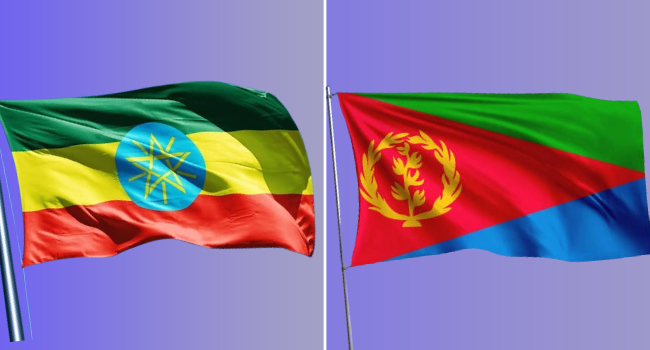
Diplomatic tensions between Ethiopia and Eritrea have intensified after Addis Ababa ordered Asmara to immediately withdraw its troops from Ethiopian territory, raising fears of a renewed conflict between the longtime rivals.
Ethiopian officials accuse Eritrea of supporting insurgent groups operating inside Ethiopia allegations Eritrea has denied.
In a letter dated Saturday, Ethiopian Foreign Minister Gedion Timothewos warned that recent developments suggest Eritrea has chosen “the path of further escalation.”
He demanded the withdrawal of Eritrean forces and an end to any collaboration with rebel groups.
The minister described the alleged military presence along Ethiopia’s northwestern borders and joint operations there as acts of outright aggression, rather than mere provocations.

Despite the sharp tone, Ethiopia signaled openness to diplomacy. Timothewos said the cycle of violence and mistrust could still be broken if Eritrea respects Ethiopia’s sovereignty and territorial integrity.
The Eritrean government has not issued an immediate response.
Relations between the neighboring Horn of Africa countries have long been tense. Eritrea gained independence from Ethiopia in 1993 after decades of armed struggle.
A border war between 1998 and 2000 left tens of thousands dead.
Ethiopian Prime Minister Abiy Ahmed initially restored ties with Eritrea after taking office, a move that earned him the 2019 Nobel Peace Prize.
However, relations later deteriorated following disagreements over the peace arrangements that ended the 2020–2022 Tigray conflict.
The Tigray war killed an estimated 600,000 people, and the Pretoria peace agreement has not fully resolved regional tensions.
Ethiopian authorities now claim Eritrea is preparing for war and supporting armed groups fighting federal forces.
Eritrea, meanwhile, accuses Ethiopia of attempting to secure access to the Red Sea through the Eritrean port of Assab.
The escalating rhetoric has heightened concerns of renewed instability in the Horn of Africa.