



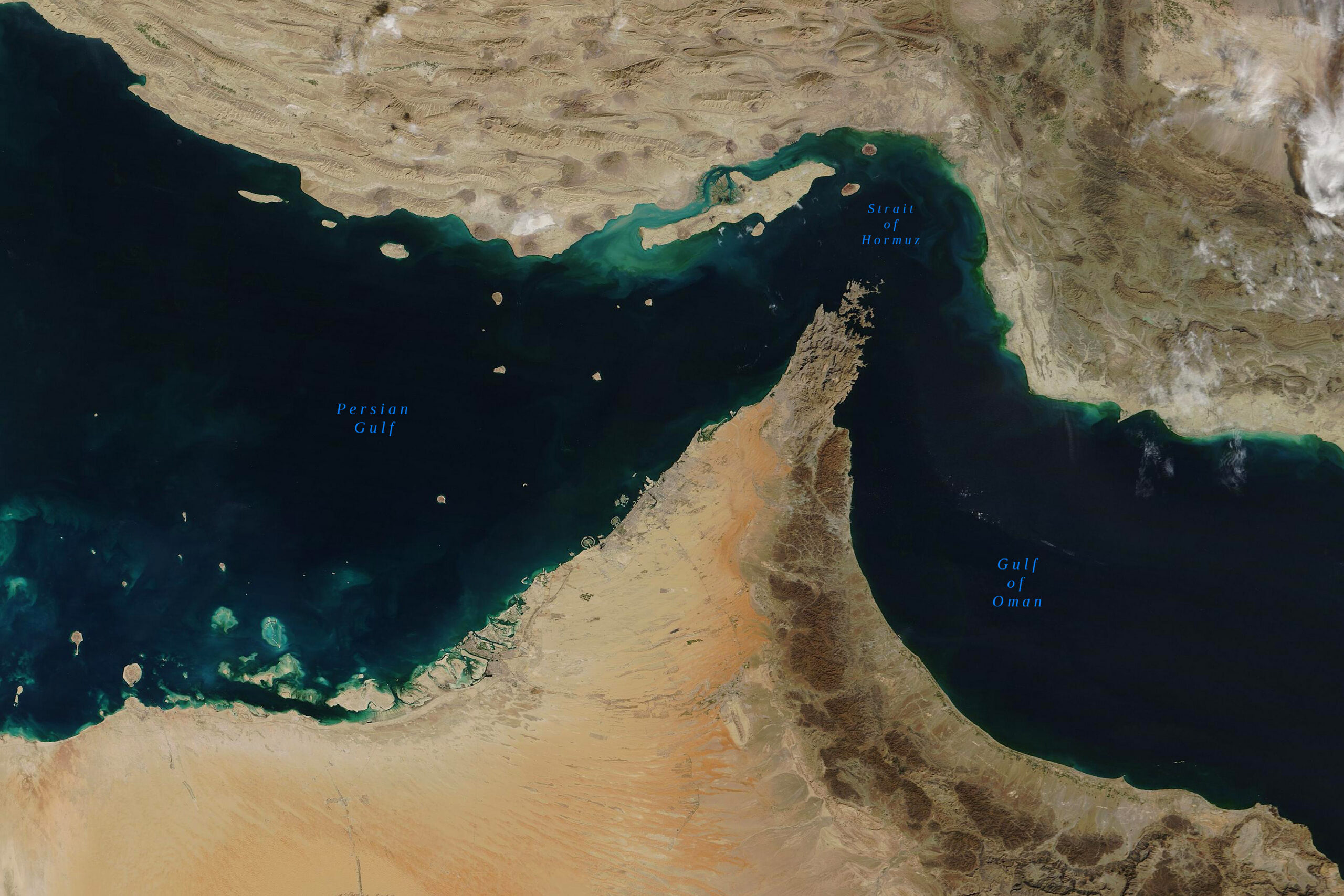
There are places on the map that look small but carry the weight of the world. The Strait of Hormuz is one of them.
Barely a narrow ribbon of water separating Iran from Oman and the United Arab Emirates, the strait has once again become the centre of global anxiety.
Recent attacks on cargo vessels and threats from Tehran have revived fears that this vital maritime corridor could be shut down.
If that happens, the consequences will stretch far beyond the Middle East.

The shock will travel through global oil markets, across international shipping lanes, and eventually into the everyday lives of millions of people around the world.

For a world already struggling with economic uncertainty, the closure of this narrow channel would be like striking a match near a barrel of fuel.
A Waterway That Powers the World
The importance of the Strait of Hormuz cannot be overstated. Roughly one-fifth of the world’s oil supply passes through this narrow waterway every single day. Tankers carrying crude from Saudi Arabia, Iraq, Kuwait, Qatar, and the UAE funnel through this maritime chokepoint before heading to global markets.
In energy terms, the strait functions like a giant artery pumping fuel into the global economy. Block that artery and the system begins to suffocate.
That is why even the threat of disruption has already sent oil prices climbing and shipping costs soaring.
Energy markets operate on confidence. When that confidence is shaken, the ripple effects can be immediate and severe.
Fear Alone Can Shut It Down
One uncomfortable reality of modern maritime trade is that a waterway does not have to be physically blocked to become unusable.
Fear can do the job just as effectively.
If ships face the risk of drone strikes, missile attacks, or naval mines, many shipping companies will simply refuse to sail through the danger zone. Insurance premiums skyrocket, captains hesitate, and supply chains begin to slow.
In such circumstances, the Strait of Hormuz could effectively become closed even without a formal blockade.
The result would be an immediate shock to global energy supply.
Asia’s Energy Lifeline at Risk
The countries most exposed to a disruption in the strait are in Asia. A vast majority of oil shipments leaving the Persian Gulf are destined for Asian economies.
Nations like China, India, Japan, and South Korea rely heavily on this energy flow to keep their industries running.
China, in particular, remains one of the largest buyers of Iranian crude. Disruptions in supply could send energy costs rising sharply across Asian markets.
And in today’s globalised economy, higher manufacturing and transport costs in Asia inevitably translate into higher prices for consumers everywhere.
In short, the closure of a strait in the Middle East could soon be felt in supermarkets, factories, and petrol stations around the globe.
The Limits of Alternative Routes
Oil producers in the Gulf have long been aware of the strategic vulnerability of the Strait of Hormuz. Over the years, they have built pipelines designed to bypass the waterway.
Saudi Arabia, for instance, operates a major pipeline capable of transporting millions of barrels of crude across its territory to ports on the Red Sea. The UAE has also invested in infrastructure that allows some oil exports to avoid the Gulf entirely.
Yet these alternatives provide only partial relief.
If the strait were fully closed, analysts estimate that global oil supply could fall by millions of barrels per day. That kind of disruption would likely push prices sharply upward and trigger economic consequences across multiple sectors.
Simply put, there is no easy substitute for the Strait of Hormuz.
A Dangerous Flashpoint
The region has seen this drama before. During the Iran–Iraq War of the 1980s, attacks on oil tankers turned the Gulf into a battlefield. Commercial vessels became targets as both sides attempted to cripple each other’s economies.
Eventually, the United States stepped in to escort tankers through the strait, ensuring that oil could continue to reach global markets.
That episode serves as a reminder that when energy security is threatened, global powers rarely remain on the sidelines.
The stakes are simply too high.
Why the World Should Worry
The Strait of Hormuz illustrates one of the central vulnerabilities of the modern global economy: critical supply routes are often concentrated in small, fragile spaces.
A single maritime chokepoint, just a few dozen kilometres wide, carries energy that fuels industries, powers transportation systems, and sustains modern life.
Disrupt that route and the consequences ripple across continents.
For ordinary people, the impact may appear gradually — higher petrol prices, rising food costs, more expensive goods. But the cause may lie thousands of kilometres away, in a narrow waterway between two coastlines.
That is the paradox of globalisation. The world has become more connected than ever before, yet those connections often pass through very fragile corridors.
The Strait of Hormuz is one of them.
And as tensions continue to rise in the region, the world is once again reminded that sometimes the stability of the global economy depends on a thin line of water that can easily become a fault line.

