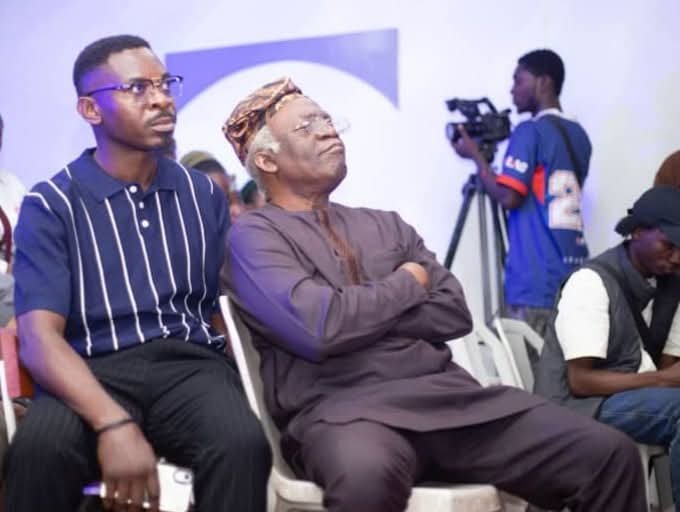
(DDM) — Renowned human rights lawyer and Senior Advocate of Nigeria, Femi Falana, has called for a nationwide ban on social media use by children under the age of 16, igniting widespread debate across Nigeria over digital freedom, child protection, and parental responsibility.
Falana made the call while speaking on the growing global concern about the psychological, moral, and social impact of unrestricted social media access on minors.
He argued that Nigeria cannot continue to ignore mounting evidence linking excessive social media exposure among children to mental health disorders, cyberbullying, sexual exploitation, and declining academic performance.
According to Falana, social media platforms have increasingly become unsafe spaces for children, exposing them to harmful content beyond the control of parents, schools, or regulators.
He noted that several countries are already taking firm legislative steps to protect minors from digital harm.

Falana cited examples from Europe, Australia, and parts of North America, where governments are introducing age-verification laws and strict limitations on minors’ access to social networking platforms.
He stressed that Nigeria must not lag behind in safeguarding its young population, which represents one of the largest youth demographics in the world.
The senior lawyer explained that while social media has benefits, its unregulated use by children has created serious social problems.
He warned that early exposure to violent content, pornography, misinformation, and online predators could have long-term consequences for national development.
Falana maintained that the proposed restriction is not an attack on freedom of expression but a child-protection measure rooted in global best practices.
He emphasized that children require structured environments for growth and learning, not algorithm-driven platforms designed primarily for profit.
Background checks show that concerns about children’s safety online have intensified globally over the past decade.
Studies by international health and education bodies have linked excessive screen time to anxiety, depression, low self-esteem, and sleep disorders among minors.
In Nigeria, child rights advocates have repeatedly raised alarms over online sexual abuse, cyber fraud recruitment, and radicalisation involving minors.
The rapid spread of smartphones and cheap internet access has made social media available to children with little or no supervision.
Experts say this digital exposure has outpaced Nigeria’s regulatory framework and parental awareness.
Falana argued that Nigeria’s Child Rights Act provides sufficient legal backing to justify protective restrictions in the best interest of the child.
He called on lawmakers to begin consultations toward drafting clear legislation that would compel social media companies to enforce age limits.
He also urged parents and schools to take greater responsibility in monitoring children’s digital activities.
However, the call has triggered mixed reactions nationwide.
Some civil society groups argue that a blanket ban could be difficult to enforce and may push children toward underground or unsafe online spaces.
Technology advocates insist that digital literacy and parental controls would be more effective than outright prohibition.
Others fear that enforcement could lead to privacy violations and abuse by authorities.
Supporters of Falana’s position counter that strong regulation is necessary in a society where parental supervision is often limited by economic pressures.
They argue that without firm laws, social media companies will continue to prioritise profit over child safety.
Nigeria currently lacks comprehensive digital child protection laws specifically tailored to social media usage.
Regulators have mostly focused on broadcasting and traditional media, leaving online platforms largely self-regulated.
Falana warned that continued inaction could expose Nigeria to a generation of digitally harmed youths.
He called for urgent national dialogue involving lawmakers, educators, parents, tech companies, and child rights organisations.
As the debate gathers momentum, Nigerians remain divided between protecting children and preserving digital freedoms.
What remains clear is that Falana’s call has reopened a critical conversation about childhood, technology, and the future of Nigeria’s digital society.