The Federal Government is exploring carbon credit financing and private-sector investments to recover the construction costs of the Lagos-Calabar Coastal Highway as it seeks to make the project financially sustainable.
Minister of Works, David Umahi, disclosed this during an inspection of bridge construction along Sections 1 and 2 of the 750-kilometre highway. He said the government plans to use the project’s concrete pavement, solar-powered streetlights and proposed commercial developments to attract climate financing and private capital.
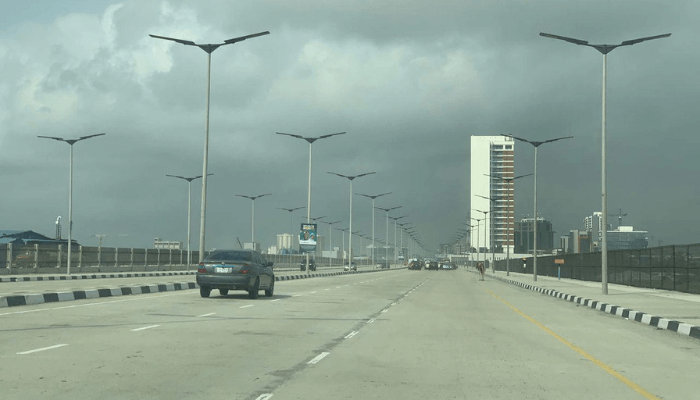
According to Umahi, the use of reinforced concrete pavement and solar-powered lighting could qualify the project for carbon credits, creating an additional revenue stream for the government.
“We are using concrete, and so we are entitled to carbon credit claims. We are also using solar instead of conventional electricity; we are entitled to carbon credits,” Umahi said.
The minister added that private investors had indicated interest in funding arrangements that would allow them to recover their investments. BusinessDay reported that the government was also considering industrial parks, tourism facilities, factories and other commercial developments along the highway to improve its economic value.
Umahi further disclosed that plans were underway to install CCTV surveillance systems along the route to strengthen security and support commercial activities.
He also addressed concerns about the project’s continuity, insisting that the reconstruction of the East-West Road would not affect the Lagos-Calabar Coastal Highway. He said President Bola Tinubu had directed that the entire 750-kilometre project must be completed as planned.
The minister stated that Section 1 of the highway was expected to be commissioned by Tinubu before the end of November or in early December.
The Lagos-Calabar Coastal Highway is designed to pass through nine coastal states, with the government expecting it to improve transportation, support trade and attract private investment across southern Nigeria.