


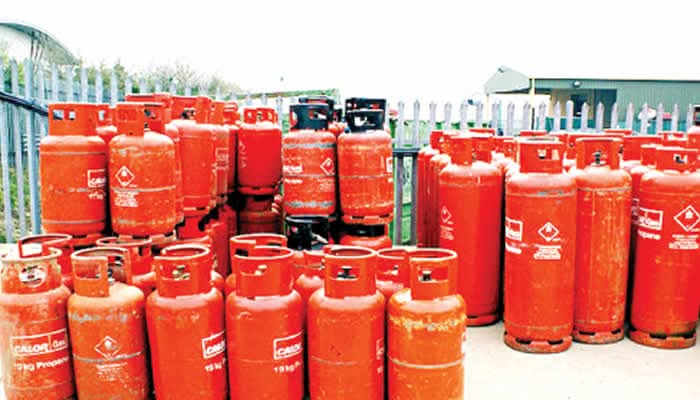
ABUJA, NIGERIA — The Federal Government has announced plans to expand its National Grassroots Liquefied Petroleum Gas (LPG) Penetration Programme to reach more than 10 million Nigerian homes by 2060, as part of efforts to accelerate the country’s transition to cleaner cooking energy.
The initiative is designed to increase access to LPG, commonly known as cooking gas, particularly among households that continue to depend heavily on traditional cooking fuels.
The Federal Government said the programme forms part of its broader clean cooking strategy, which seeks to reduce reliance on polluting fuels while improving access to safer and more efficient cooking alternatives.
According to the government, expanding LPG access at the grassroots level will be critical to achieving a wider transition toward cleaner household energy.

Millions of Nigerian households continue to rely on firewood, charcoal and other traditional fuels for cooking, particularly in rural and low-income communities. The continued dependence on these fuels has raised concerns over household air pollution, environmental degradation and the health risks associated with prolonged exposure to cooking smoke.
The grassroots LPG programme is therefore intended to bring cleaner cooking solutions closer to households across the country.
The government’s long-term target of reaching more than 10 million homes by 2060 reflects the scale of the challenge facing Nigeria’s clean cooking sector.
Officials say expanding access will require sustained investment in LPG infrastructure, distribution networks and consumer awareness, particularly in communities where cooking gas remains difficult to obtain or unaffordable for many families.
One of the major objectives of the programme is to increase the number of households that can conveniently access LPG within their communities.
Improved availability could also help reduce the challenges faced by families who have to travel long distances to purchase cooking gas.
The government is expected to work with relevant stakeholders, including private-sector operators, distributors and community-level partners, to expand the reach of the programme.
The initiative also has environmental implications.
Heavy dependence on firewood contributes to deforestation and puts pressure on Nigeria’s forest resources. Encouraging households to adopt cleaner alternatives could help reduce the demand for wood fuel and support efforts to protect the country’s natural environment.
Clean cooking is also closely connected to public health.
Smoke produced by burning firewood and other solid fuels contains pollutants that can affect the respiratory system and contribute to various health problems, particularly among women and children who spend significant amounts of time around cooking areas.
By encouraging the transition to LPG, the government hopes to reduce household exposure to harmful cooking smoke.
However, affordability remains a major issue.
The price of LPG and the cost of cooking equipment can make the transition difficult for low-income households. The government will therefore face the challenge of ensuring that increased availability is matched by affordability.
Without adequate measures to address cost, households may struggle to consistently use LPG even when the fuel is available in their communities.
The programme’s long-term success will consequently depend not only on expanding distribution but also on creating conditions that allow households to sustain their use of cooking gas.
The Federal Government’s 2060 target also places the initiative within Nigeria’s broader long-term energy and environmental objectives.
The country has been working to increase access to cleaner energy sources while addressing the environmental consequences of traditional fuel use.
For households, the shift to LPG could offer several practical benefits, including faster cooking, reduced exposure to smoke and greater convenience compared with some traditional fuels.
For communities, wider access to clean cooking could contribute to improved health outcomes and reduced pressure on local sources of firewood.
The government also expects grassroots penetration to help close the gap between urban and rural households.
While cooking gas is more readily available in many urban areas, residents of remote communities may face challenges related to transportation, distribution and supply.
The programme is therefore intended to expand access beyond major cities and commercial centres.
The initiative’s 2060 target gives the government several decades to expand the programme, but achieving meaningful progress will require sustained implementation and investment.
Energy infrastructure, safety standards and public education will also remain important components of the programme.
As more households adopt LPG, users will need to understand how to handle, store and operate cooking gas equipment safely.
Government agencies and industry stakeholders will therefore have an important role in promoting safety awareness alongside increased access.
The initiative also provides an opportunity to develop the country’s clean cooking market and create jobs across the LPG value chain, including distribution, retail, equipment supply and related services.
The Federal Government’s announcement signals its intention to make clean cooking a larger component of Nigeria’s energy transition.
With more than 10 million homes targeted by 2060, the programme represents a long-term attempt to change how millions of Nigerians cook their meals.
The success of the initiative, however, will ultimately depend on whether households can access LPG reliably, affordably and safely.
For Nigeria, the transition to cleaner cooking is not simply an energy issue. It is also linked to public health, environmental protection, household welfare and economic development.
As the Federal Government expands the National Grassroots LPG Penetration Programme, the coming years will determine how effectively the initiative can translate its ambitious target into real improvements in Nigerian homes.
If successfully implemented, the programme could help millions of families move away from traditional cooking fuels while contributing to Nigeria’s broader clean-energy and environmental goals.




