



African football has once again demonstrated its growing influence on the global stage after four of the continent’s representatives secured places in the Round of 32 of the 2026 FIFA World Cup, equalling one of Africa’s strongest collective performances in the tournament’s history and raising hopes of another deep run in football’s biggest competition.
With the 2026 FIFA World Cup expanded to 48 teams for the first time, Africa was allocated nine direct qualification places, providing the continent with its largest ever representation at the global tournament. Expectations were high before the competition began, and while some nations endured disappointing campaigns, Morocco, Senegal, South Africa and Côte d’Ivoire rose to the occasion by navigating difficult group stage challenges to book their places in the knockout rounds.
Their qualification is another powerful statement about the steady rise of African football over the past two decades. Better youth development programmes, increased investment in domestic football, improved coaching standards and the growing presence of African stars in Europe’s elite leagues have all contributed to narrowing the gap between African teams and the traditional football powerhouses.

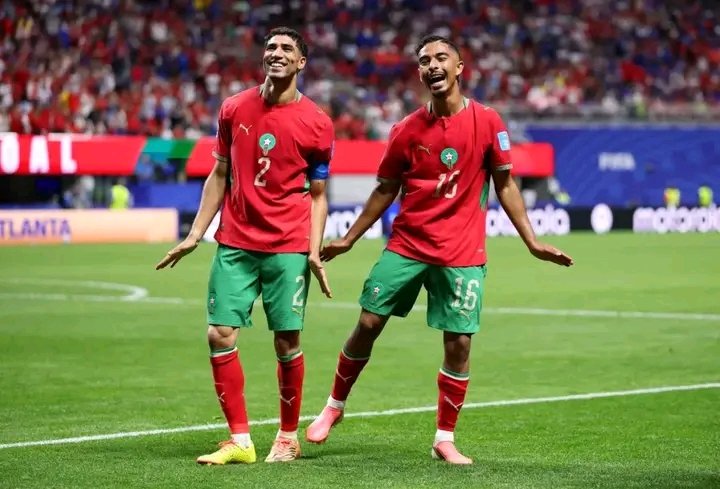
Morocco once again led the continent’s charge after producing another composed and disciplined campaign. Building on their historic semifinal appearance at the 2022 FIFA World Cup in Qatar, the Atlas Lions showed that their previous success was no coincidence. Combining defensive organisation with attacking creativity, Morocco demonstrated why they remain one of Africa’s strongest football nations and one of the most respected teams in international football.
The North Africans entered the tournament carrying enormous expectations after becoming the first African and Arab nation to reach a World Cup semifinal four years earlier. Rather than being overwhelmed by pressure, they responded with mature performances that secured another place in the knockout rounds.
Senegal also maintained their reputation as one of Africa’s elite football nations. The Lions of Teranga displayed tactical discipline, physical strength and valuable tournament experience throughout the group stage to comfortably secure qualification.
Having won the Africa Cup of Nations in 2022 and consistently competed at major international tournaments, Senegal once again proved they possess the quality required to challenge some of the world’s best teams.
South Africa emerged as one of the biggest surprise packages of the tournament. Bafana Bafana exceeded expectations with organised defending, outstanding teamwork and unwavering determination throughout the group phase.
Their qualification for the Round of 32 represents one of the greatest achievements in the nation’s World Cup history and reflects the remarkable progress South African football has made in recent years. Their memorable victory over South Korea proved decisive in securing passage into the knockout rounds and sparked celebrations among supporters across the country.
Côte d’Ivoire also produced one of the standout stories of the group stage after reaching the World Cup knockout rounds for the first time in their history.
The Elephants secured qualification with an impressive victory over Curaçao in their final group match, with experienced winger Nicolas Pépé scoring both goals to seal a famous win.
Their qualification is particularly significant considering the team’s remarkable resurgence following their triumph at the 2023 Africa Cup of Nations, where they recovered from a difficult start to become continental champions.
Although four African teams celebrated progression, several others narrowly missed out despite showing moments of quality.
Nations including Ghana, Tunisia, Algeria, Egypt and Cape Verde fought courageously but were unable to collect enough points to reach the knockout phase.
Their exits underline the growing competitiveness of the expanded World Cup, where every point and every goal proved crucial.
The new tournament format has created fresh opportunities for nations across every continent.
Unlike previous editions that featured only 32 teams, the expanded competition allows the top two teams from each of the 12 groups, along with the eight best third placed finishers, to qualify for the Round of 32.
The revised structure has increased the number of competitive matches while giving emerging football nations a greater opportunity to compete beyond the group stage.
Africa’s progress at the FIFA World Cup has steadily improved over the years.
Cameroon became the first African nation to reach the quarterfinals at the 1990 World Cup in Italy.
Senegal repeated that feat during their remarkable debut appearance in 2002 after defeating defending champions France in the opening match before advancing to the last eight.
Ghana came within seconds of becoming Africa’s first semifinalist in 2010 before suffering a heartbreaking penalty shootout defeat against Uruguay.
Morocco eventually broke new ground at the 2022 World Cup by becoming the first African and Arab nation to reach the semifinals, defeating Belgium, Spain and Portugal during an unforgettable campaign.
Those landmark achievements have inspired a new generation of African footballers who now compete regularly for Europe’s biggest clubs and bring invaluable experience back to their national teams.
The qualification of four African nations for the Round of 32 further demonstrates the continent’s growing competitiveness and tactical maturity.
As the knockout stage begins, Morocco, Senegal, South Africa and Côte d’Ivoire will carry not only the ambitions of their respective nations but also the hopes of an entire continent eager to witness another historic breakthrough.
With confidence growing and belief stronger than ever, African football now has four opportunities to continue rewriting history on the world’s biggest sporting stage.




