



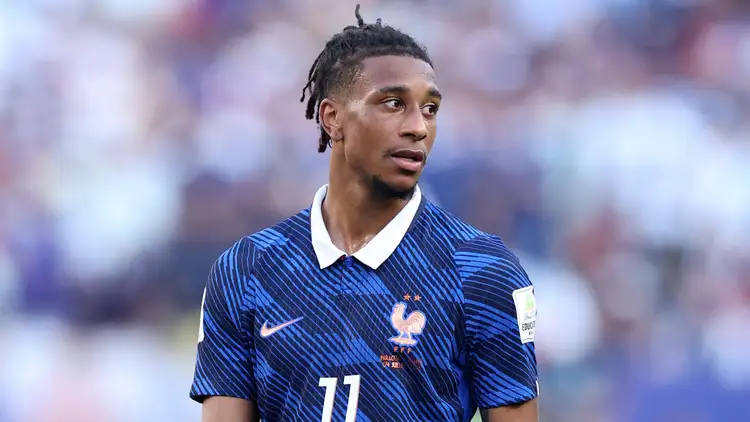
France have suffered a major setback ahead of their FIFA World Cup quarter final showdown with Morocco after FIFA rejected the French Football Federation’s appeal against Michael Olise’s yellow card.
The decision means the talented winger will enter the crucial knockout fixture carrying disciplinary concerns, leaving head coach Didier Deschamps with an important tactical decision as France continue their pursuit of another World Cup title.
Olise received the booking during France’s Round of 16 victory over Paraguay following an incident involving Paraguayan midfielder Matias Galarza. The referee judged that the French attacker committed a foul during a physical challenge, with replays showing contact between both players before the decision was made.

France believed the punishment was excessive and submitted an official request to have the caution removed. However, FIFA reviewed the case and decided that the referee’s original decision should stand.
Speaking ahead of the quarter final, Deschamps confirmed that the appeal had been unsuccessful and that Olise would remain one booking away from a possible suspension.
The situation creates a difficult balancing act for the France manager. Olise has become one of the most influential players in the French squad during the tournament, contributing significantly in attack through his creativity, movement and ability to unlock defensive structures.
The winger has played an important role in France’s attacking success, providing several assists and consistently creating problems for opposing defenders. His ability to operate in wide areas while also moving into central positions has made him a valuable tactical option for Deschamps.
However, another yellow card against Morocco would mean Olise could miss a potential semi final clash, a possibility France must carefully consider before naming their starting lineup.
The controversy surrounding Olise’s situation has also increased debate about FIFA’s disciplinary decisions during the tournament. France’s frustration was intensified by the fact that another suspension issue involving United States forward Folarin Balogun was handled differently earlier in the competition.
Some observers questioned whether similar cases were being treated consistently, although FIFA maintained that each disciplinary matter is reviewed individually based on the circumstances involved.
Despite the disappointment, France must quickly shift their focus toward the challenge presented by Morocco. Deschamps has warned his players that the North African side cannot be underestimated after their impressive performances on the world stage.
Morocco have developed a reputation as one of the tournament’s most organised teams, combining defensive discipline with technical quality and attacking ambition. Their ability to compete against elite opponents has earned widespread respect, and France know they face a difficult test.
Deschamps highlighted Morocco’s quality, pointing to their strong squad, confidence on the ball and attacking approach. The French coach also reminded his players that previous encounters cannot guarantee future success, especially at the knockout stage of a World Cup.
For France, the quarter final represents another important step in their attempt to secure global glory. The national team entered the tournament among the favourites because of their depth, experience and collection of world class players.
Kylian Mbappe remains the focal point of the attack, but France’s strength has also come from the contributions of players around him. Olise’s emergence has provided another creative dimension, giving Deschamps additional options when breaking down opponents.
The Bayern Munich winger’s rise has been closely followed by supporters who believe he can become one of France’s leading attacking figures for many years. His technical ability, confidence and versatility have made him one of the most exciting players in the squad.
For now, Olise must remain focused and disciplined as France prepare for their meeting with Morocco. Avoiding another booking will be crucial if he wants to remain available for the later stages of the tournament.
The French coaching staff will carefully evaluate the risks before deciding whether to start him or manage his involvement differently. The decision will depend on tactical needs, match circumstances and France’s desire to reach the semi finals.
As the World Cup reaches its decisive stages, small moments can determine the outcome of major matches. France know that discipline, concentration and consistency will be just as important as attacking quality.
Although FIFA’s decision has created frustration within the French camp, Deschamps and his players must now focus on the challenge ahead. With Morocco standing between them and a place in the semi finals, France will need their best performance to continue their World Cup journey.




