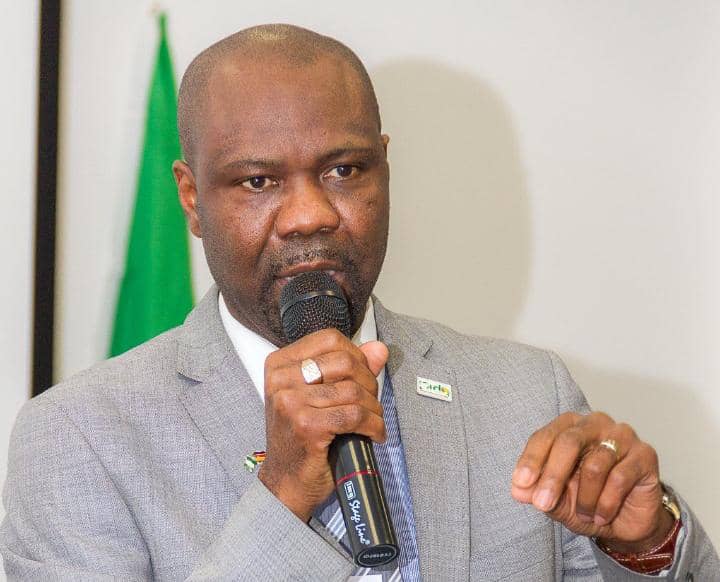
(DDM) – On a cold morning in Hamburg, inside a stately civic building overlooking the Alster Lake, policymakers gather around a long table to debate one of Europe’s most pressing questions: how societies adapt to migration and diversity.
Among the voices contributing to the discussion is a Nigerian whose political journey stretches far beyond the city’s borders.
For Kenneth Chibuogwu Gbandi, a native of Akwukwu-Igbo in Nigeria’s Anioma region of Delta State, the meeting represents another moment in a life shaped by movement across continents.
His story moves between Europe and Africa, linking policy debates in Germany with grassroots political conversations in Nigeria’s Delta North, where questions about governance, development, and diaspora influence are redefining the nature of leadership.
In an age of globalization, leaders like Gbandi represent a growing phenomenon: political actors whose influence operates simultaneously in both homeland and diaspora.
The power of diaspora politics
The rise of diaspora political influence is not unique to Nigeria.
Across the world, migrants and their descendants are increasingly shaping politics in their countries of origin through advocacy, investments, and public policy engagement.
For Nigeria, the numbers alone tell a powerful story.
Millions of Nigerians live abroad, forming one of Africa’s largest diaspora communities.
Their annual remittances exceed $20 billion, making the diaspora one of the country’s most important economic lifelines.
But beyond financial flows, diaspora communities are increasingly pushing for political participation and representation.
For Gbandi, the mission has long been to transform diaspora communities from scattered migrant networks into organized political stakeholders.
A career that began in media
Long before entering formal politics, Gbandi’s work began in an unlikely arena: media.
In Germany, where discussions about race and representation were only beginning to gain visibility in public discourse, he launched what became the first pro-Black magazine in the country’s history.
The publication provided a platform for African and diaspora voices at a time when Black perspectives were largely absent from mainstream European media.
It became more than a cultural outlet.
It was a forum for dialogue about identity, migration, and political participation.
Later, Gbandi expanded his work into broadcasting.
Through the Afrika Outlook TV Magazine, one of the longest-running African television programs in Germany, he introduced European audiences to African culture, politics, and diaspora life.
The program helped bring African narratives into German living rooms and contributed to changing perceptions of African communities across Europe.
Entering the world of public policy
Media visibility eventually opened the door to civic leadership.
Gbandi’s election into Hamburg’s Senate Integration Council marked a historic milestone.
He became the first Nigerian and only the second African ever elected into the advisory body, which provides guidance to the city government on integration and diversity policy.
Within the council, he later chaired the Anti-Discrimination Committee.
The position placed him at the center of debates on racism, minority representation, and migrant participation in one of Germany’s most diverse cities.
His work reflected a broader shift taking place across Europe.
As migrant populations grew, questions about inclusion, representation, and social integration were moving to the center of political debate.
Building a political voice for the diaspora
While Gbandi’s work in Europe was shaping migration policy discussions, a parallel movement was unfolding within Nigeria’s global community.
Across continents, from London to Houston, Nigerians abroad were increasingly seeking a more organized role in the country’s political future.
Working with Okey Nwosu, founding chairman of the African Democratic Congress, Gbandi helped establish the ADC Diaspora Network.
The initiative formally recognized Nigerians abroad as the 7th geopolitical zone within the party.
It marked a symbolic shift in Nigerian political thinking.
For decades, diaspora communities had been seen primarily as sources of remittances.
The new framework recognized them instead as a political constituency.
Gbandi has also advocated for a more ambitious idea: recognizing the diaspora as Nigeria’s 37th state, with formal representation in national governance.
Leadership within the global diaspora movement
Beyond party politics, Gbandi became deeply involved in the broader diaspora advocacy movement.
Through the Nigerians in Diaspora Organisation (NIDOE), the largest umbrella body representing Nigerians abroad, he rose through the organization’s leadership ranks.
He eventually served as Global Coordinating Chairman, representing millions of Nigerians living outside the country.
During that period, diaspora advocacy gained new political momentum.
Among the key achievements associated with the movement was the establishment of the Nigerians in Diaspora Commission, a government agency created to strengthen ties between Nigeria and its overseas citizens.
The same advocacy networks pushed forward conversations about diaspora voting rights, investment frameworks, and policies aimed at integrating diaspora expertise into national development.
Returning to the grassroots
After decades spent advocating for diaspora participation in national affairs, Gbandi sought to bring that experience back home.
In Nigeria’s 2023 elections, he ran for the Delta North senatorial seat.
His campaign reflected a broader trend across Africa.
Increasingly, diaspora professionals are returning to contest political office, presenting themselves as bridges between local communities and global opportunities.
For Gbandi, the message is simple.
He describes his political philosophy as “From the Diaspora to the Grassroots.”
The concept argues that international exposure and global networks can help address local challenges, whether in governance, infrastructure, or economic development.
Supporters see the idea as a new model of leadership for Nigeria.
Critics question whether diaspora politics can translate into effective governance on the ground.
A new kind of political actor
What remains undeniable is the broader transformation happening within Nigeria’s global community.
From financial remittances to policy advocacy, diaspora networks are becoming increasingly influential in shaping national conversations.
In this evolving landscape, the story of Kenneth Gbandi reflects something larger than an individual political career.
It represents the rise of a transnational African leader, a figure whose influence moves across borders, institutions, and identities.
And as migration continues to reshape politics worldwide, the role of diaspora leaders in countries like Nigeria may only grow stronger in the years ahead.