



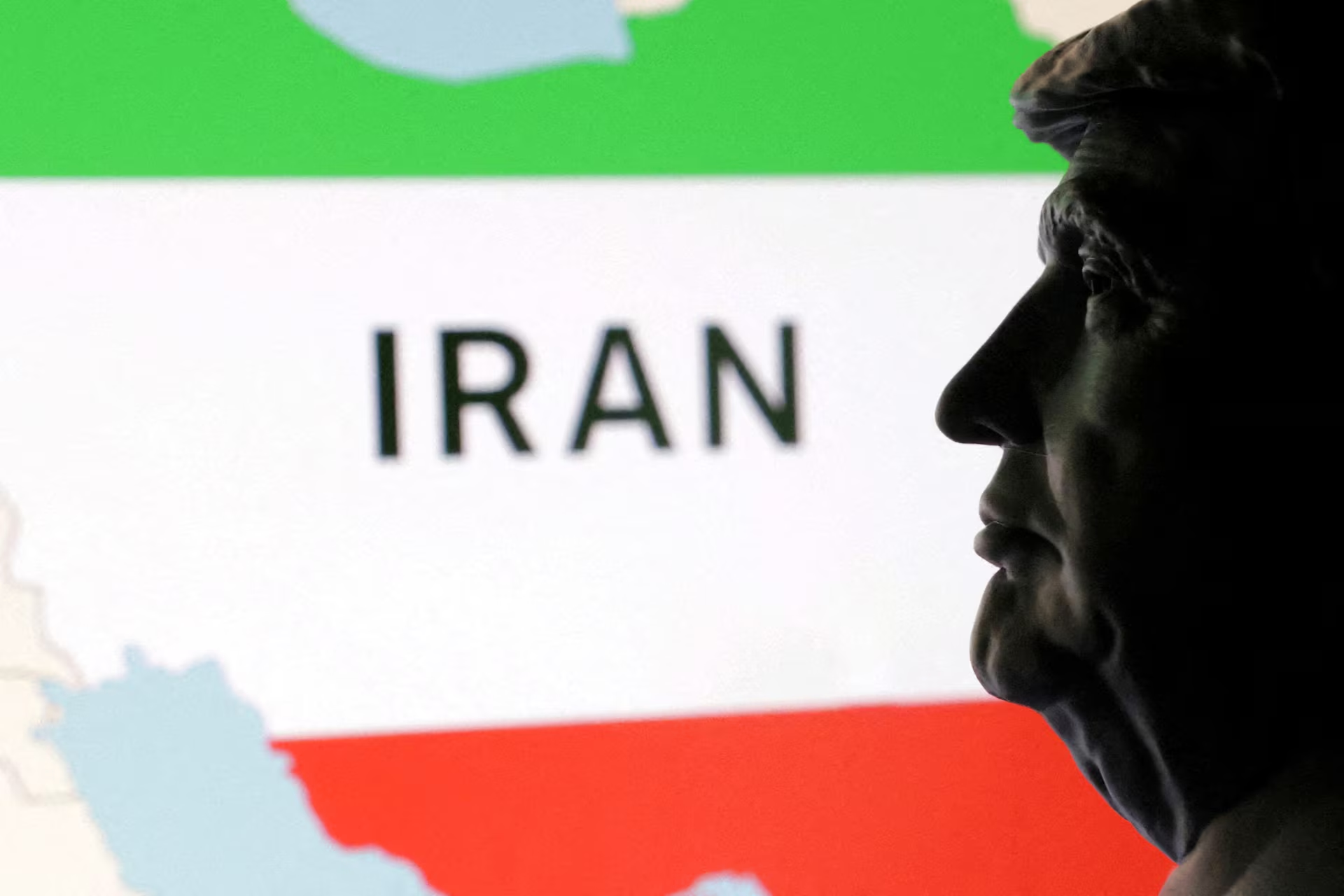
U.S. President Donald Trump has on Tuesday, June 24, 2025, announced that China can continue purchasing oil from Iran—despite ongoing American sanctions.
However, he urged Beijing to increase imports of U.S. crude instead.
Trump made the announcement in a Truth Social post just days after ordering airstrikes on three Iranian nuclear sites.
His comment came shortly after a ceasefire was declared between Israel and Iran, cooling regional tensions.
“China can now continue to purchase oil from Iran. Hopefully, they will be purchasing plenty from the U.S. also,” Trump posted.
The White House clarified that Trump’s comments do not reflect a shift in formal U.S. sanctions policy.
A senior administration official said the U.S. still encourages all nations to choose American energy over sanctioned Iranian crude.
Oil markets react to Trump’s comments
Oil prices dropped nearly 6% on Tuesday. Analysts said Trump’s statement signaled a potential easing in enforcement of Iran oil sanctions.
The message further pressured already volatile markets.
Under Trump’s earlier “maximum pressure” campaign, the U.S. targeted Chinese refineries and port operators involved in Iranian oil deals.
However, enforcement has remained inconsistent.
“Trump’s greenlight for China to buy Iranian oil reflects a return to lax enforcement,” said Scott Modell, CEO of Rapidan Energy and a former CIA analyst.
What this means for China’s oil import
Iranian crude makes up around 13.6% of China’s oil imports this year.
Discounted barrels have helped China’s independent “teapot” refineries cope with narrow profit margins.
By contrast, U.S. oil only accounts for about 2% of China’s crude imports.
China’s 10% tariff on American oil continues to discourage large-scale purchases.
Guo Jiakun, spokesperson for China’s foreign ministry, responded to Trump’s statement at a press briefing.
“China will make energy decisions based on its national interests,” he said, reiterating opposition to unilateral U.S. sanctions.
Saudi Arabia, a key U.S. ally and top oil exporter, may be concerned by increased Chinese imports of Iranian oil.
Trump’s comments could be seen as undermining shared goals on energy and regional containment of Iran.
Jeremy Paner, a partner at Hughes Hubbard & Reed law firm, said any suspension of sanctions would require inter-agency cooperation.
That includes Treasury licenses and State Department waivers, all needing congressional notification.
For now, the Trump administration has not issued any official changes to its sanctions enforcement policy.
State Department spokesperson Tammy Bruce told reporters the president had “signaled what he wanted” but declined to outline next steps.
“We are focused on ensuring the guiding hand of President Trump prevails,” she said.
As diplomatic efforts continue and oil markets remain unstable, analysts say China is unlikely to change its current strategy.
Trump’s statements, while bold, may have more symbolic impact than practical effect—at least in the short term.




