
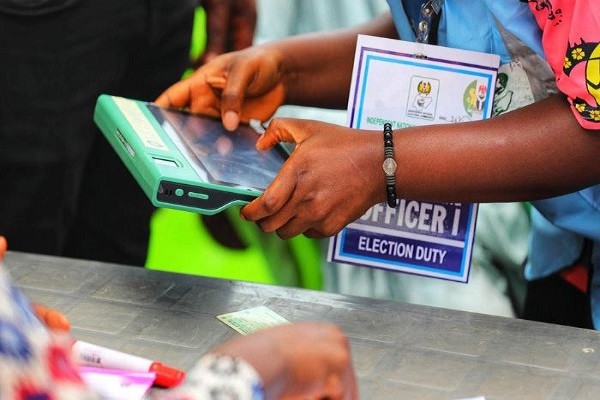
The ongoing debate over electronic transmission of election results has once again taken centre stage in Nigeria’s political space, following comments by Senate President Godswill Akpabio and a sharp response from prominent human rights lawyer, Inibehe Effiong. The exchange has reopened unresolved questions about the credibility of Nigeria’s electoral reforms and whether the country is genuinely committed to ending election manipulation.
The controversy was triggered after Senate President Akpabio stated publicly that the National Assembly did not reject electronic transmission of election results. According to him, the Senate merely allowed flexibility within the Electoral Act, leaving the implementation to the discretion of the Independent National Electoral Commission (INEC). His remarks were widely interpreted as an attempt to counter growing public criticism that lawmakers deliberately weakened the 2022 Electoral Act.
Reacting strongly, Inibehe Effiong took to social media platform X to challenge Akpabio’s position, describing it as misleading and intellectually dishonest. The lawyer argued that the real issue has never been whether electronic transmission exists in law, but whether it is compulsory and enforceable.
“Akpabio thinks he is talking to illiterates,” Effiong wrote. “The issue is making e-transmission compulsory. What is in the 2022 Act has been rendered useless by INEC, and the courts upheld INEC’s action. If e-transmission is not compulsory, we’re wasting our time.”
According to DDM NEWS, Effiong’s remarks have resonated widely among civil society groups, election observers, and pro-democracy advocates who believe that Nigeria’s electoral reforms have been deliberately diluted to preserve loopholes for manipulation.

The Core of the Dispute
At the heart of the debate is Section 60 and related provisions of the Electoral Act 2022, which introduced the use of technology in elections, including electronic transmission of results. While many Nigerians celebrated the law as a breakthrough, critics have long warned that its wording gives INEC excessive discretion.
Instead of mandating electronic transmission in all elections, the Act allows INEC to determine “the manner” of transmitting results. This discretion, according to Effiong and other critics, has effectively neutralised the reform.
During the 2023 general elections, INEC’s failure to consistently upload results in real time to its Result Viewing Portal (IReV) triggered nationwide outrage, legal battles, and allegations of large-scale electoral malpractice. Although courts acknowledged lapses in technology deployment, they ultimately ruled that electronic transmission was not mandatory under the law, thereby validating INEC’s position.
For Effiong, that judicial outcome confirmed that the reform was fundamentally flawed.
“The courts upheld INEC’s action because the law itself is weak,” he has argued in previous commentaries. “A reform that depends on the goodwill of an institution rather than a binding obligation is not reform at all.”
Akpabio’s Defence and Public Skepticism
Senate President Akpabio’s defence rests on the argument that lawmakers never opposed technology in elections, but simply avoided imposing rigid rules that might fail in areas with poor network coverage. However, critics say this explanation ignores Nigeria’s history of electoral manipulation.
DDM NEWS gathered that many election observers believe flexibility has consistently been exploited to justify manual collation, delayed uploads, and post-election alterations of results. For them, the refusal to make electronic transmission compulsory signals a lack of political will to reform the system.
Civil society organisations have also questioned why Nigeria continues to design electoral laws around potential failure rather than building infrastructure to ensure success.
“If banks can mandate electronic transfers nationwide, why can’t elections?” asked a governance advocate who spoke to DDM NEWS. “We are setting a lower standard for democracy than for commercial transactions.”
Why Compulsion Matters
Legal analysts explain that making electronic transmission compulsory would fundamentally alter Nigeria’s election architecture. It would drastically reduce human interference at collation centres, limit ballot box manipulation, and increase public confidence in the process.
Effiong argues that anything short of compulsion only creates the illusion of reform.
“If INEC can choose when to transmit electronically and when not to, then politicians will always find a way to influence those choices,” he said in an earlier interview. “That defeats the whole purpose.”
According to DDM NEWS, several election observer missions, including international partners, have consistently recommended mandatory electronic transmission as a safeguard against fraud.
A Pattern of Half-Measures
Critics say the controversy fits a broader pattern of Nigeria adopting reforms that appear progressive on paper but fail in implementation. From campaign finance regulations to asset declarations and procurement rules, enforcement gaps have repeatedly undermined public trust.
“The tragedy of Nigerian governance is not lack of laws, but lack of courage,” Effiong wrote in a follow-up post. “We keep pretending that optional compliance will fix systemic corruption.”
Political analysts warn that unless the National Assembly amends the Electoral Act to remove ambiguity, future elections will face the same credibility crisis.
What Lies Ahead
As discussions on electoral reform resume ahead of future polls, pressure is mounting on lawmakers to revisit the Act. Pro-democracy groups are calling for clear, non-negotiable provisions that compel real-time electronic transmission of results from polling units.
For many Nigerians, the stakes are existential.
“If e-transmission is not compulsory, then nothing has changed,” Effiong insists. “We are simply recycling the same problems under a new name.”
DDM NEWS observes that the debate is no longer about technology alone, but about trust, accountability, and whether Nigeria’s political elite is willing to surrender control over an electoral system that has long worked in its favour.
As the dust settles on Akpabio’s remarks and Effiong’s rebuttal, one thing is clear: without decisive legislative action, Nigeria risks repeating the same electoral controversies—election after election—while citizens grow increasingly disillusioned with democracy itself.