


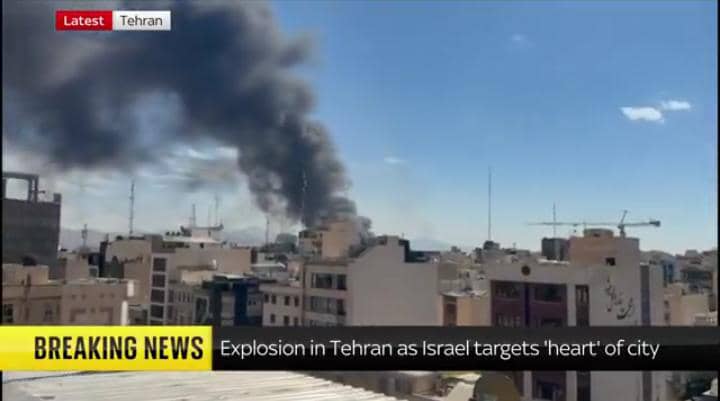
(DDM) – The escalating confrontation between the United States and Iran has entered its fourth day, with mounting casualties, expanding military operations and rising global anxiety over what may come next.
The crisis began after coordinated strikes by the United States and Israel targeted Iranian assets, triggering swift retaliation from Tehran and raising fears of a broader regional war.
By Monday, Iranian counterstrikes had hit multiple locations across the region, killing at least 20 people, including six American service members, according to officials cited in early briefings.
The attacks shattered a long-held sense of relative security in parts of the Persian Gulf, where US military installations and allied infrastructure have operated for decades under heavy protection.

The widening scope of the confrontation has drawn in neighboring states, with several countries reporting impacts from missile or drone activity, while airspace closures have disrupted regional travel.
Thousands of travelers are reportedly stranded as airlines suspend flights over key Middle Eastern corridors, reflecting the scale of uncertainty gripping the region.
Global markets are also reacting nervously, with oil prices fluctuating sharply amid fears that prolonged fighting could threaten energy supplies from one of the world’s most critical production hubs.
At the political level, US President Donald Trump has offered the clearest signal yet that Washington anticipates a sustained military campaign.
In a series of media interviews, including remarks to CNN, Trump suggested the conflict could last “four weeks,” indicating that the administration does not see the strikes as a short-term operation.
Speaking at the Pentagon, the chairman of the Joint Chiefs of Staff, Dan Caine, stressed that the unfolding campaign is not a “single, overnight operation.”
He warned that additional US casualties should be expected as operations continue.
Trump echoed that message in comments to CNN anchor Jake Tapper, stating that the “big wave hasn’t even happened” and that more significant developments could be imminent.
The president did not provide further operational details, but his remarks have fueled speculation that additional strikes or expanded military objectives may be under consideration.
Strategically, analysts say the confrontation risks drawing in non-state actors and allied militias aligned with Tehran, potentially widening the battlefield beyond direct state-to-state exchanges.
There is also concern that shipping lanes in the Strait of Hormuz could be affected, a move that would have immediate consequences for global oil markets and supply chains.
Diplomatic channels appear limited at this stage, with both sides signaling resolve rather than compromise.
The coming days are likely to determine whether the conflict stabilizes into a contained exchange or escalates into a broader regional war with far-reaching economic and security implications.




