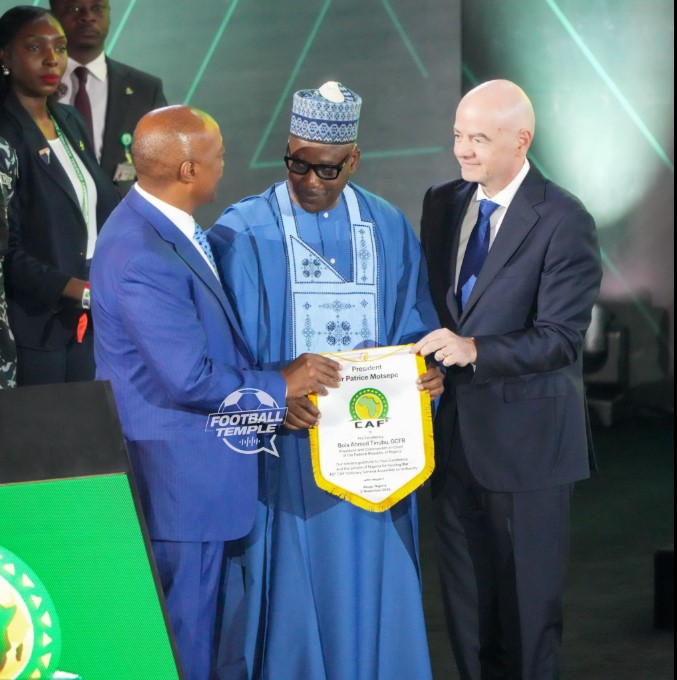
FIFA president Gianni Infantino appears to have strengthened his relationship with African football leaders following the Confederation of African Football (CAF) General Assembly in Abuja, Nigeria, with reports suggesting that the growing alliance could affect Europe’s calculations over the 2030 World Cup final.
The meeting, attended by representatives of all 54 CAF member associations, also brought together Infantino and Philippe Diallo, the French football official who is reportedly positioning himself as Europe’s candidate for the FIFA presidency.
According to Spanish newspaper AS, Infantino used the gathering to promise a significant increase in funding for African football associations. His announcement reportedly received strong applause from delegates, highlighting the level of support he enjoys across the continent.
The reaction was said to have surprised Diallo, who was also present at the congress. The development has drawn attention to Africa’s growing influence within FIFA and the importance of its voting power in decisions affecting world football.
CAF president Patrice Motsepe publicly confirmed the continent’s support for Infantino, making the organisation’s position clear during the gathering.
Several influential African football administrators, including Fouzi Lekjaa, Ahmed Yahya and Augustin Senghor, have also played important roles in the development and representation of African football at international level.
Africa’s influence is particularly significant under FIFA’s electoral system, where each member association has one vote, regardless of the size or strength of its national football team. This means that each of the continent’s 54 associations carries the same voting weight as an individual European association.
With the backing of African football leaders, Infantino has an important source of support within FIFA’s decision-making structure. The continent’s voting strength could therefore become a major factor in future leadership discussions.
The report also highlighted how African football has benefited from several major changes introduced under FIFA’s leadership. One of the continent’s long-standing demands was an expanded men’s World Cup, which would create more opportunities for African countries to qualify for the competition.
Africa also supported maintaining the Africa Cup of Nations on a two-year cycle, while the continent has gained further opportunities to host major international football events.
These developments have strengthened Africa’s position in global football discussions, with the continent increasingly seeking a greater role in decisions involving competitions, funding and the administration of the game.
The 2030 World Cup is another major issue attracting attention, particularly because of discussions surrounding the location of the tournament’s final. The growing relationship between Infantino and African football administrators could influence the wider negotiations and calculations surrounding the competition.
However, the reported support for Infantino does not automatically determine where the 2030 World Cup final will take place. The final venue remains a separate decision involving FIFA and the tournament’s organising arrangements.
The Abuja gathering nevertheless demonstrated the importance of African football associations in FIFA’s wider political and administrative structure. With 54 votes available, the continent represents a significant bloc that cannot easily be ignored by anyone seeking support within the organisation