


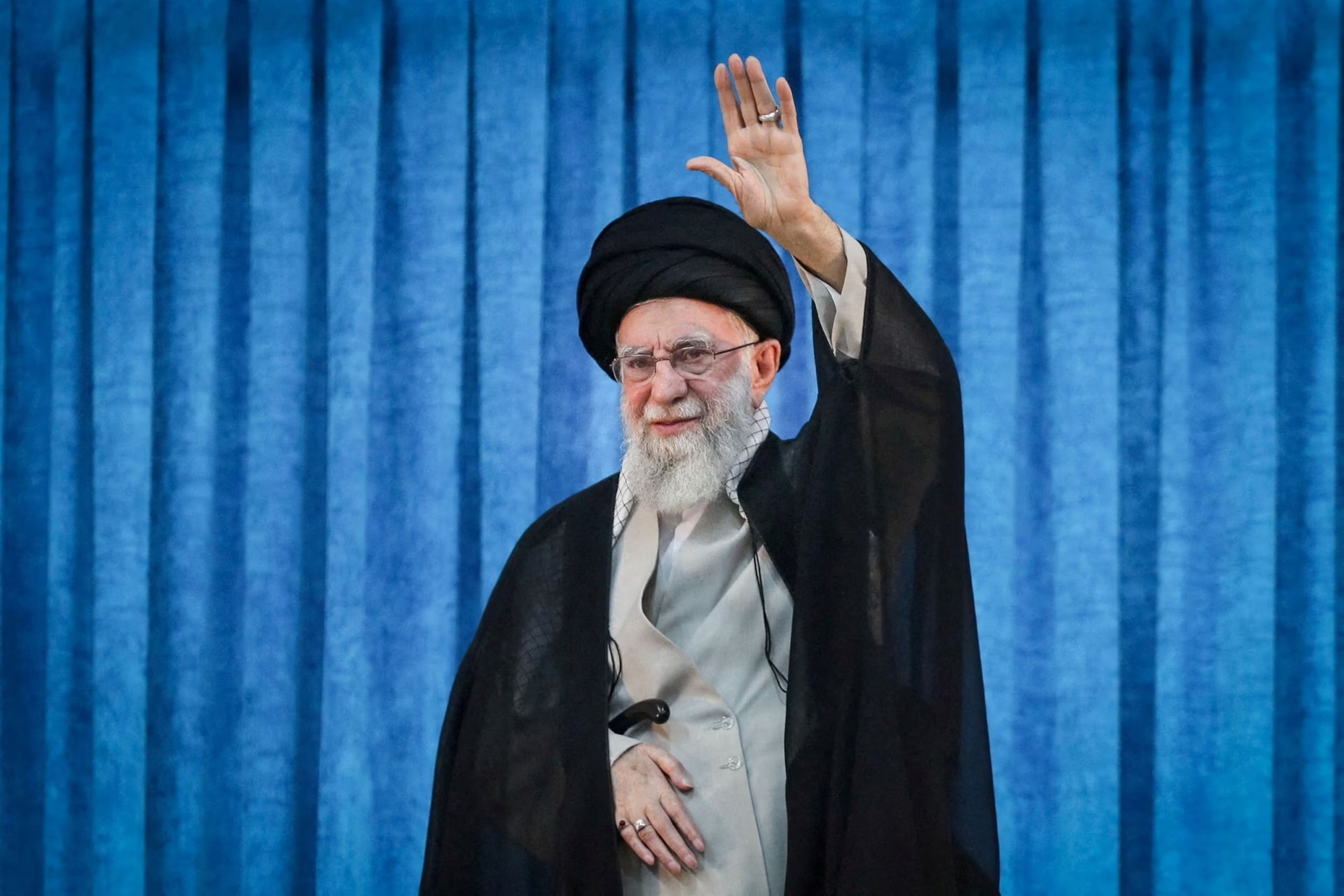
Iran is preparing for a week of nationwide mourning and elaborate funeral ceremonies for slain Supreme Leader Ayatollah Ali Khamenei, as the country’s leadership seeks to project unity and resilience following his death in U.S. and Israeli airstrikes.
The state-organised ceremonies, beginning this weekend, are expected to draw millions of mourners to Tehran, Qom, Mashhad and Iraq’s holy cities of Najaf and Karbala, in what officials describe as a powerful demonstration of support for the Islamic Republic.
Iranian authorities have portrayed the funeral as a defining moment in the country’s modern history, with senior clerics urging citizens to participate in large numbers.
“The large public turnout at the funeral procession of the martyred leader and the other martyrs will, in effect, be another referendum for the Islamic Republic,” Ayatollah Mohammad Saidi, Friday prayer leader in Qom, said in remarks carried by state media.

Authorities have mobilised extensive logistical support for the ceremonies, offering discounted hotel accommodation, expanding public transport services and preparing schools, mosques and sports halls to accommodate visitors expected from across the country.
The funeral comes after Khamenei was killed during the opening phase of the recent conflict between Iran, the United States and Israel, marking one of the most consequential events in the Islamic Republic’s 47-year history.
His son, Mojtaba Khamenei, who was seriously wounded in the same strike and later succeeded his father as Iran’s new supreme leader, has not appeared publicly since the conflict began.
Despite official calls for national unity, analysts say the leadership faces growing public discontent after years of economic hardship, international sanctions and political repression.
Many Iranians continue to struggle with soaring inflation and declining living standards, while previous anti-government demonstrations have exposed deep divisions within the country.
During protests late last year, demonstrators openly called for Khamenei’s removal before security forces suppressed the unrest.
Some residents also reported hearing celebrations in parts of Tehran immediately after news of Khamenei’s death emerged, underscoring the mixed public reaction.
Others, however, view his death as a profound national loss.
“These are the hardest days of my life,” said Mohsen, a 24-year-old member of the Basij volunteer militia in Tehran.
“My father told me the whole country mourned when Imam Khomeini died. Today people are mourning again because our leader was martyred.”
Funeral events begin on Friday with condolence ceremonies attended by senior Iranian officials and foreign delegations, including representatives from Russia and China.
On Saturday, Khamenei’s remains will be taken to a mosque in Tehran before a nationwide funeral procession.
The bodies of several family members killed in the same strike including his daughter, son-in-law, granddaughter and the wife of Supreme Leader Mojtaba Khamenei will be carried alongside his coffin.
Following a major procession through central Tehran on Monday, the funeral will continue in the holy city of Qom before moving to Iraq’s Shiite shrine cities of Najaf and Karbala, where members of Iran’s regional allies are expected to participate.
Khamenei will be laid to rest on Thursday in Mashhad, near the shrine of Imam Reza, one of Shiite Islam’s holiest sites.
Security has been significantly tightened ahead of the ceremonies, with temporary airspace restrictions imposed over Tehran and other major cities amid warnings from Iranian military leaders that any renewed attacks by the United States or Israel would trigger a forceful response.
“We are showing our power to America and others in our own way,” said Hossein Kheiri, a 63-year-old veteran of the Iran-Iraq war, standing beneath a portrait of Khamenei in Tehran.




