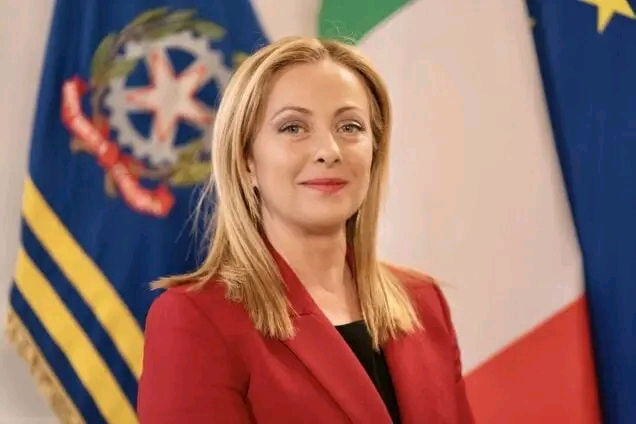
(DDM) – Italy’s Prime Minister, Giorgia Meloni, has strongly condemned a deadly missile strike on a girls’ school in southern Iran that killed dozens of children, calling the incident a “massacre” and urging that those responsible be held accountable.
Speaking to lawmakers in Rome on Wednesday, Meloni described the attack on the school in the port city of Minab as a horrific tragedy and expressed her condolences to the families of the very young victims. She emphasized that civilian and children’s safety must be protected and insisted on a swift investigation to identify those behind the strike.
The missile strike occurred on February 28, during the early phase of the ongoing Middle East conflict, and Iranian media reported that at least 165 people were killed — most of them schoolgirls. Iran has accused the United States and Israel of carrying out the strike, a claim that has fueled international debate. The U.S. government said it is investigating, while Israeli officials have denied involvement.
Meloni’s comments came during a parliamentary session in which she also addressed the broader conflict, which has escalated into one of the most serious geopolitical crises in recent years. While Italy has maintained diplomatic ties with both the United States and its NATO partners, Meloni stressed that responsibility for the school attack must be determined and that international norms protecting civilians should be upheld.
Her condemnation represented one of the clearest and most forceful expressions of concern by a Western leader regarding the strike on children, a subject that has drawn global outrage. Lawmakers from both the ruling coalition and opposition benches reportedly applauded her call for accountability and civilian protection.

The attack on the school has intensified global scrutiny of the conflict’s humanitarian toll, especially on vulnerable populations. International human rights groups have condemned the loss of innocent lives and called for stronger measures to protect civilians amid expanding hostilities. Independent verification of the situation remains difficult due to restricted access to the affected area.
Meloni’s remarks come at a time when the broader conflict is reshaping diplomatic alignments and prompting debates within European capitals about security, humanitarian law, and the role of international institutions in preventing civilian harm. Her comments underscore mounting pressure on world leaders to respond to crises that increasingly blur the lines between political strategy and humanitarian obligation.
As investigations continue and global diplomatic reactions unfold, the incident remains a stark reminder of the human cost of the Middle East conflict and the urgent need for mechanisms that prevent such tragedies.