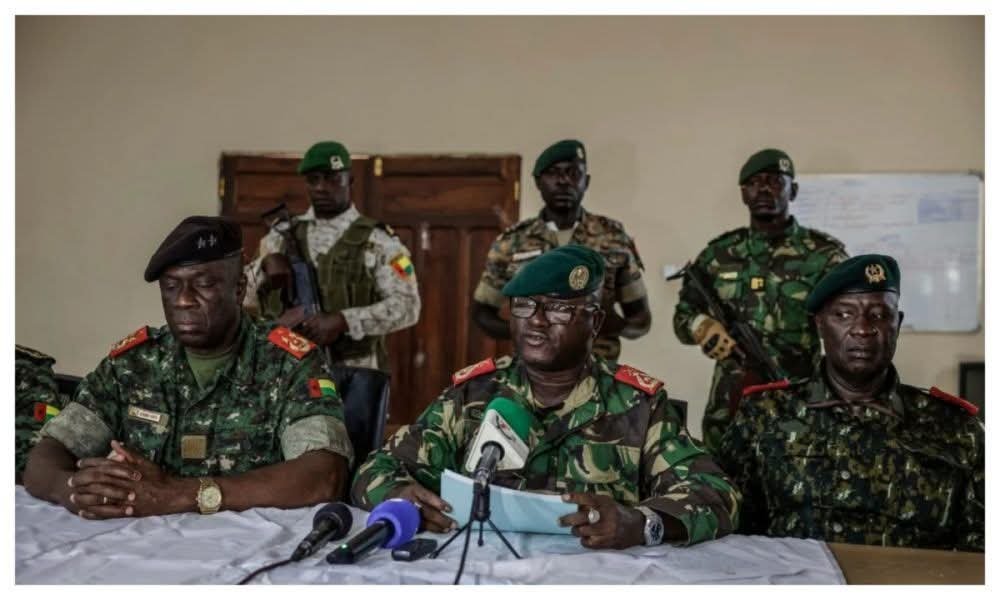
(DDM) – Guinea-Bissau’s ruling junta has released six opposition members who had been detained following last month’s military coup.
The release occurred on Tuesday, December 23, 2025, according to local sources, and marks a significant development in the country’s tense political landscape.
The freed individuals are close associates of Domingos Simoes Pereira, leader of the African Party for the Independence of Guinea and Cape Verde (PAIGC), the party that led Guinea-Bissau to independence in 1974.
Officials indicated that the move could be a gesture towards easing political tensions, though the junta continues to maintain control over the government.
Observers noted that the release may be aimed at fostering dialogue between the junta and opposition forces to stabilise the nation.

Analysts said the decision comes amid growing international pressure for a return to democratic governance and respect for human rights in Guinea-Bissau.
The coup, which occurred last month, resulted in widespread arrests and political uncertainty, drawing concern from regional and global actors.
The six released members had been prominent figures in the opposition, actively advocating for political reforms and challenging the junta’s authority.
Their detention had previously drawn condemnation from civil society groups, regional organisations, and diplomatic missions, highlighting fears of a prolonged political crisis.
Observers are closely watching the developments, considering the potential implications for national stability and the future of governance in Guinea-Bissau.
The junta has maintained that it retains full control over the state apparatus and has emphasized the need for security and order during the transitional period.
Political analysts suggest that releasing opposition figures could be a tactical move to gain legitimacy both domestically and internationally.
Regional bodies, including the Economic Community of West African States (ECOWAS), have called for inclusive dialogue to restore constitutional order.
Local residents have expressed cautious optimism, hoping the release could signal a reduction in political tension and an opportunity for peaceful negotiations.
Observers noted that Guinea-Bissau has a history of political instability, with coups and power struggles recurring since independence.
The move has been welcomed as a potential first step toward reconciliation between the ruling junta and opposition groups.
Experts warned, however, that meaningful dialogue and reforms would be required to ensure long-term stability and prevent further unrest.
The junta has not indicated any immediate plans to reinstate the previous government or allow a swift return to civilian rule.
Analysts believe the situation remains fragile, and any misstep could reignite political tensions in the country.
International stakeholders have called for continued monitoring and support to facilitate a peaceful transition and respect for human rights.
The release of the six opposition members may serve as a litmus test for the junta’s willingness to engage with political opponents.
Observers emphasize the importance of dialogue and compromise to avoid further escalation and to restore confidence in Guinea-Bissau’s political system.
The coming weeks are expected to be critical in shaping the country’s political trajectory and prospects for stability.
The situation remains fluid, with the international community urging all parties to exercise restraint and pursue peaceful resolution through constructive engagement.