


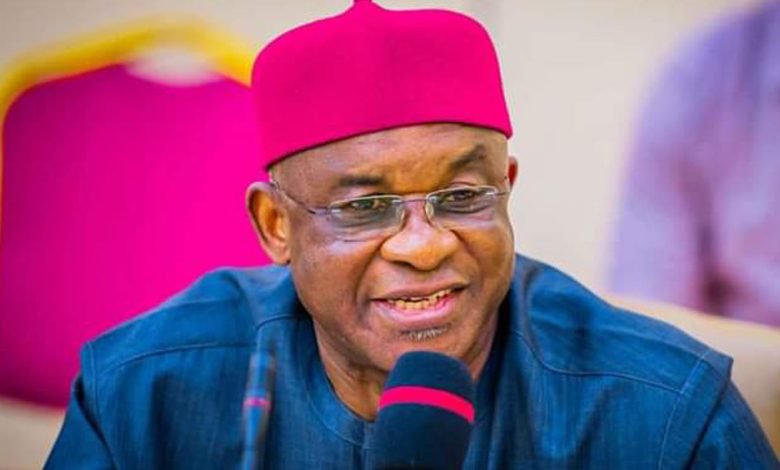
(DDM) – Former Senate President David Mark has publicly urged the Nigerian Senate to allow the Independent National Electoral Commission (INEC) to determine whether it can electronically transmit election results, rather than lawmakers speaking on the commission’s behalf.
Mark made the remarks in Abuja during the launch of The Burdens of Legislators in Nigeria, a book written by former Senator Effiong Bob, where political leaders and stakeholders gathered to reflect on governance and lawmaking.
He directed his comments at Senate President Godswill Akpabio amid ongoing debates over proposed amendments to Nigeria’s Electoral Act, especially the controversial issue of electronic transmission of results.
Mark argued that the electoral body should have the space to test and demonstrate its own capabilities.
He said the National Assembly should focus on creating the legal framework that permits electronic transmission instead of pre-judging INEC’s readiness.

According to him, public demand clearly favors real-time electronic transmission from polling units.
He stressed that the debate over INEC’s technical capacity should not overshadow the broader democratic goal of transparency.
Mark maintained that once the law allows electronic transmission, responsibility for execution should rest with INEC.
He cautioned lawmakers against appearing to limit reforms that many Nigerians see as critical to credible elections.
Addressing Akpabio as a friend, Mark noted that the Senate President carries the duty of representing the legislature’s collective voice.
However, he emphasized that speaking for INEC could blur institutional boundaries.
He stated that if INEC fails after being given the legal backing, accountability should fall on the commission, not the lawmakers.
Nigeria has debated electronic transmission for several election cycles.
Supporters argue that digital transmission reduces manipulation, delays, and disputes that often follow manual collation.
Critics, however, frequently raise concerns about infrastructure, network coverage, and cybersecurity risks.
The controversy intensified after past elections where result collation delays fueled allegations and court cases.
Electoral credibility remains a sensitive topic in Nigeria because disputed outcomes have historically triggered political tension and litigation.
Reforms to the Electoral Act in recent years have aimed to strengthen INEC’s independence and improve transparency.
Civil society groups and election observers often push for technology-driven solutions to build public trust.
Mark’s intervention adds the voice of a seasoned lawmaker who once presided over the Senate during key democratic periods.
Analysts say his comments reflect a wider concern among reform advocates that political caution may slow innovation.
Some lawmakers prefer gradual reforms, arguing that failed technology could damage confidence.
Others believe Nigeria must modernize its election process in line with global trends.
Countries across Africa and beyond increasingly test electronic systems to improve speed and accuracy.
Still, experts warn that technology alone cannot fix political interference or weak institutions.
They argue that legal clarity, funding, and training matter just as much.
As the National Assembly continues deliberations, Nigerians watch closely because electoral rules shape future contests.
Many citizens view transparent elections as essential to stability and development.
Mark’s message ultimately centers on letting institutions perform their assigned roles.
Whether lawmakers adopt that approach may influence the direction of Nigeria’s next electoral reforms.



 and then