


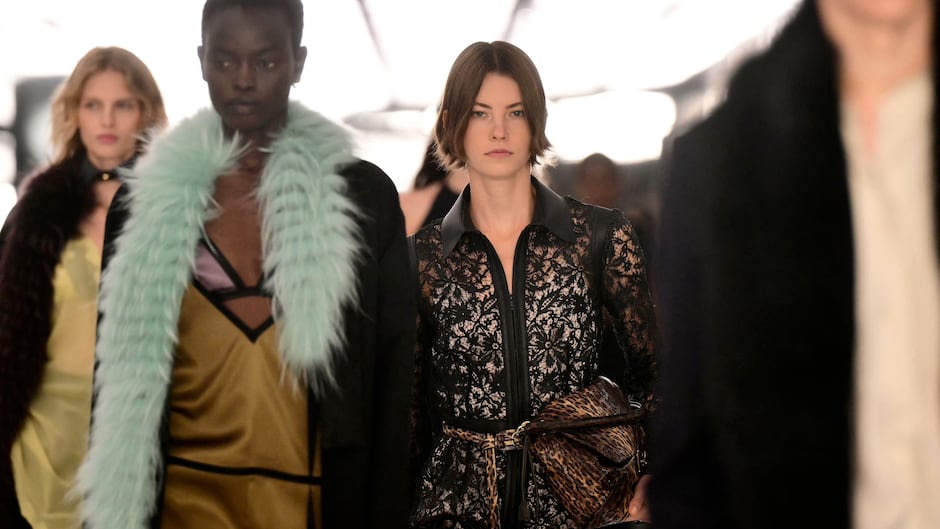
Milan Fashion Week’s second day highlighted a growing tension in luxury fashion: how much of a designer’s personal identity should remain visible when working for an established fashion house?
At Jil Sander, Simone Bellotti brought a subtle sense of rebellion to the brand, introducing a more provocative edge while maintaining the house’s recognisable minimalist language.
His approach suggested that modern luxury does not necessarily require dramatic changes.
Sometimes, small shifts in silhouette, proportion and styling can be enough to challenge expectations.

At Fendi, Maria Grazia Chiuri faced a different creative conversation.
Her work involved balancing Fendi’s established design vocabulary with her own perspective, creating a collection that acknowledged the identity of the Italian fashion house while allowing her creative voice to emerge.
This designer-brand relationship has become increasingly important across the luxury industry.
Fashion houses are built around recognisable identities, but designers are also expected to bring fresh ideas that keep those identities relevant.
For Nigerian designers and tailors, the lesson is equally relevant.
A strong fashion brand should have a clear identity, but that identity should not prevent creativity.
A designer can experiment with new fabrics, silhouettes, colours and finishing techniques while still maintaining the elements that make customers recognise the brand.
Milan’s second day therefore offered more than individual collections.
It showed how fashion can evolve through a conversation between an established brand and the creative personality responsible for shaping its next chapter.




