
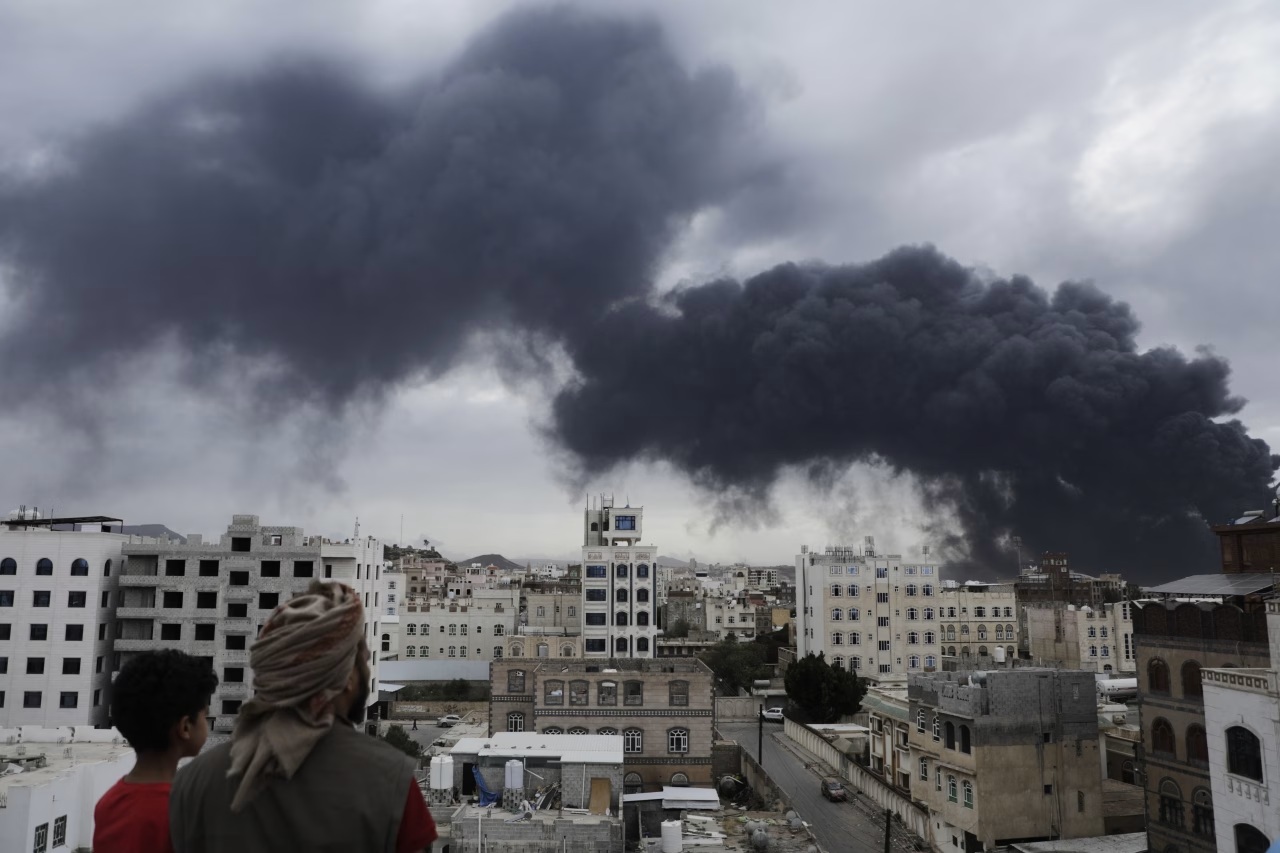
Iran has launched multiple waves of missiles into Israel on Tuesday, intensifying hostilities despite a last-minute decision by Donald Trump to delay planned U.S. strikes on Iranian energy infrastructure.
Air raid sirens sounded across Israel, including in Tel Aviv, where a multi-storey residential building was badly damaged.
Emergency responders said they were searching for civilians feared trapped in the debris, while others were found sheltering in nearby structures.
It was not immediately clear whether the destruction was caused by a direct missile hit or falling debris from intercepted projectiles.

The latest attacks came hours after Trump announced a five-day postponement of threatened attacks on Iran’s power plants, citing what he described as “very good and productive” discussions aimed at ending the conflict.
Even as diplomatic signals emerged from US, the fighting on the ground continued unabated.
Israel’s military said its fighter jets carried out a large wave of strikes in central Tehran overnight, targeting key command centres linked to Iran’s security apparatus, including facilities associated with the Islamic Revolutionary Guard Corps and the intelligence ministry.
According to the military, more than 50 additional targets were hit, including ballistic missile storage sites and launch positions.
The conflict remains closely tied to tensions around the Strait of Hormuz, a critical global energy corridor through which about a fifth of the world’s oil passes.
Iran has effectively disrupted traffic through the strait since the war began on February 28, prompting U.S. threats to target its energy infrastructure if shipping was not fully restored.
While Trump has now delayed those strikes, U.S. military operations elsewhere in Iran are reportedly continuing.
Tehran has warned it would retaliate by targeting infrastructure linked to U.S. allies in the region, raising fears of wider disruption to global energy supplies.
Despite Trump’s claims of progress, Iranian officials have flatly denied that any negotiations are taking place.
Mohammad Baqer Qalibaf said no talks had been held with the United States, accusing Washington of spreading “fake news” to influence financial and oil markets.
Iran’s Revolutionary Guards echoed that stance, describing Trump’s remarks as “psychological operations” with no bearing on Tehran’s military posture.
Financial markets reacted sharply to the conflicting developments.
Oil prices, which had dropped below $100 per barrel following news of the U.S. pause, rebounded on Tuesday as renewed missile attacks and diplomatic uncertainty rattled investor confidence. Brent crude climbed back above $104, reversing part of the previous day’s losses.
Analysts warned that the situation remains highly unstable, with one market observer describing it as “incredibly fragile.”
Trump said his envoy Steve Witkoff and adviser Jared Kushner had held discussions with Iranian counterparts and suggested a deal could be within reach, citing “major points of agreement.”
However, officials familiar with the situation indicated that any contacts may have been indirect, with countries such as Egypt, Pakistan and Gulf states acting as intermediaries.
There are also indications that potential talks could take place in Islamabad in the coming days, although no formal meeting has been confirmed.
For now, with missiles still being fired and both sides offering conflicting accounts of diplomacy, the prospect of a breakthrough remains uncertain as the conflict continues to escalate.