


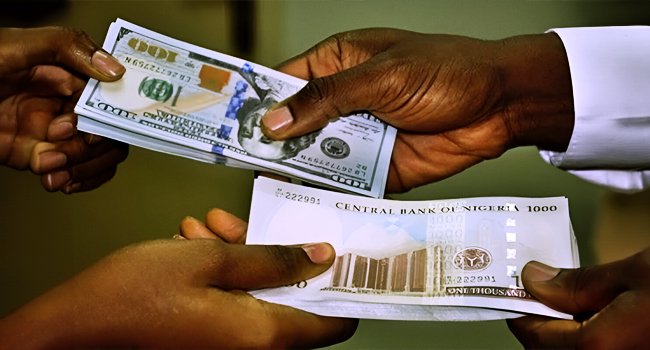
(DDM) – Nigeria’s currency is hovering near the N1,400 to the dollar mark as global geopolitical tensions intensify, even as authorities insist a new phase of relative stability has emerged in the foreign exchange market.
Diaspora Digital Media (DDM) gathered that the naira recently weakened to about N1,353.5 to the dollar ahead of the 304th Monetary Policy Committee meeting of the Central Bank of Nigeria, reflecting lingering market caution.
Market analysts say the currency is no longer experiencing the wild swings seen in previous years, but remains vulnerable to external shocks, particularly from the Middle East.
They describe the current exchange rate band of N1,350 to N1,400 per dollar as a “new normal,” shaped largely by the CBN’s active management of liquidity and its historically strong foreign reserves position.
Nigeria’s external reserves reportedly climbed to about $50.45 billion in February 2026, marking a 13-year high and providing the apex bank with significant room to defend the naira.

With reserves now estimated to cover roughly 10 months of imports, the CBN is seen as having enough “firepower” to intervene in the market and meet dollar demand when pressure mounts.
Year-to-date, the naira has recorded modest gains of between 7 and 9 percent, signaling partial recovery from the severe depreciation witnessed during earlier reform cycles.
In a notable policy shift, the CBN recently reduced the Monetary Policy Rate to 26.5 percent from 27 percent, a move interpreted as a signal of growing confidence in macroeconomic stability.
Economists say such a pivot typically indicates that policymakers believe the currency’s decline has slowed sufficiently to support growth-focused measures.
Nigeria’s economy is projected to expand between 4.3 and 4.7 percent by 2026 if current fiscal and monetary adjustments hold.
A key structural factor expected to ease dollar demand is the ramp-up of operations at the Dangote Refinery, which could significantly cut Nigeria’s reliance on imported petrol.
By refining more crude locally, the refinery may reduce the billions of dollars previously spent monthly on fuel imports, thereby easing pressure on foreign reserves.
Oil production trends also remain central to the naira’s outlook, with Nigeria working toward meeting its OPEC quota of 1.84 million barrels per day.
However, persistent oil theft and aging infrastructure continue to limit output, constraining the inflow of foreign currency earnings.
Geopolitical developments in the Middle East present a complex mix of risks and opportunities for Nigeria.
On one hand, rising crude prices triggered by tensions between Israel and Iran have lifted Brent crude to around $75 per barrel, roughly 10 percent higher in recent sessions.
Since Nigeria’s 2026 federal budget is benchmarked at $64.85 per barrel, sustained higher prices could strengthen reserves and provide fiscal relief.
On the other hand, global uncertainty often drives investors toward safe-haven assets such as the US dollar, Treasury bonds, and gold, prompting capital outflows from frontier markets like Nigeria.
Any escalation in hostilities could push the parallel market rate toward N1,450 per dollar as investors seek safety.
The US Dollar Index, which measures the greenback against six major currencies, recently hovered near five-week highs before easing slightly during Asian trading hours.
Analysts warn that continued conflict in the region could limit any dollar pullback, sustaining pressure on emerging market currencies.
For Nigeria, the immediate challenge lies in balancing the windfall from higher oil prices against the broader financial market volatility triggered by geopolitical risk.
If oil output improves and reserves remain strong, some analysts believe the naira could test N1,300 per dollar in the medium term.
But sustained stability will depend not only on external conditions, but also on domestic reforms, production capacity, and investor confidence in policy consistency.



 and then