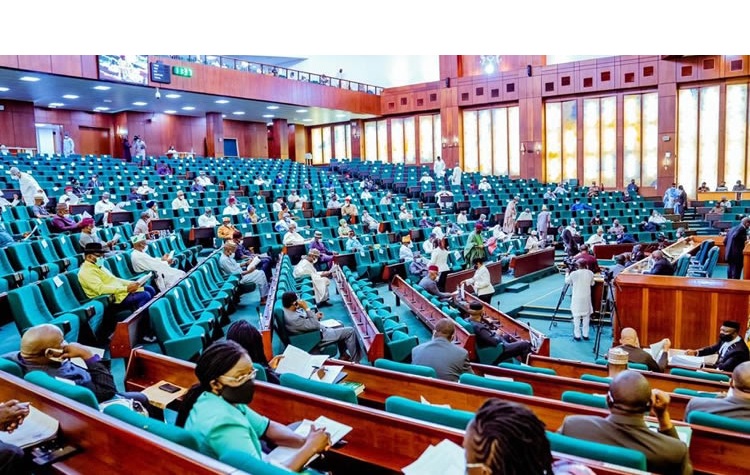
The National Assembly has moved to address growing public concerns over Nigeria’s new tax laws, announcing plans to release certified copies of the bills signed into law by President Bola Tinubu amid claims of discrepancies in the versions gazetted.
In a statement issued on Thursday, the Director of Information of the National Assembly, Bullah Bi-Allah, said the legislature had directed the Clerk to release the transmitted tax bills, including their certificate pages, to enable Nigerians verify their authenticity.
According to Bi-Allah, the decision followed allegations that the versions of the tax laws gazetted after presidential assent differed from what was passed by the legislature, as reflected in the votes and proceedings of the National Assembly.
He said while public interest in the matter had intensified, only a limited number of formal requests had been made for Certified True Copies (CTCs) of the harmonised bills, adding that all such requests had been duly processed.

Bi-Allah also disclosed that the Clerk of the National Assembly was working with the Federal Government Printing Press to ensure the publication of duly certified and assented Acts in line with statutory requirements, noting that the official gazettes were expected to be ready shortly.
While clarifying that the Clerk initiates the gazetting process, he stressed that the responsibility for printing and publication rests with the Federal Government Printing Press.
To prevent a recurrence, he said the National Assembly would review its internal procedures for the transmission and gazetting of bills.
“Henceforth, all bills for presidential assent will be routed through presidential liaison officers,” Bi-Allah said. “No request for gazetting an Act of the National Assembly will be entertained by the printing press unless initiated by the Clerk to the National Assembly or an authorised representative.”
He added that the legislature welcomed public scrutiny, describing citizens’ engagement as vital to transparency, accountability and professionalism in the lawmaking process.
President Tinubu signed four tax-related laws on June 26, 2025: the Nigeria Tax Act, the Nigerian Tax Administration Act, the National Revenue Service (Establishment) Act, and the Joint Revenue Board (Establishment) Act.
The controversy was triggered by a motion raised in the House of Representatives by Abdulsamad Dasuki (PDP, Sokoto), who alleged that the gazetted versions of the tax laws differed from those approved by lawmakers. Dasuki said a comparison of the passed bills and the published versions revealed discrepancies.
In response, the House constituted a seven-member committee to investigate the claims and subsequently ordered the re-gazetting of the laws, pending the committee’s report.
Ezekwesili Raises Constitutional Concerns
Meanwhile, former World Bank Vice President, Obiageli Ezekwesili, has faulted the alleged gazetting of what she described as an incorrect version of the Tax Reform Act, warning that it poses a serious threat to constitutional governance.
In a public statement posted on her X handle and addressed to the Presidency and the National Assembly, Ezekwesili said the controversy had undermined both the credibility of the policy and the integrity of the legislative process.
She said while she supports tax reforms that promote growth, equity and fiscal sustainability, such reforms must not violate constitutional principles or due process.
“All actions so far taken by the executive and legislative branches regarding the gazetting of a wrong version of the recently passed and assented Tax Reform Act constitute a grave threat to constitutional governance and must be halted,” she said.
Ezekwesili alleged that the gazetted version reportedly contains provisions with no clear legislative origin, expanded administrative discretion that weakens taxpayer protections, and clauses that raise federalism and legality concerns.
She called on the Federal Government to suspend implementation of the tax laws, rescind the gazetted version and restart the process transparently, beginning from the public hearing stage.
The former minister also urged President Tinubu to announce an immediate postponement of implementation until the integrity of the legislative text is resolved.
“Gazetting a wrong bill as an Act is prima facie unlawful and potentially unconstitutional,” she said, warning that deliberate alteration or substitution could attract criminal liability.
Ezekwesili further criticised the National Assembly’s move to simply re-gazette the laws without a transparent and independent inquiry into how the alleged error occurred, saying such an approach falls short of democratic standards.
“A functioning democracy requires that when something this significant goes wrong, the government conducts a full review, investigation and disclosure,” she said.
The tax reforms have continued to generate mixed reactions nationwide, with religious bodies, economic experts and former public officials urging caution, transparency and compassion in their implementation amid prevailing economic hardship