
Connect with us

Analysis

Nigeria and Senior Advocates of No-Consequence (SANs)

By Chidi Anselm Odinkalu

Published

on

Share this:

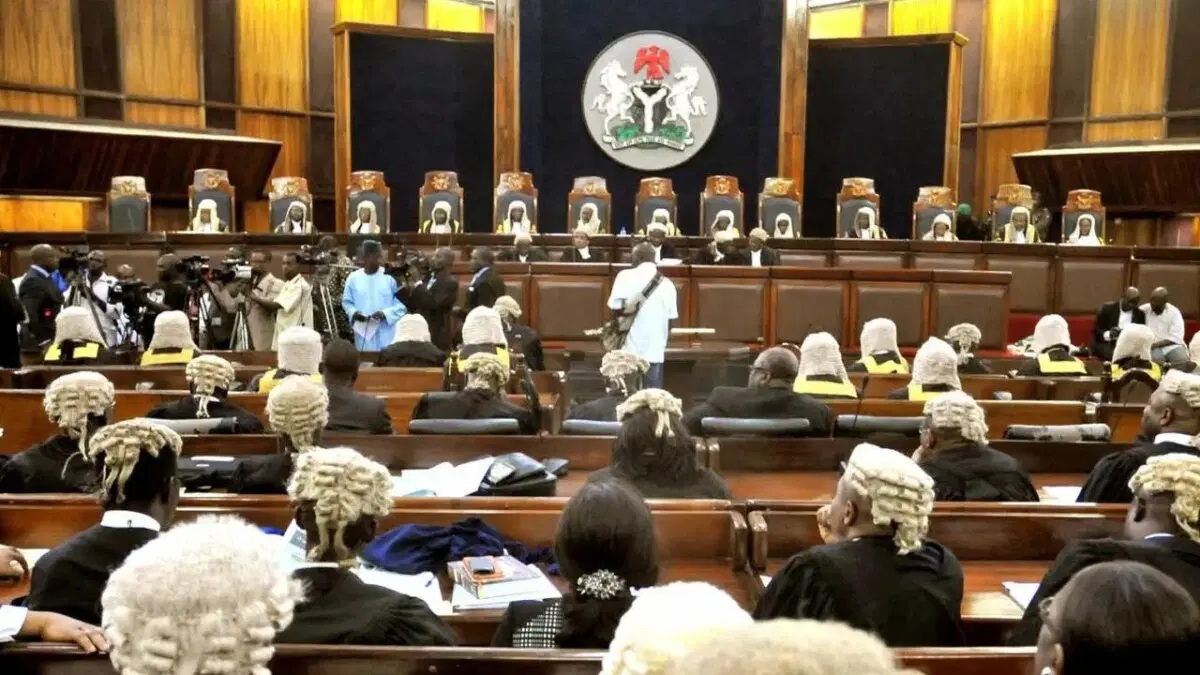
The ritual of the “Call to Bar” is the formal ceremony for the admission of new entrants into Nigeria’s legal profession. The responsibility for administering it resides in the Body of Benchers (BoB), a statutory entity described by law as “a body of legal practitioners of the highest distinction in the legal profession in Nigeria.”

The solemnity of the Call to Bar is guaranteed by the presence of members of the BoB who administer the ceremony resplendent in ceremonial gowns supposed to testify to their high distinction in matters legal. The criteria for the determination of this threshold requirement of “highest distinction” antecedent to membership of the BoB are, however, opaque.

The ceremony itself is usually an occasion for members of the Body of Benchers to remind the new entrants of the obligations that come with their new status. It should go without saying that members of the BoB should themselves embody those values through their own records and examples. It should be no surprise that, in Nigeria, this is not usually the case.

There are three categories of membership of the BoB. Membership can exceptionally be honourific, mostly vacuous conferment reserved for political or diplomatic occasions. Separately, there is ordinary membership attained through high office in public service as judges or Attorneys-General or as leaders or nominees of the Nigerian Bar Association (NBA). Such membership these days also extends to the chairpersons of the judiciary committees of the two chambers of the National Assembly as well as to principal officers of the National Assembly who are lawyers. Members who are conscientious in attending meetings and official dinners of the BoB over a period of four years may be conferred with the status of Life Benchers. That is the stuff of high distinction.

The most recent Call to Bar ceremony occurred in Abuja, the Federal Capital Territory, over three days from 23 to 25 September 2025. Away from the cameras, on 24 September, something happened which speaks to the existential – even terminal – crisis of values, leadership and responsibility that currently afflicts the governance of Nigeria’s legal profession. At the insistence of certain members of the BoB, Chief Mike Ozekhome, one of the members elevated to the status of Life Bencher only in January 2025, was prevailed upon to quietly withdraw from participating in the process of admitting the new entrants into the legal profession.

READ ALSO:  Is Nnamdi Kanu being prosecuted because he is Igbo?

The reason given by the objecting members of the BoB was a judgment delivered a mere six weeks earlier on 11 September 2025 in his ultimately unsuccessful application for registration of title in real estate before a property registration tribunal in England, in which the presiding judge shredded Ozekhome’s testimony as “an invention and contrivance.” According to Gideon Christian, a law professor at the University of Calgary in Alberta, Canada, “this case illustrates how corruption operates (in Nigeria): politicians hide wealth abroad under false identities, while lawyers – sworn to uphold the law – serve as enablers of fraud.”

The most significant aspect of the enforced withdrawal of Chief Ozekhome from the Call to Bar ceremonies last month is not that it occurred. It is that the BoB went out of its way to ensure that it was a well-guarded secret. It is relevant here that in addition to its role in admitting new entrants into the vocation of the law in Nigeria, the BoB also hosts the Legal Practitioners Disciplinary Committee (LPDC), the statutory body charged with enforcing consequences for ethical lapses in Nigeria’s legal profession. When it comes to cases affecting senior lawyers, however, the BoB seems to lapse into a habit of no consequence.

On 10th December 2021, the Supreme Court of Nigeria determined that Michael Aondoakaa, a Senior Advocate of Nigeria, (SAN), and former Attorney-General of the Federation, HAGF “had, by his conduct, undermined and subverted the administration of justice and the independence, authority and integrity of the judiciary” and “ought not to be entrusted with any other public office at all.” In effect, the Supreme Court barred Mr. Aondoakaa from public office again in Nigeria. The antecedents of this decision were staggering.

Ahead of Nigeria’s 2007 general elections, political parties had organized processes in 2006 to select their candidates for various offices to be contested across the country. In Uyo Federal Constituency of Akwa Ibom State, the then ruling party, the Peoples’ Democratic Party (PDP), in primaries conducted in December 2006, selected Bassey Obot as candidate to fly their flag in the contest for a seat in the House of Representatives. In a country where the most consequential things are accomplished by the unknown, some unknown persons contrived to remove Mr. Obot’s name from the records of the Independent National Electoral Commission, INEC, substituting him with one Mr. Bassey Etim as the PDP candidate.

READ ALSO:  The child asked, “Was dad a virgin when he married you?”

In December 2007, the Court of Appeal ordered the President of the Court of Appeal to constitute a new tribunal in Uyo to hear Mr. Obot’s case. Mr. Aondoakaa, then newly installed as the HAGF, wrote to the President of the Court of Appeal (PCA) claiming powers to instruct him not to comply with the order of the Court of Appeal. He cited as his reason the fact that he was considering a petition from Mr Etim. Unable to contrive a sensible reason to disobey the order of a court over which he presided, however, the PCA disregarded Mr Aondoakaa’s importuning and obeyed the Court of Appeal.

In April 2008, the Tribunal decided in favour of Mr Obot, ordering INEC to certify him as the winner, so he could be sworn in as such. The Court of Appeal, the final arbiter then in disputes over elections to Parliament, affirmed the judgment of the tribunal. In separate letters thereafter to the INEC Chairman and to the Speaker of the House of Representatives, Mr Aondoakaa again required them to disobey and disregard the final orders of the Court of Appeal. They complied. Allegations that Mr Aondoakaa issued those letters in exchange for value were unverified but not implausible.

On 15th May 2009, Mr Obot, whose judicial victory had been frustrated by the HAGF, returned to the Federal High Court, asking it to declare that Mr Aondoakaa had abused his office and desecrated the independence and authority of the judiciary. On 1st June 2010, the Federal High Court obliged him, lamenting that “the hallowed office of the HAGF has been desecrated and put into disrepute with the likes of (Mr Aondoakaa) being appointed and occupying it. It is meant for learned eminent members of the Bar and not for political charlatans, jobbers or latter-day praise singers/converts….”

READ ALSO:  ECOWAS and the Fear of Regional Disintegration, By Paul Ejime

On 3rd September 2015, the Court of Appeal affirmed that judgment of the High Court with the hope that “that office (of HAGF) should never again be occupied by individuals of such poor quality as (Mr Aondoakaa).” The Court of Appeal went further and invited the Nigerian Bar Association, NBA, “to subject (Mr Aondoakaa) to its appropriate disciplinary processes.”

In his appeal to the Supreme Court, Mr Aondoakaa did not deny what he did but claimed that he only acted as an adviser in the letters he wrote and that the recipients were at liberty to disregard his opinion. The Supreme Court made short shrift of Aondoakaa’s chicanery. Describing his conduct as “reprehensible,” “reckless” and “unbecoming of the occupant of such an exalted office,” the Court accused him of violating Rule 30 of the Rules of Professional Conduct (RPC) in the Legal Profession which require every lawyer to refrain from doing “any act or conduct….in any manner that may obstruct, delay or adversely affect the administration of justice.”

Before Mr Aondoakaa, there was the case of Kunle Kalejaiye, SAN, involved in corrupting a judge, Thomas Naron, in an election petition. In 2013, Thomas Naron lost his job but the Supreme Court decided in 2019 on a disreputable technicality that Mr. Kalejaiye could keep his. Two years later, the same court similarly decided that there should be no consequences in the case of Dr. Joseph Nwobike, another SAN whose specialty was “inducing court registrars to ensure that his cases were assigned to his preferred judges so he could obtain favourable judgments.”

Chief Mike Ozekhome is rightly described as “one of Nigeria’s most high-profile lawyers.” Few will quibble with his claim to be serenaded in those terms. In addition to being a Life Bencher, Chief Ozekhome is also a SAN. The combination of these two attainments makes him one of the most senior lawyers in Nigeria. His is only the latest in a long line of senior lawyers whose relationships with the rules of professional conduct appears to be governed by a “Teflon rule of no consequence”

A lawyer and a teacher, Odinkalu can be reached at chidi.odinkalu@tufts.edu

Share this:

Analysis

What lies ahead for Nnamdi Kanu if convicted

Published

on

Nnamdi Kanu
Share this:

By Emeka Ugwuonye


The conviction of Nnamdi Kanu on November 20, 2025, appears to be a near certainty. As we contemplate his fate, it’s essential to focus on what will happen after he is convicted and sentenced, rather than getting caught up in debates about rendition, repealed laws, or other issues that primarily serve to entertain some and fuel the egos of his IPOB followers.

One potential outcome is that Kanu will be transferred to Kuje Correctional Center, a significant change from his current detention at the DSS facility. In Kuje Prison, Kanu will have privileges that he did not enjoy in the DSS, including less restrictive monitoring and access to regulated visits. He will likely receive visits from various politicians who wish to feign concern, as well as from his supporters and followers who view him as a messiah. The prison will become their new holy land.

Financially, he should not have any problem: Biafra is a selling brand. Unlike at the DSS facility, where communication with the outside world was limited, he will have access to a phone in prison, enabling him to manage his activities and issue directives to IPOB members from behind bars.

The prison authority has the power to transfer him to any other prison in Nigeria. However, there are compelling reasons why Kanu will probably remain in Kuje Prison. First, he will inevitably file an appeal at the Abuja Court of Appeal, making it essential for him to be in close proximity to his lawyers as they prepare for this process. Second, there are valid safety concerns; transferring him to prisons in northern states could expose him to threats, including possible harm from Boko Haram members, while relocating him to southern prisons carries the risk of escape.

READ ALSO:  Political dimensions of insecurity in Nigeria and one silver bullet solution ~ by Law Mefor

After his conviction, filing an appeal will be one of Kanu’s immediate actions. Unfortunately, his chances of success may be severely impacted by his earlier decision not to present a defense during the trial. The appeal court primarily reviews the performance of the lower court and does not accept new evidence; therefore, Kanu’s failure to mount any defense will significantly complicate his efforts to overturn the judgment. What basis could he have for reversing the verdict when he didn’t provide a counter-argument for consideration? By choosing to represent himself and refusing to submit a defense, he has effectively hampered his own case.

Additionally, the support of Igbo politicians may not be as reliable as some might hope. Many do not want Kanu released, viewing him as a potential threat to the status quo. Their apparent concern is often driven by fear rather than genuine support. Politicians like Charles Soludo and Peter Mbah have recently secured their positions; they are vulnerable to IPOB sympathizers.

With the 2027 elections on the horizon, it is doubtful that they would want Kanu released before the election cycle, as his presence could contribute to instability. Consequently, the length of time Kanu spends in prison remains uncertain. The corrections officials might also impose limitations on his privileges, restricting his access to communication and potentially making his experience in prison more difficult.

Furthermore, the DSS may advocate for continued surveillance, convincing prison authorities that they need to monitor Kanu closely, even while he is incarcerated. This ongoing oversight could lead to further restrictions on Kanu’s ability to communicate privately with his supporters.

READ ALSO:  Opoku-Agyemang: Behold Ghana's first ever female vice president

Many unknown factors still surround the situation, but one thing is clear: Kanu’s journey from conviction to potential pardon will be fraught with challenges, uncertainties, and the complex dynamics of Nigerian politics. As events unfold, it will be crucial to observe how these factors will influence Kanu’s fate in the coming months.

Share this:
Continue Reading

Analysis

Inside Akwa Ibom, BOI’s 4bn Naira Intervention for Local Businesses

Published

on

By

Share this:

*By Ofonime Honesty

For years, the story of small businesses has been one of resilient hustle hampered by a familiar adversary: access to capital. A struggling tailor with a waiting list of clients cannot afford an industrial machine. A rural farmer watches his business struggle due to his inability to expand and invest in modern tools. Even the tech startup with a brilliant idea operates on little, or zero budget.

This narrative is what the Akwa Ibom State Government and the Bank of Industry (BOI) are aiming to rewrite with a landmark N4 billion intervention fund, one of the most significant private sector injections the state has seen in recent years.

Announced recently, the comprehensive loan scheme for Micro, Small, and Medium Enterprises (MSMEs) is designed to be more than just a cash disbursement. Its objectives are multi-faceted: create over 5,000 new jobs, stimulate economic growth, boost agricultural productivity, and ultimately enhance household welfare across the state’s communities.

The program represents a deliberate and structured intervention to build the economy from the ground up. Rather than simply giving out loans, the initiative focuses on investing in the businesses that form the backbone of the local economy and equipping them for sustainable growth.

The programme framework outlines clear eligibility criteria aimed at ensuring transparency and impact. To qualify, businesses must be formally registered with the Corporate Affairs Commission (CAC) and have their operational headquarters within Akwa Ibom State.
Applicants must also provide valid means of identification during the application process.

The application process is a four-stage journey designed to vet and prepare applicants. It begins with online submission of business details through the official portal at https://aksgboiloan.akwaibominvest.ng, followed by a rigorous document verification stage where applicants must upload all required supporting documents.

READ ALSO:  CBN To Freeze Bank Accounts Without BVN, NIN Starting April 2024

Crucially, successful applicants will not receive funds immediately but will undergo mandatory capacity-building training with the Ibom Leadership and Entrepreneurship Development (Ibom-LED) agency before final approval and disbursement.

This training component serves as the soul of the scheme, building business acumen alongside providing financial capital. The approach aims to ensure businesses thrive long after the loan has been repaid.

For aspiring entrepreneurs dreaming of expanding their operations, the application portal is a gateway to possibilities.

This intervention is a game-changer since MSMEs represent one of largest employers of labour in any developing economy, and injecting N4 billion directly into this sector will definitely create significant ripple effects.

Share this:
Continue Reading

Analysis

Ten instances of misinformation in Nnamdi Kanu’s case (Part 2)

Published

on

Share this:

By Emeka Ugwuonye

6. Did the Court of Appeal decide that Kanu should not be tried for treasonable felony?

ANSWER: Not quite. While the Court of Appeal made a ruling regarding Kanu’s trial, that judgment was subsequently appealed to the Supreme Court, which reversed the Court of Appeal’s decision. As a result, the findings of the Court of Appeal have become irrelevant.

Currently, the law is defined by the judgment of the Supreme Court, which takes precedence over any previous appellate rulings. This means that Kanu can indeed be tried for treasonable felony, as the Supreme Court has upheld the charges against him. In legal terms, the most recent and authoritative ruling is what matters, and at this moment, that ruling supports the continuation of Kanu’s trial for the offenses he faces. It’s essential to recognize that legal outcomes are shaped by the highest court’s decisions, not by earlier judgments that have been overturned.

7. Should the judge have explained to him all these things when he asked the judge that question in court?

ANSWER: No, the judge should not have provided that explanation. Doing so would have amounted to the judge offering the kind of assistance that is typically provided by legal counsel. Nnamdi Kanu made the choice to represent himself, which means he cannot expect the judge to clarify or elaborate on legal matters outside the established rules of the court.

Moreover, Kanu’s question was posed in the context of his challenge to the court’s jurisdiction. This issue will be addressed in the court’s forthcoming judgment, and it would be inappropriate for the court to divulge information that pertains to a decision that has yet to be rendered. Judges must maintain impartiality and adhere to proper judicial protocol. Providing guidance or clarity on legal questions during court proceedings could compromise that impartiality and undermine the integrity of the judicial process.

READ ALSO:  Is Nnamdi Kanu being prosecuted because he is Igbo?

In summary, it is essential for defendants to seek clarification and understanding from their legal counsel rather than from the judge. The legal system is designed to ensure that each party is responsible for navigating it according to established procedures and rules. By choosing to represent himself, Kanu has placed himself in a position where he must rely on his own understanding of the law, and the court must remain neutral, providing a level playing field for all parties involved.

8. What is the implication of Nnamdi Kanu representing himself?

ANSWER: Representing himself is arguably the gravest mistake Nnamdi Kanu could make. While he has the legal right to defend himself, this is a right that no reasonable person should choose to exercise in a complex legal battle. It’s akin to firing your doctor and attempting to perform an appendectomy on yourself—an act fraught with peril and devoid of sound judgment.

Self-representation in legal proceedings can lead to disastrous consequences, as it places the individual at a significant disadvantage. The law is intricate, filled with procedural rules and nuanced arguments that require expert knowledge and experience to navigate effectively. By opting to represent himself, Kanu risks undermining his defense and jeopardizing his position in court.

Furthermore, there appears to be an inclination for Kanu to enjoy the spotlight and assert his voice, but that desire should not override practical legal considerations. The courtroom is not a forum for personal expression but a formal setting where skilled attorneys utilize their expertise to advocate for their clients’ best interests. By eschewing professional legal representation, Kanu not only diminishes his chances for a favorable outcome but also engages in a self-defeating strategy that could have serious ramifications for his case.

READ ALSO:  The child asked, “Was dad a virgin when he married you?”

In summary, while the choice to represent oneself is protected under the law, it is rarely a wise decision—especially in a high-stakes legal environment like the one Kanu finds himself in. Professional legal representation is crucial for ensuring that rights are upheld and justice is pursued effectively. Ignoring this reality is a significant miscalculation that Kanu may come to regret.

9. What is the implication of him refusing to present his defense?

ANSWER: Initially, I considered the possibility that his decision might be a strategic one. However, it has become clear that this refusal to present a defense is a significant miscalculation. By not offering a defense, Nnamdi Kanu leaves himself completely vulnerable, providing no counterarguments against the allegations and evidence brought forth by the prosecution. As a result, the prosecution has a clear path to victory.

Without any defense to challenge the prosecution’s case, the court is effectively compelled to convict him. The legal principle at play is that the court has already established that the prosecution has presented a prima facie case—which means they have provided sufficient evidence for the case to proceed. Kanu’s failure to defend himself means that he is allowing the prosecution’s arguments to stand unopposed.

This situation puts Kanu at a serious disadvantage and effectively undermines any chance he had of achieving a favorable outcome. When a defendant does not testify or present evidence in their favor, the court is left with only the prosecution’s narrative, increasing the likelihood of a conviction. It is crucial in any legal proceeding for a defendant to engage actively in their defense, as neglecting to do so can lead to a self-inflicted defeat.

READ ALSO:  CBN To Freeze Bank Accounts Without BVN, NIN Starting April 2024

10. Can Kanu be tried in Nigeria for broadcasts he made outside Nigeria?

ANSWER: Yes, Kanu can indeed be tried in Nigeria for statements made outside the country. The law takes into account the location where the effects of an action occur, rather than where that action was carried out. A person can commit treasonable felonies or incitement from abroad, especially if the incitement has the potential to impact individuals or events in Nigeria.

The crucial factor is where the individuals being incited are located or where the unlawful act is intended to be executed. This principle underlines the legal precedent that holds individuals accountable for their words and actions, regardless of their physical location at the time.

Moreover, the Terrorism Prevention Amendment Act of 2013 was specifically amended to extend its reach beyond Nigeria’s borders, allowing for the prosecution of offenses committed outside the country if they have implications within Nigeria. This means that Kanu’s statements from abroad could fall under the jurisdiction of Nigerian law, especially if they are perceived to incite unlawful activities or threaten national security.

In summary, Kanu’s geographical location does not absolve him from accountability under Nigerian law. He can be prosecuted for his statements made outside Nigeria as long as those statements have consequences within the country. This legal framework emphasizes the importance of holding individuals accountable for their actions, irrespective of where those actions are conducted.

Share this:
Continue Reading

Latest from DDM TV

LATEST NEWS

Obidient Movement’s mobilisation director resigns

PHOTO: Kanu in Supreme Court, submits appeal against Nov 20 ruling

Gunmen kill 4, abduct pastor, 11 others in Kaduna

Troops Rescue 74 NYSC Members From Boko Haram Abduction Attempt In Borno <p><span style='color:#808080;font-size:18px;'><i>DDM News</i></span></p>

Gunmen Kill Police Inspector, Two Vigilantes In Deadly Nasarawa Ambush <p><span style='color:#808080;font-size:18px;'><i>DDM News</i></span></p>

Kaduna Governor Sani Spends Zero On Internal Security Despite Worsening Banditry <p><span style='color:#808080;font-size:18px;'><i>DDM News</i></span></p>

FG scraps mother tongue policy, declares English sole medium of instruction

Clerical Error Or Celebrity Privilege? Akon’s US Arrest Sparks Outrage

Subscribe to DDM Newsletter for Latest News

Trending

Copyright © 2023 -2024 Diaspora Digital Media (DDM) www.diasporadigitalmedia.com. All Rights Reserved . NOTE: All opinion articles published on Diaspora Digital Media are ENTIRELY those of the authors and do not necessarily reflect the opinion of the publishers.

Soludo Wins Anambra Governorship Election 2025

X
Get Notifications from DDM News Yes please No thanks

