


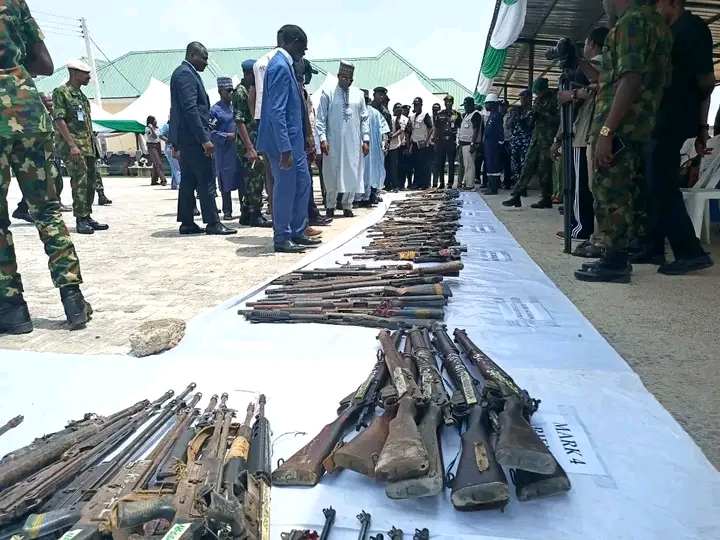
(DDM) – Nigeria has intensified its fight against insecurity as the National Centre for the Control of Small Arms and Light Weapons destroyed over 2,800 illicit firearms in a major arms destruction exercise held in Abuja.
The exercise, which took place on Friday, marked the fifth large-scale destruction of illegal weapons conducted by the agency since its establishment.
Officials described the move as a significant milestone in ongoing efforts to curb the proliferation of small arms and light weapons across the country.
The destroyed weapons were reportedly recovered from criminal elements, insurgents, and illegal arms traffickers through various security operations.

Authorities say the initiative is part of a broader strategy by the Federal Government to reduce violent crime and enhance national security.

Nigeria has faced persistent security challenges in recent years, including terrorism, banditry, kidnapping, and communal clashes.
Experts note that the widespread availability of illegal firearms has been a major factor fueling these security threats.
The destruction of the weapons is intended to prevent their re-circulation and eliminate the risk of them falling back into the hands of criminal groups.
Security analysts have long advocated for stricter control measures to address the unchecked spread of small arms in the country.
The NCCSLAW reiterated its commitment to strengthening arms control mechanisms and supporting law enforcement agencies.
Officials also emphasised the importance of collaboration between security agencies, border authorities, and local communities in tracking illicit weapons.
The agency noted that many of the arms were intercepted through intelligence-led operations and coordinated enforcement actions.
There are also ongoing efforts to improve data collection and monitoring systems related to arms trafficking.
The Federal Government has repeatedly stated that controlling illegal weapons is key to restoring peace in affected regions.
Observers say such destruction exercises serve both practical and symbolic purposes in demonstrating government resolve.
They also help build public confidence in the state’s ability to address insecurity.
However, some experts argue that arms destruction alone is not sufficient without addressing the root causes of violence.
They point to poverty, unemployment, and weak border control as underlying factors contributing to the proliferation of weapons.
The government has indicated plans to complement enforcement actions with broader socio-economic and security reforms.
The latest exercise underscores Nigeria’s continued commitment to tackling illegal arms and improving national safety.



 and then