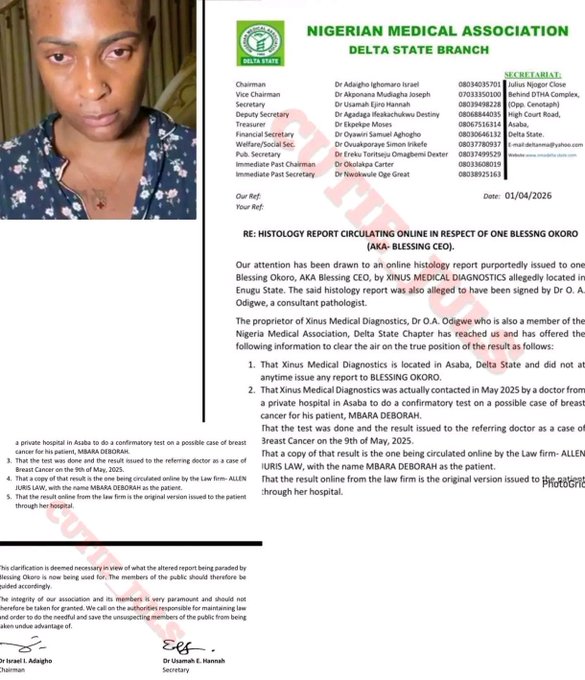
The Nigerian Medical Association (NMA) has reportedly raised serious concerns over what it describes as a case of deception involving social media personality Blessing CEO. According to the association, investigations suggest that a medical report she allegedly presented to the public as proof of a breast cancer diagnosis may not be authentic.
In its statement, the NMA claimed the document in question was forged and originally belonged to another individual identified as Mbara Deborah. The association further alleged that the report was manipulated and circulated to mislead the public, particularly in connection with fundraising efforts.
The development has sparked widespread reaction, with many expressing shock over the allegations, especially given the sensitive nature of illnesses like breast cancer. Health professionals have emphasized that such actions, if proven true, undermine public trust and could have damaging consequences for genuine patients who rely on public goodwill and support during medical crises.
Medical experts have also pointed out that falsifying health records is a serious ethical and legal violation. Beyond potential criminal implications, it raises concerns about misinformation and exploitation within the digital space, where emotional narratives can quickly attract attention and financial contributions.

Public reaction has been swift, with social media users calling for accountability and transparency. Some have urged authorities to carry out a thorough investigation to establish the full facts of the case, while others have expressed sympathy for individuals who may have donated in good faith.
As of now, Blessing CEO has yet to issue a detailed response addressing the latest claims. Observers note that her next steps could be critical in shaping public perception as the situation continues to unfold.
The NMA, on its part, reiterated the importance of verifying medical information before sharing or supporting any health-related campaigns, urging the public to rely on credible institutions and certified professionals.
This incident has reignited conversations about the growing need for regulation and accountability in online fundraising and personal storytelling, especially when they involve life-threatening health conditions.