



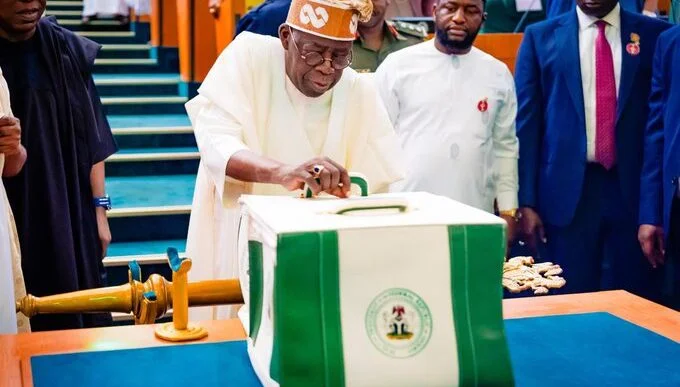
In the ornate chambers of the National Assembly of Nigeria this week, what was supposed to be a procedural defence of the 2026 budget quickly morphed into a stinging indictment of the federal government’s handling of the 2025 fiscal year. Ministers stood before senators with heads bowed, numbers in hand, and a single, unshakeable admission — the bulk of funds appropriated for capital projects were never released, leaving infrastructure, critical services, and development initiatives in limbo, stalled or entirely unfunded. The fallout from these revelations has exposed deep fiscal fragilities in Nigeria’s economy, generating public outcry and raising urgent questions about fiscal discipline, governance, and the future of the nation’s development agenda. Recent exchanges in the Senate and budgetary analyses by civic advocacy groups have unveiled a grim story of unfulfilled promises and financial mismanagement that now threatens to define the current administration’s economic legacy.
The drama unfolded against the backdrop of the 2026 budget defence hearings, where ministers and agency heads were summoned to account for the previous year’s performance. What emerged was a sobering consensus: despite the federal government’s declaration of ambitious capital spending plans and a record-setting expenditure framework, actual capital releases were disproportionately low. In some ministries, allocated funds never materialised; in others, they trickled in at levels too insignificant to sustain even the most modest projects, crippling infrastructure plans nationwide.
Among the most striking admissions came from Saidu Ahmed Alkali, the Saidu Ahmed Alkali — Nigeria’s Minister of Transport. Charged with defending the ministry’s 2026 appropriation, Alkali stunned observers when he disclosed that out of an enormous N256.73 billion capital budget allocated to the ministry for 2025, barely N2.5 billion was released — a mere one percent of what was budgeted. Such a paltry release effectively froze plans for rail and road expansions, modern bus terminals, and other strategic transport infrastructure vital to economic growth. Numerous agencies under his portfolio, including the Nigerian Institute of Transport Technology and the Nigerian Railway Corporation, reported zero capital allocations, forcing most development plans to be either postponed or shelved indefinitely.
The transport sector was not alone in this distressing predicament. Across federal ministries, departments, and agencies — widely referred to as MDAs — capital release figures were reported to be so minimal that key projects remained unfunded. Some ministries recorded zero capital votes, a reality that drew sharp rebukes from lawmakers. In a heated session before the Senate Committee on Finance, senators grilled Dr. Shamseldeen Ogunjimi, the Shamseldeen Ogunjimi and Accountant-General of the Federation, over the incomplete disbursement of capital funds and mounting unpaid contractor liabilities.

Senators were particularly incensed by reports that a significant number of federal projects — numbering 471 and more according to civic group budget tracking data — had not even been started, despite being part of the 2025 budget appropriation. The lack of progress on these projects has sparked disbelief and fury among legislators and constituents alike, many of whom are now questioning where billions of naira earmarked for development went or why they were never released.
The Senate’s confrontation with the Accountant-General was explosive. Lawmakers described the situation as “embarrassing,” expressing frustration that contractors across the country were seeking intervention from legislators to settle unpaid contract bills that had accumulated due to delayed or absent capital releases. “Here at the National Assembly, we have never seen contractors bombarding us weekly for intervention on non-payment of executed contracts,” one senator fumed during the hearing. The frustration was not limited to transport projects: road construction, school rehabilitation, health infrastructure, water supply schemes, electrification plans, and even essential constituency projects were among the stalled works cited by senators.
A critical flashpoint during the hearing was the ongoing debate over Nigeria’s centralised payment system — a Treasury-managed mechanism intended to streamline government disbursements. Senators described the system as “compromised” and “slowing down payment processing,” arguing that it contributed to bottlenecks that prevented capital funds from reaching MDAs on time. They also questioned why more revenue was not available for release, especially after major economic reforms in the last year, including the removal of fuel subsidies and foreign exchange harmonisation, were expected to boost government revenues.
For its part, the Office of the Accountant-General defended its performance by attributing disbursement challenges to cash-backing issues — essentially saying that funds could not be released because they were not available in the Treasury in the first place. Dr. Ogunjimi also pointed to indiscriminate contract awards by MDAs that were not backed by actual cash, further compounding the implementation gaps. While promising improvements and adjustments to the centralised system, he stopped short of offering a full explanation for the stark shortfall in capital releases, a stance that did little to soothe legislative ire.
Adding to the unease, lawmakers also questioned broader fiscal management trends, including debt servicing that continues to consume a disproportionate share of government revenues. Debt obligations are believed to have consumed an estimated 72 percent of revenue in the first seven months of 2025, echoing patterns seen in previous years where servicing debt eclipsed funds available for capital development and social services. Though comprehensive, independent figures on this percentage were not immediately available, it reflects a widely acknowledged structural challenge in Nigeria’s public finances.
Civil society organisations have also weighed in, underscoring that the official budget implementation figures reveal systemic weaknesses in budget execution and transparency. The BudgIT report on federal budget insertions highlighted that tens of thousands of projects worth trillions of naira were included in the 2025 budget with contentious prioritisation and implementation prospects — raising caution about oversight and value-for-money outcomes in national budget processes.
For ordinary Nigerians, the implications are all too real. Roads that should have been built remain dirt tracks; hospitals and schools cry out for renovation; rural electrification initiatives languish; and communities wait indefinitely for promised development. Across social media, citizens are venting their disillusionment, arguing that a “budget of hopes” has turned into a narrative of unmet expectations.
As senators continue to scrutinise the 2026 budget proposal, the glow of fiscal annual planning has dimmed under the harsh light of execution realities. Unless urgent reforms are implemented to ensure timely and adequate capital releases, coupled with robust revenue mobilisation and transparent oversight, the gap between what Nigeria plans and what it delivers risks widening further.
For now, the 2025 budget saga stands as a cautionary chapter in Nigeria’s fiscal history — a reminder that appropriations mean little without effective implementation, and that a nation’s development is measured not by figures on paper but by tangible transformations on the ground.

