


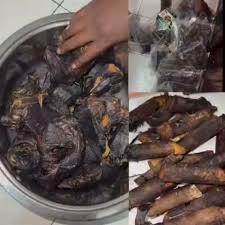
Nigerian Woman Abroad Laments Sticks Found Inside Expensive Dry Fish
A Nigerian woman living abroad has taken to social media to express frustration after allegedly discovering numerous sticks inside a batch of dry fish she ordered from Nigeria.
The woman, who was apparently inspecting the shipment after it arrived abroad, showed the fish and the foreign materials she claimed were packed alongside or inside the product.
“The sticks inside the fish are more than the whole fish. Look at the fish I spent over ₦2 million on shipping,” she said while displaying the items.
Her complaint has sparked reactions online, with many Nigerians expressing disbelief over the condition of the shipment, particularly the amount she claimed to have spent on getting the fish transported from Nigeria.

The woman appeared particularly upset that after paying a substantial amount for shipping, she allegedly received fish containing what she described as an excessive quantity of sticks.
The exact value of the fish itself was not immediately established, and it is also unclear whether the reported ₦2 million represented the shipping cost for only the particular batch shown in the video or a larger shipment.
The video has nevertheless renewed conversations among Nigerians in the diaspora about the quality and packaging of food products sent from Nigeria.
Dried and smoked fish are popular among Nigerians living abroad because they are commonly used in traditional dishes and can be preserved for longer periods than fresh fish. Nigeria also has a long-established fish-processing industry, with smoked fish forming part of the country’s food and agricultural economy.
However, concerns surrounding the processing and exportation of smoked fish are not new.
A 2017 investigation by Techpoint Africa documented challenges within Nigeria’s traditional fish-smoking industry, including the widespread use of firewood-powered kilns and concerns about contamination from smoke. The report also noted that Nigerian smoked-fish exports had historically faced problems at foreign entry points because of poor processing standards.
The report explained that smoke from wood and charcoal can introduce polycyclic aromatic hydrocarbons, or PAHs, into food. Some of these compounds are recognised as carcinogenic, creating food-safety concerns when traditional smoking methods are poorly controlled.
That background has added another dimension to the woman’s complaint, although there is currently no evidence establishing that the sticks shown in her video were connected to contamination or that they resulted from a particular processing method.
It is also unclear where exactly the shipment was processed, who supplied the fish or whether the sticks were deliberately included during packaging or entered the shipment accidentally.
As the video continues to attract attention online, some viewers have questioned the quality-control measures used by suppliers handling food products intended for Nigerians living outside the country.
For Nigerians in the diaspora who regularly order local food items, the incident also highlights the importance of proper packaging, inspection and compliance with destination-country food regulations when exporting or shipping processed foods.
At the time of publication, there was no verified statement from the alleged supplier addressing the woman’s complaint.
The woman’s account remains an allegation based on her social-media video, and the condition of the full shipment, the supplier’s identity and the circumstances surrounding the presence of the sticks have not been independently verified.




