
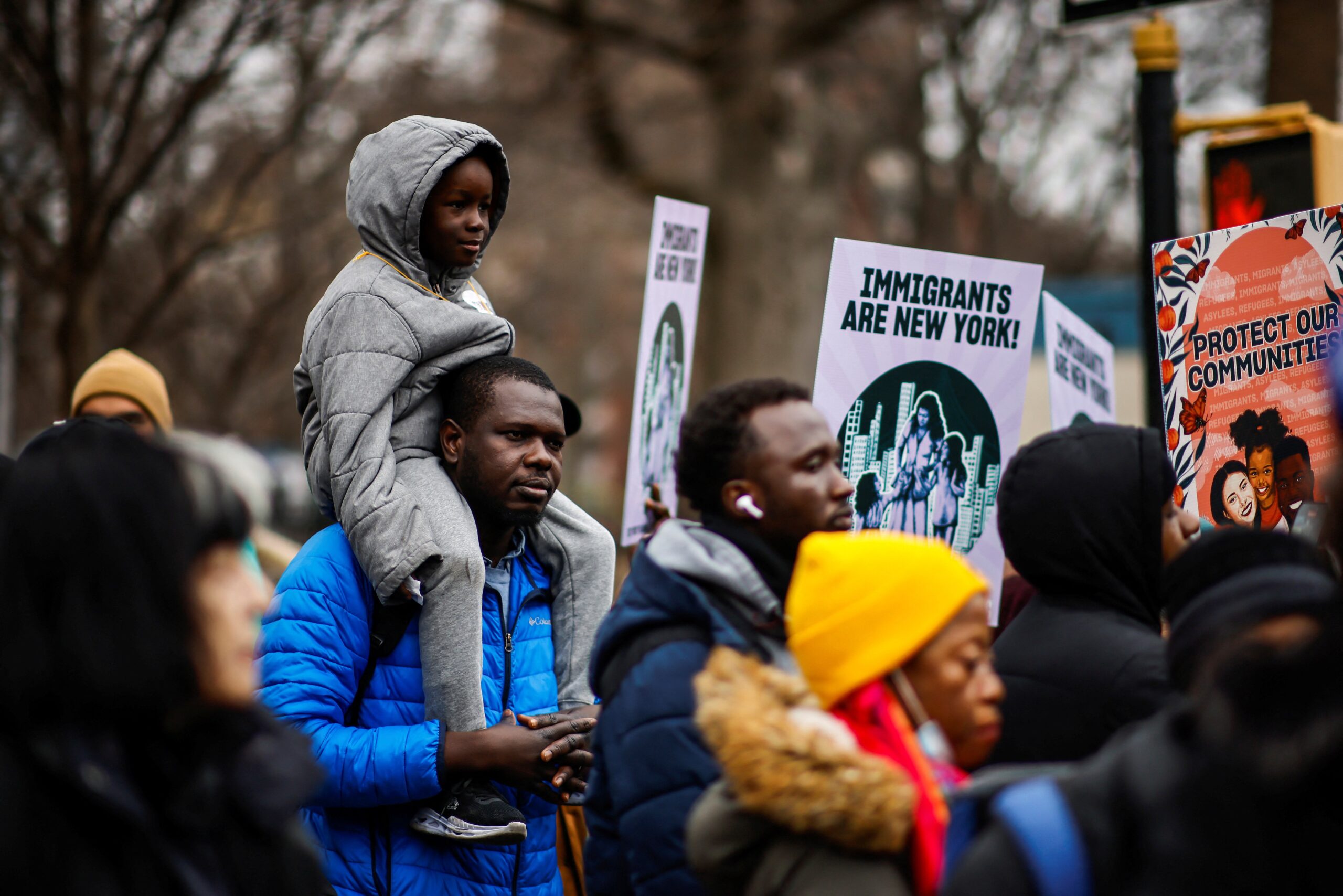
A growing sense of fear and uncertainty has swept through Nigerian immigrant communities across the United States as intensified enforcement operations by President Donald Trump’s Immigration and Customs Enforcement (ICE) agency trigger panic, displacement, and a quiet wave of self-deportation. From major cities to suburban enclaves, Nigerians are increasingly withdrawing from public life, abandoning jobs, going into hiding, or secretly returning home in response to what many describe as an aggressive and deadly immigration crackdown.
Findings by DDM NEWS indicate that the renewed enforcement drive, marked by house-to-house raids and high-profile arrests, has reshaped daily life for thousands of immigrants. Many Nigerians, both documented and undocumented, have reportedly stopped going to work, limited their movements, and severed routine social interactions after President Trump reiterated his full support for ICE’s actions, despite mounting criticism and protests nationwide.
The current situation traces back to January 2025, when President Trump, immediately after his inauguration, rolled out a hard-line immigration policy focused on the swift arrest and removal of illegal immigrants. While the administration framed the policy as a necessary step to enforce immigration laws, human rights groups, immigrant advocates, and foreign governments have condemned the approach as cruel, indiscriminate, and dangerously excessive.
What has intensified anxiety within immigrant communities are reports of deadly encounters involving ICE officers. According to available data, at least 32 people died in ICE custody in 2025 alone, making it the deadliest year for ICE-related deaths in over two decades. The UK-based Guardian further reported that in 2026, no fewer than eight people have already died in incidents involving ICE officers, deepening public outrage and fear.
Two recent cases in Minneapolis, Minnesota, have become flashpoints for national and international concern. On January 7, 37-year-old Renée Good was fatally shot by an ICE agent during an enforcement operation. A medical examiner later ruled her death a homicide caused by multiple gunshot wounds, igniting protests and renewed scrutiny of ICE’s use of force. Barely weeks later, on January 24, 2026, another 37-year-old, Alex Pretti, an intensive care nurse at the Minneapolis VA Medical Center, was shot and killed during a separate federal enforcement action. The killings sent shockwaves through immigrant communities, including Nigerians, who now fear that no one is truly safe during enforcement operations.

ICE officials have continued large-scale raids, reportedly detaining about 70,000 people since the latest crackdown began, while an estimated 540,000 immigrants have been deported to their countries of origin. These numbers, DDM NEWS gathered, have amplified panic among immigrants who fear sudden arrest without the opportunity to contact family members or seek legal counsel.
The emotional toll of the situation was captured in a viral Instagram video by a Nigerian woman who broke down in tears while describing the trauma immigrants are facing. Speaking from the US, she lamented what she described as the indiscriminate treatment of immigrants, insisting that ICE agents no longer distinguish between citizens and non-citizens during operations.
“It is very traumatising the way these people are treating immigrants,” she said in the video monitored by DDM NEWS. “President Trump, if you want immigrants to leave America, just say it clearly. Don’t hunt people like animals.”
In a later interview with Saturday PUNCH, the woman, who requested anonymity and identified herself simply as a senior immigrant, revealed that fear has forced many Nigerians to abandon their jobs and seek alternative means of survival. According to her, some now rely on online trading, home-based businesses, or community support to avoid exposure to ICE raids.
She recounted how her shop assistant stopped coming to work in mid-December after ICE agents conducted operations in her area, first in New Jersey and later near her residence. “Since then, she has lived with constant anxiety,” the woman said. She also disclosed that families who once worked in factories have quit their jobs entirely, turning instead to selling goods or cooked meals from their homes through online orders.
“People are staying indoors because of fear,” she added. “We now contribute money to support families who can no longer work. That is the reality many immigrants are facing.”
Corroborating these accounts, the President of the Nigerian Community in Maryland, Mrs. Chris Ademiluyi, confirmed to DDM NEWS that many Nigerians have chosen to go into hiding rather than return to Nigeria. She explained that worsening economic and security conditions back home make return an unattractive option for many.
“Nigeria is not any better,” Ademiluyi said. “Some people would like to speak, but they are afraid. They prefer to stay hidden and survive quietly.”
Religious leaders have also raised concerns. Pastor Shola Adeoye of the Lighthouse/Rejuvenation Church in Rosenberg, Texas, warned on Facebook that fear of the Trump administration was pushing Nigerians to leave the US prematurely. “Some Nigerians are moving back home due to fear. It’s not wise to bury yourself before death,” he cautioned, sparking widespread debate on social media.
While some Nigerians support self-deportation as a way to avoid trauma, others argue that leaving involuntarily could have lasting psychological consequences. One Facebook user, Ben Ijeh, wrote that deportation trauma could permanently discourage return to the US, while another, Olukunle Durodolu, said controlled self-return allows individuals to preserve dignity and mental stability.
Beyond enforcement raids, broader policy changes have compounded immigrants’ fears. A Washington DC-based non-profit, the Nigerian Center, reported a surge in Nigerians seeking help amid the crackdown. Its Executive Director, Mr. Gbenga Ogunjimi, said the crisis is multi-layered, pointing to visa restrictions and Nigeria’s designation as a Country of Particular Concern.
According to Ogunjimi, a partial visa ban imposed in December 2025 suspended several visa categories and restricted Nigerians’ access to citizenship processing, green cards, work authorisation, and asylum pathways. “Many people were not told that these policies would affect their ability to regularise their status,” he said.
DDM NEWS gathered that as a result, many Nigerians are now weighing their options, with self-deportation increasingly seen as a last resort. Ogunjimi admitted that while many have sought advice, exact numbers of those who have returned home remain unclear.
As ICE operations continue and policy uncertainty deepens, Nigerian immigrants remain caught between fear abroad and hardship at home, navigating a precarious existence shaped by enforcement raids, legal barriers, and the struggle to survive.