


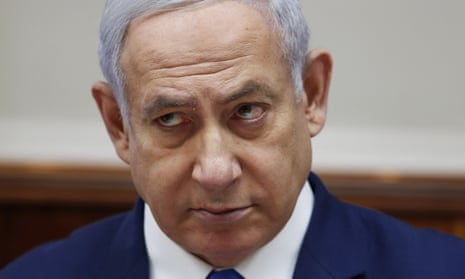
Benjamin Netanyahu, the Prime Minister of Israel, has issued a veiled threat against Iran’s new Supreme Leader, Mojtaba Khamenei, saying he would not “issue life insurance” for leaders of what he described as terrorist organisations.
Speaking at his first press conference since the start of the war, Netanyahu suggested that Khamenei could become a target as Israel continues its joint military campaign with the United States against Iran.
“I wouldn’t issue life insurance policies on any of the leaders of the terrorist organization,” Netanyahu said when asked about Khamenei and the leader of the Iran-backed militant group Naim Qassem.
However, the Israeli leader acknowledged that even after nearly two weeks of bombardment, the war may not necessarily lead to the collapse of Iran’s government.

Netanyahu said Iran had already suffered major damage during the ongoing air campaign.
According to him, Israeli and American strikes have weakened Iran’s security apparatus, including the powerful Islamic Revolutionary Guard Corps and the paramilitary Basij militia.
“Iran is no longer the same country it was before,” he said.
Netanyahu also vowed that Israel would continue striking Hezbollah in Lebanon after the group fired rockets at Israel earlier in the conflict.
The Lebanese militant group had launched attacks in retaliation for the killing of Iran’s former Supreme Leader, Ali Khamenei, who died in the first wave of U.S.–Israeli strikes that triggered the current war.
While Israel says one of its goals is to weaken Iran’s leadership and possibly trigger a political collapse, Netanyahu admitted that such an outcome would ultimately depend on the Iranian people themselves.
“We are creating the optimal conditions for toppling the regime,” he said. “But a regime is toppled from the inside.”
Despite speculation that the war could spark anti-government protests in Iran, there has so far been no major uprising since the conflict began.
As Netanyahu spoke, missile-warning sirens reportedly sounded across central Israel, highlighting the continued exchange of attacks between the two countries




