



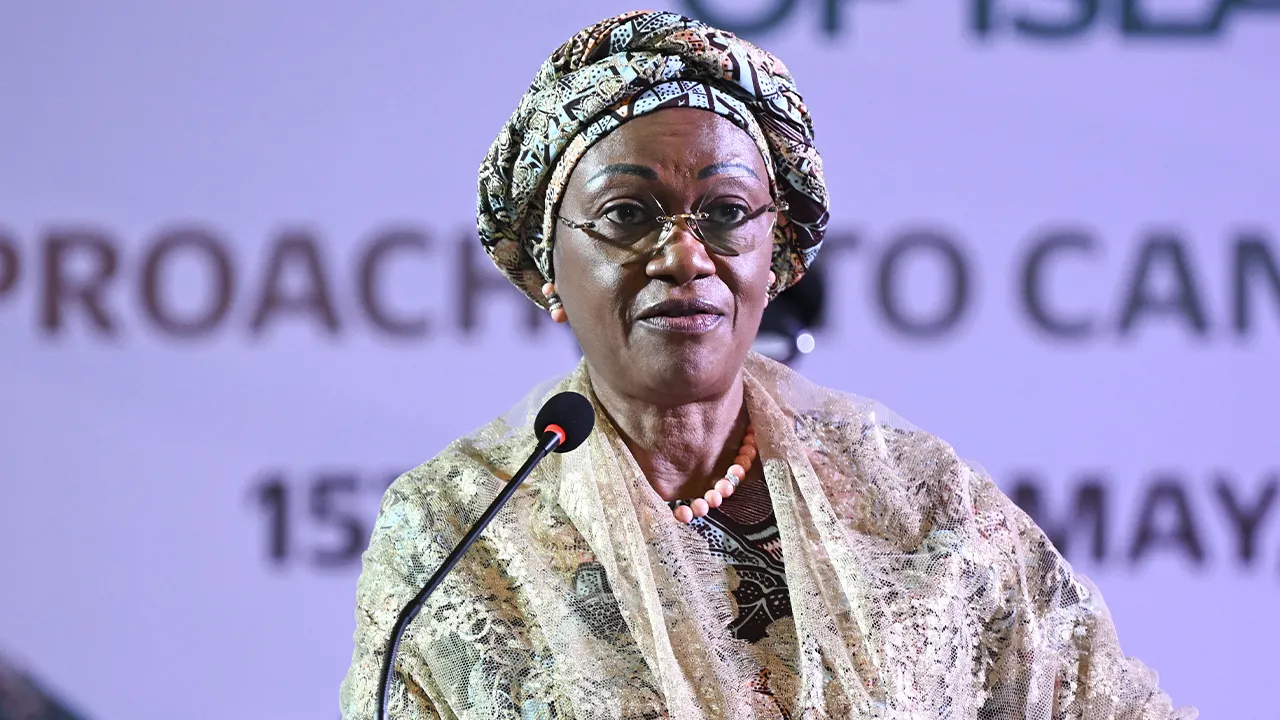
DDM NEWS — In an address that has reverberated across diplomatic circles and domestic political debates, Nigeria’s First Lady Oluremi “Remi” Tinubu has publicly described the United States’ Christmas Day airstrikes in Sokoto State as a “blessing” and welcomed broader military collaboration between Nigeria and Washington, D.C., signaling a deepening security partnership at a time of intensifying militant violence across the country.
Speaking to Fox News Digital during a week-long visit to the U.S. capital, Mrs. Tinubu framed the controversial strikes — ordered by then-U.S. President Donald Trump on December 25, 2025 — as a positive development in Nigeria’s ongoing struggle against armed groups, bandits, and jihadist militants that have ravaged large swaths of the country’s northwest and central regions.
“In the midst of immense suffering and loss, the intervention of the U.S. was quite a welcome development,” she told Fox News, referring to the airstrikes conducted in Sokoto State under the auspices of the U.S. Africa Command (AFRICOM). “We are expecting that there will be more; it’s going to yield better fruit for us and for America.”
A “Blessing” Amid a Brutal Security Crisis
Mrs. Tinubu’s comments reflect a narrative of cooperation in confronting Nigeria’s deepening insecurity, which has seen Islamist-linked militants and criminal gangs carry out devastating attacks in recent months, including one incident in Kwara State where at least 162 civilians were killed in coordinated assaults on villages.
The airstrikes themselves — a rare instance of direct U.S. military action on Nigerian soil — were coordinated with Nigerian authorities and targeted Islamist militants believed to be entrenched in forested areas of Sokoto State. Both governments have characterised the operations as part of broader joint efforts to degrade extremist networks undermining regional stability.

“In collaboration with the U.S., we were able to engage militant positions that have long eluded effective response,” Mrs. Tinubu said, emphasising that the strikes were aimed at protecting civilians and complementing Nigeria’s own security operations. She highlighted that these measures coincide with domestic reforms, including a national state of emergency on insecurity and plans to recruit tens of thousands of additional security personnel.
Domestic Measures and International Diplomacy
Mrs. Tinubu outlined steps taken by the administration of President Bola Ahmed Tinubu to strengthen internal security, such as mobilising resources to recruit 50,000 new police officers, redeploying more than 11,000 officers from VIP duties to conflict zones, and arming forest guards tasked with protecting remote communities. These measures, she said, reflect the government’s determination to protect all Nigerians, regardless of faith or region.
“We live in Nigeria, we know this situation on the ground, and we are concerned about our people’s safety,” she told the U.S. media. Her comments sought to clarify the government’s position amid public debate over the scale of violence and accusations that Nigeria was failing to protect its citizens.
In the same interview, Mrs. Tinubu touched on Nigeria’s broader reform agenda, including economic stabilisation measures such as the removal of fuel subsidies — a controversial policy aimed at addressing long-standing macroeconomic challenges — and efforts to attract foreign investment. She argued that improved security would underpin economic growth.
Praise Meets Sharp Criticism
While some analysts have praised Mrs. Tinubu’s diplomatic tone and her efforts to frame Nigeria-U.S. cooperation as mutually beneficial, her remarks have also provoked sharp criticism domestically. Many northern Nigerians and commentators argue that welcome collaboration could open the door to an expanded U.S. military footprint, raising concerns over national sovereignty and potential civilian harm.
Security experts have cautioned that foreign military involvement carries risks, including potential misinterpretation of local dynamics, challenges with accurate intelligence, and the danger that militants may exploit such involvement for recruitment or propaganda. One analyst warned that Nigeria must ensure its command and control in security operations remains sovereign and not perceived as dominated by external interests.
Political parties have also weighed in. The African Democratic Congress (ADC) criticised the strikes and called for greater transparency on their outcomes, particularly regarding casualty figures and the broader implications of foreign military action on Nigerian soil. Although recognising the severity of the security threat, the ADC described reliance on external force as an unsustainable substitute for Nigeria’s own constitutional duty to secure its territory.
The Stakes Ahead
Mrs. Tinubu’s public endorsement of U.S. actions, and her call for deeper security cooperation between Abuja and Washington, take place against a backdrop of increasingly complex threats facing Nigeria. Extremist groups such as Boko Haram, Islamic State West Africa Province (ISWAP), and local affiliates continue to operate, while banditry and kidnappings have spread beyond traditional hotspots into central and western regions, exacerbating national fears of expanded militant reach.
Indeed, Nigeria’s uneasy security environment was underscored in another recent attack where over 170 people were killed in Kwara State — an assault that prompted fresh troop deployments and reinforced the urgency of bolstering defence and intelligence capacities.
International cooperation is now in focus. The U.S. has also deployed a small team of military officers to Nigeria to support intelligence gathering and operational coordination, marking another milestone in bilateral security engagement.
Balancing Sovereignty and Security
The debate sparked by Mrs. Tinubu’s remarks illustrates a broader dilemma for Nigeria: how to balance effective responses to persistent threats with the imperative to safeguard national sovereignty and public confidence.
Supporters of tighter cooperation argue that no single nation can confront the sophisticated networks of militants operating across borders without shared intelligence, technology, and joint operations. Critics counter that foreign military involvement must be meticulously defined and transparently communicated to avoid undermining Nigeria’s autonomy in security matters.
As Nigerians grapple with the human toll of militant violence and the pursuit of peace, the government’s strategy — both at home and abroad — will remain under intense scrutiny. For now, Mrs. Tinubu’s declaration that U.S. airstrikes were a “blessing” crystallises the high stakes of the security partnership between Abuja and Washington, even as debates over its long-term implications continue to unfold.



 and then