


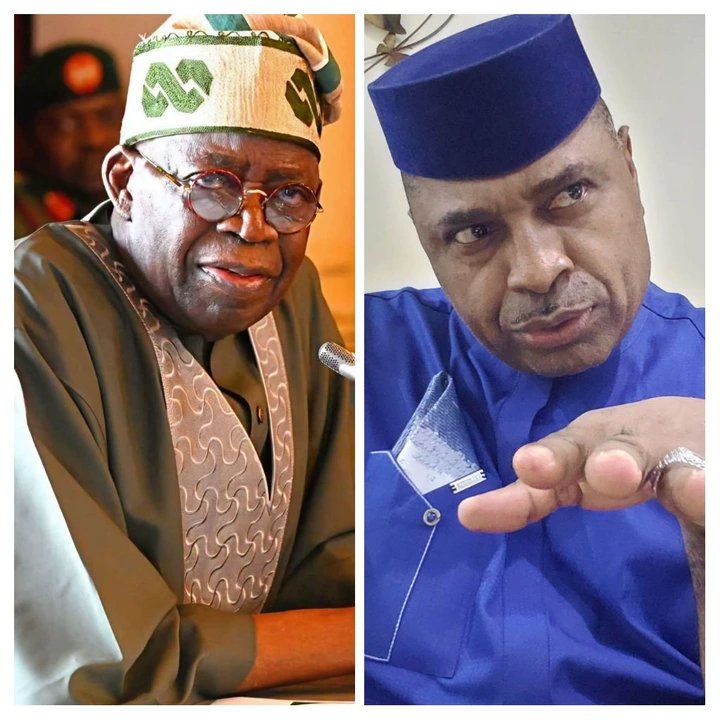
ABUJA, NIGERIA — Kenneth Okonkwo, spokesperson for the African Democratic Congress Presidential Campaign Council, has argued that the Nigerian Constitution requires the President to transmit a written declaration to the National Assembly whenever he proceeds on vacation or is otherwise unable to discharge the functions of his office.
Okonkwo made the submission on Sunday while reacting to President Bola Tinubu’s extended working vacation in Europe. The Presidency had announced on August 30, 2026, that Tinubu was beginning a three-week vacation in Europe, before announcing on September 21 that he had extended the working vacation by a few days.
Section 145(1) of the 1999 Constitution, as amended, provides that whenever the President is proceeding on vacation or is otherwise unable to discharge the functions of his office, he shall transmit a written declaration to the President of the Senate and Speaker of the House of Representatives. It further provides that the Vice-President shall perform the functions of President as Acting President until the President transmits a written declaration to the contrary.
Okonkwo, in a statement shared on Sunday, rejected the argument that a President could avoid transmitting such a declaration by describing the trip as a “working vacation,” describing the position as unconstitutional.

“The position of the law is that no president of Nigeria has the legal right to proceed on a vacation without informing the National Assembly that he is embarking on such a vacation,” Okonkwo said.
He added that Section 145(2) provides that if the President fails to transmit the required declaration within 21 days, the National Assembly may, by a simple majority resolution of each chamber, mandate the Vice-President to perform the functions of President as Acting President until the President formally resumes his functions.
“The argument in some quarters that a President should not transmit the written declaration because he is on a working vacation is spurious and unconstitutional. Once the word vacation is used in any form whatsoever, power must be transmitted to the Vice-President to act as President,” he said.
Okonkwo further argued that the absence of a clear constitutional arrangement for the discharge of presidential functions could have implications for national security. “Whatever the intention of Tinubu for his disobedience of Section 145(1), he should understand that Nigeria’s national security is compromised whenever there is no clear leader in his absence,” he said.
He consequently urged the National Assembly to invoke its constitutional powers if the President failed to transmit the required declaration within the stipulated 21-day period, saying, “Rule of law demands obedience to the law whether convenient or not.”
The Presidency, meanwhile, has described Tinubu’s absence as a “working vacation,” noting that the President had continued to direct affairs of government while in Europe. It said Vice-President Kashim Shettima had represented him at some official engagements, including the 81st United Nations General Assembly, while the Secretary to the Government of the Federation, George Akume, continued to represent the President at other events.
Okonkwo’s comments were contained in his “Global Square” column published in the Sunday Sun under the title, “Politics of ‘working vacation’ and the grand deception.” His intervention adds to the growing debate over the constitutional implications of the President’s prolonged absence from the country and the propriety of the “working vacation” designation. As the 2027 elections approach, the issue is likely to remain a subject of intense political discourse.




