


LOKOJA, NIGERIA — Kogi State Governor, Ahmed Usman Ododo, has attributed his administration’s ability to pay workers’ salaries promptly while executing infrastructure projects to improved revenue allocations under President Bola Ahmed Tinubu’s administration.
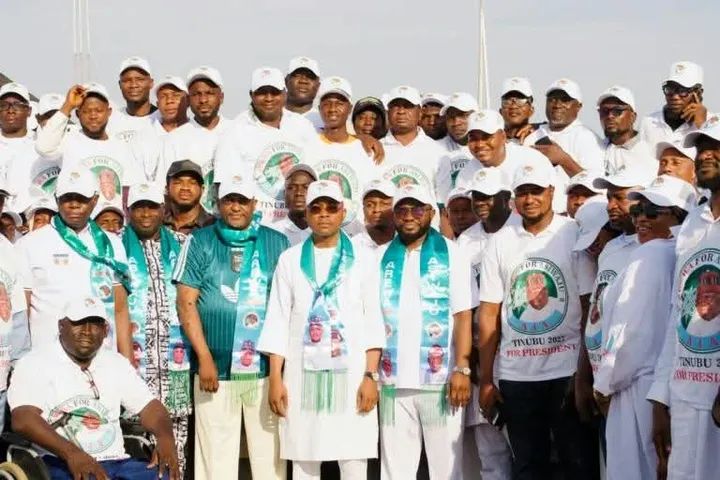
Ododo made the statement on Friday, November 13, 2026, during a meeting with members of the Kogi State chapter of Arewa for Asiwaju (A4A) at the Government House Banquet Hall in Lokoja.
The governor said increased revenue accruing to the state had strengthened its financial capacity, allowing the government to meet its obligations to public servants while continuing to invest in infrastructure and other development initiatives.
According to him, the additional resources have created greater room for the state to balance recurrent expenditure, particularly workers’ salaries, with capital projects.

“We are paying salaries and still doing projects. President Bola Ahmed Tinubu made it possible,” Ododo said, acknowledging the Federal Government’s contribution to the state’s improved revenue position.
The governor’s remarks highlight the importance of revenue allocation to the finances of state governments, many of which depend significantly on funds distributed from the Federation Account to meet their monthly obligations.
For Kogi, regular salary payments and continued infrastructure development are among the major responsibilities competing for available public resources. State governments must also provide funding for essential services, including education, healthcare, road maintenance and other public infrastructure.
Ododo’s position is that the improved revenue available under the current Federal Government has helped his administration pursue these responsibilities simultaneously.
The meeting also provided an opportunity for the leadership of Arewa for Asiwaju to present its organisational structure and outline its grassroots mobilisation plans ahead of the 2027 general elections.
The group’s Kogi State Coordinator, Pharm. Chief Abdulkareem Jamiu Mohammed, popularly known as Asuku, said the organisation was targeting 200 votes from each of the state’s 3,508 polling units, projecting a total of 701,600 votes for President Tinubu.
He explained that the group had established a mobilisation structure extending from the state level to individual polling units, with representatives and women representatives assigned to support its activities.
According to him, the organisation intends to engage communities across Kogi’s 21 local government areas, presenting what it considers the achievements of the Tinubu and Ododo administrations as part of its campaign activities.
The group’s strategy is centred on grassroots engagement, with members expected to interact with residents and communicate their political message ahead of the next general elections.
Ododo’s comments on increased revenue therefore came within a broader political engagement involving a support group seeking to mobilise backing for Tinubu’s re-election campaign.
Beyond the political discussions, the governor’s remarks have drawn attention to the relationship between federal revenue distribution and the capacity of state governments to finance public services and development projects.
However, increased allocations alone do not automatically guarantee improved living conditions. Their impact depends on how effectively governments manage available resources, prioritise expenditure, complete projects and ensure transparency in public spending.
For Kogi residents, the key measure of improved public revenue will ultimately be its visible impact on workers’ welfare, infrastructure, access to essential services and economic opportunities.
Ododo’s administration will therefore face the continuing responsibility of demonstrating how additional resources are being translated into tangible benefits across the state.




