(DDM) – Central Bank of Nigeria (CBN) Governor, Olayemi Cardoso, has revealed that only 14 Nigerian banks have fully met the capital requirements set under the ongoing recapitalization exercise.
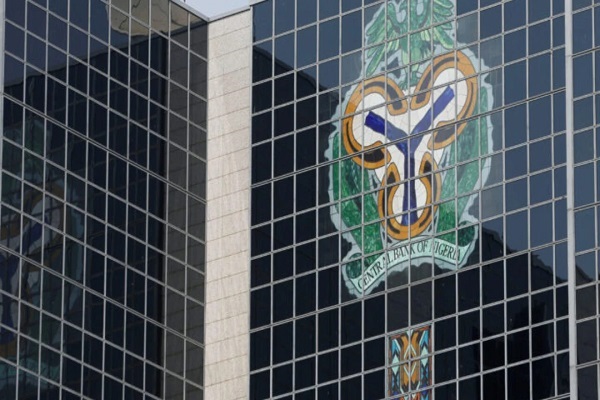
Central Bank of Nigeria (CBN)The Central Bank of Nigeria, often abbreviated as CBN, serves as the principal financial institution and the apex monetary authority in Nigeria, responsible for regulating and overseeing the nation’s banking sector.
It plays a crucial role in the country’s financial stability by formulating and implementing monetary policies aimed at achieving sustainable economic growth.
As a pivotal entity within the Nigerian economy, the CBN is tasked with ensuring price stability, controlling inflation, and maintaining a stable financial system.
Established in 1958, the bank has since been instrumental in managing the currency, influencing interest rates, and supervising the financial market operations across the country.
Diaspora Digital Media (DDM) notes that the disclosure came during a high-profile press briefing in Abuja on Tuesday, following the Monetary Policy Committee (MPC) meeting.
Cardoso said the reform, introduced in March 2024, was designed to strengthen the resilience of Nigerian banks, boost lending power, and ensure the safety of depositors’ funds.
He explained that while the “big four” banks, Access Holdings, Zenith Bank, GTCO, and UBA, have raised billions through rights issues, public offers, and foreign listings, several smaller and foreign-owned banks remain far behind target.
According to the CBN’s directive, international and national commercial banks must hold a minimum of ₦500 billion in capital, while non-interest banks are expected to raise ₦200 billion. Regional banks must achieve ₦10 billion.
Cardoso warned that the March 2026 deadline remains non-negotiable, stressing that banks that fail to comply risk mergers, acquisitions, or complete exit from the Nigerian financial market.
Analysts have already predicted a wave of consolidations, with Bloomberg reporting that recapitalization will “produce resilient banks, but force inevitable mergers.”
The recapitalization effort, a key plank of President Bola Tinubu’s economic reforms, has already injected over ₦13 trillion in fresh equity into the financial system.
CBN also announced a slight reduction in the Monetary Policy Rate (MPR) to 27% and a cut in the Cash Reserve Requirement to 45%, aimed at balancing growth stimulation with inflation control.
Cardoso maintained that the reforms will support financial inclusion, improve digital banking for underserved populations, and position Nigeria’s lenders as globally competitive institutions.
He concluded with a stern reminder: “Full adherence is not optional. We will not compromise on safeguarding depositors and building a stronger financial sector for Nigeria’s economic recovery.”