


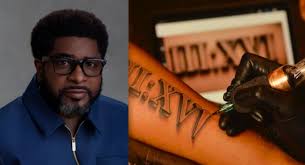
Pastor Kingsley Okonkwo has ignited fresh debate online after responding to criticism over his newly revealed tattoo, challenging what he described as selective judgment among Christians and the wider public.
The popular relationship coach and senior pastor came under scrutiny shortly after images of his tattoo began circulating on social media. Critics questioned how a Christian leader could openly wear a tattoo, with some framing it as incompatible with faith and moral standards expected of clergy. The backlash quickly gained traction, prompting the pastor to address the matter directly.
In a pointed response, Pastor Okonkwo highlighted what he views as hypocrisy in the criticism directed at him. He noted that many of those condemning his tattoo freely engage in cosmetic and aesthetic practices such as wearing wigs made from human hair, fixing artificial eyelashes, or undergoing microblading procedures, yet see no issue with these modifications. According to him, such practices also involve altering one’s appearance, raising questions about why tattoos are singled out as unacceptable.
His remarks shifted the conversation from the tattoo itself to a broader discussion about how society defines morality, spirituality, and personal expression. Pastor Okonkwo emphasized that external appearances do not determine a person’s faith or relationship with God, arguing that character, conduct, and love for others should matter far more than outward looks.
The response resonated with many supporters who applauded his honesty and willingness to confront what they see as outdated or inconsistent standards within religious spaces. They argued that Christianity should focus on spiritual growth and compassion rather than rigid rules about appearance. Others, however, maintained that spiritual leaders should uphold traditional values, insisting that tattoos remain controversial within certain Christian interpretations.
The exchange has once again brought attention to evolving perspectives on faith in modern society. As younger generations embrace self-expression and challenge long-held norms, religious leaders are increasingly navigating the tension between tradition and contemporary culture.
Pastor Okonkwo’s comments underline a growing call for introspection within religious communities, urging believers to examine why certain practices are condemned while others are widely accepted. Whether one agrees with his stance or not, the conversation has opened space for a more nuanced discussion about faith, freedom, and the essence of spirituality in today’s world.
Rather than silencing the criticism, the pastor’s response has amplified an important question: should faith be measured by outward appearance, or by the values and actions that define a person’s life?

