
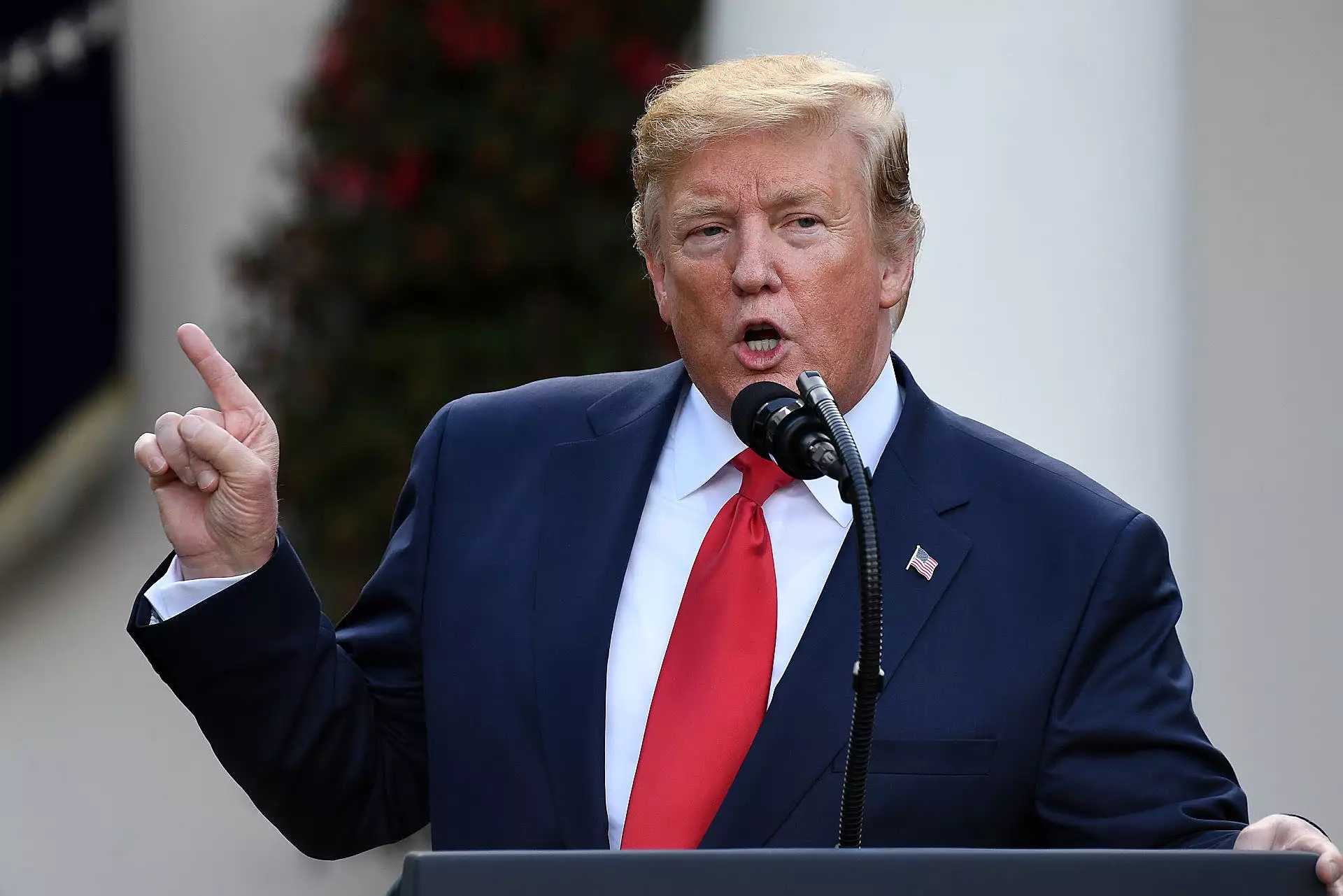
United States President Donald Trump has unveiled what may become one of the most controversial diplomatic experiments of his presidency: a self-styled “Board of Peace,” an international body he says is designed to resolve global conflicts and which he has openly suggested could one day replace the United Nations.
The initiative, however, is already exposing deep fault lines in global politics.
While the board has attracted support from several Middle Eastern monarchies, authoritarian leaders, and politically isolated states, it has struggled to gain the confidence of key Western allies.
Critics warn that the structure, leadership, and ambition of the board risk undermining the existing international order rather than strengthening it.
From Gaza Oversight to Global Ambition

The Board of Peace was initially conceived as a narrow mechanism to oversee the demilitarization, reconstruction, and governance of Gaza following Israel’s devastating two-year war.
That original plan received backing from the United Nations Security Council, lending it a degree of international legitimacy.
But the concept has since evolved or expanded far beyond its original mandate.
A draft charter circulated to invited nations now describes the board as a permanent international organization tasked with promoting peace, stability, and governance in conflict-prone regions worldwide. Notably, Gaza is no longer mentioned at all.
Under the proposal, Trump would serve as the board’s chair indefinitely, potentially beyond his second presidential term.
Who Holds the Power
At the top of the structure is Trump himself, overseeing a “founding Executive Board” composed of a small circle of political allies and insiders.
This inner group includes his son-in-law Jared Kushner, Secretary of State Marco Rubio, special envoy Steve Witkoff, and former British Prime Minister Tony Blair.
Below them would sit member states, serving renewable three-year terms. Permanent membership, however, comes at a steep cost: a reported $1 billion fee, ostensibly earmarked for reconstruction efforts in Gaza.
This pay-to-stay model has alarmed diplomats and transparency advocates, who argue it risks turning peacekeeping into a transactional enterprise vulnerable to influence and corruption.
Who Has Signed On
Support for the Board of Peace has come largely from outside Western Europe.
Countries that have accepted invitations include the United Arab Emirates, Saudi Arabia, Egypt, Qatar, Bahrain, Turkey, Pakistan, Morocco, Hungary, Kosovo, Argentina, Paraguay, Indonesia, Vietnam, Kazakhstan and Uzbekistan.
Israel’s Prime Minister Benjamin Netanyahu has also agreed to participate, despite voicing strong objections to the inclusion of Turkish and Qatari representatives and facing an arrest warrant from the International Criminal Court.
Armenia and Azerbaijan fresh from a U.S.-brokered peace agreement that granted Washington exclusive development access to a key transit corridor have also joined.
Perhaps most controversially, Belarusian leader Alexander Lukashenko, widely described as Europe’s last dictator and a close ally of Russia’s Vladimir Putin, has accepted an invitation.
Trump has also claimed that Putin has agreed in principle to participate, though the Kremlin has yet to formally confirm.
Who Is Holding Back
Several Western nations have declined or expressed serious reservations.
France and Norway have rejected the proposal outright, citing concerns about how the board would coexist with the United Nations.
Italy has raised constitutional questions, while Ireland has said it is still reviewing the invitation.
Ukraine’s President Volodymyr Zelensky has been blunt, saying it is impossible to imagine sitting at the same table as Russia while Moscow continues its war against Ukraine.
China has confirmed it was invited but has stopped short of committing, reiterating that it remains firmly committed to an international system centered on the United Nations.
Why the Board is Raising Alarm
At the heart of the controversy is Trump’s repeated suggestion that the Board of Peace could replace the UN an institution created 80 years ago to prevent global conflict through collective security.
The board’s charter refers vaguely to “institutions that have too often failed,” a phrase widely interpreted as a thinly veiled critique of the United Nations.
Diplomats fear the initiative could fracture international cooperation, weaken established norms, and concentrate global decision-making power in the hands of a few wealthy or politically aligned states.
UN officials have dismissed the notion that the organization could be supplanted, insisting the UN remains indispensable. Still, the very suggestion underscores a growing tension between unilateral power politics and multilateral governance.
A Test of Global Order
Trump’s Board of Peace reflects a broader worldview: skepticism toward multilateral institutions, preference for deal-making over diplomacy, and belief in strongman leadership as a path to stability.
Supporters see it as a bold alternative to what they view as an ineffective international system.
Critics see it as a dangerous experiment one that risks legitimizing authoritarian actors, monetizing peace, and eroding the fragile architecture that has helped prevent major global conflict for decades.
Whether the Board of Peace becomes a transformative diplomatic forum or a short-lived political spectacle remains uncertain.
What is clear is that it has already sparked a fundamental debate about who governs global peace and on whose terms.
In a world facing multiple overlapping crises, the question is not just whether new institutions are needed, but whether replacing cooperation with concentration of power will bring peace or deepen division.
For now, Trump’s Board of Peace stands less as a solution, and more as a symbol of an international order in transition and under strain