


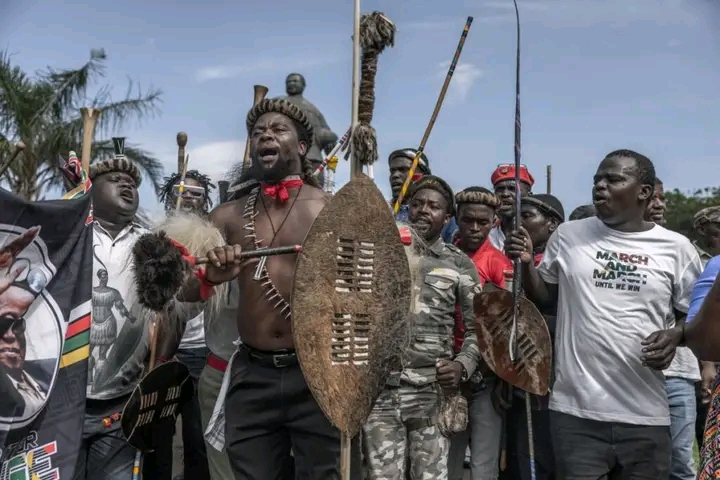
(DDM) — Fresh tensions erupted in Durban as South African protesters took to the streets demanding stricter government action against foreigners, including Nigerians, in a demonstration that quickly escalated into clashes with security forces.
Eyewitness accounts indicate that the protest, which drew large crowds, was fueled by growing frustration over unemployment, crime, and economic hardship, with demonstrators accusing foreign nationals of contributing to these challenges. Protesters were seen carrying placards and chanting slogans calling for tighter immigration controls and the deportation of undocumented migrants.
Security operatives were deployed to maintain order as the protest intensified, with police eventually firing rubber bullets to disperse the crowd after tensions escalated. Videos and images circulating online show scenes of chaos, with protesters running for safety while law enforcement attempted to regain control of the situation.
Residents in affected areas reported disruptions to business activities, as shops were shut down amid fears of looting and violence. Some foreign-owned businesses were reportedly targeted, heightening concerns about the safety of migrant communities living and working in the region.
Analysts note that such protests are not new in South Africa, where periodic outbreaks of xenophobic violence have been linked to socio-economic pressures and competition for limited resources. The recurrence of such incidents continues to raise questions about long-term solutions to integration, employment, and public perception of migrants.

Community leaders and civil society groups have condemned the violence, calling for calm and urging the government to address underlying issues without resorting to scapegoating. They emphasize the need for dialogue, inclusive economic policies, and stronger law enforcement to tackle crime without targeting specific groups.
Diplomatic observers warn that repeated attacks on foreign nationals could strain relations between South Africa and other African countries, particularly Nigeria, whose citizens have often been affected by such unrest. Past incidents have triggered diplomatic protests and calls for greater protection of African migrants.
Authorities in South Africa have yet to issue a comprehensive statement on the latest protest, but officials are expected to review security measures and engage community stakeholders to prevent further escalation. Meanwhile, humanitarian groups are monitoring the situation and providing support to those affected by the unrest.
Observers say the images emerging from Durban serve as a stark reminder of the fragile balance between economic hardship and social cohesion. Without sustained efforts to address unemployment and inequality, they warn, tensions could continue to resurface with potentially far-reaching consequences.



 and then