
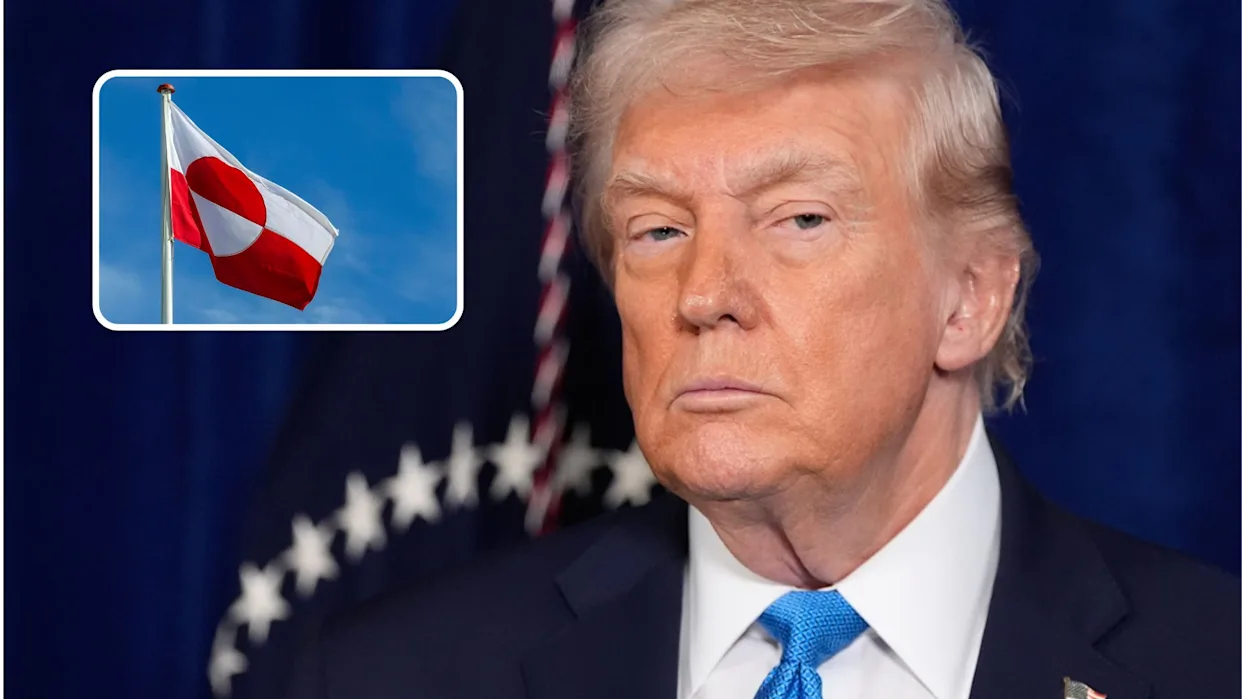
In a dramatic and rare break from partisan unity, senior Republican lawmakers have issued stark warnings to U.S. President Donald Trump that any attempt to invade or seize Greenland, the vast Arctic territory of Denmark, would not only derail his foreign policy ambitions but could also spell the end of his presidency. This unprecedented intra-party dissent has emerged as Trump’s provocative remarks about Greenland—echoing his post-Venezuela military rhetoric—continue to reverberate through Washington, Copenhagen, and NATO capitals.
At the heart of the controversy is Trump’s renewed push to acquire control over Greenland—an island rich in strategic value due to its geographic position between North America and Europe, its role in Arctic security, and its untapped natural resources. While Trump has publicly stated that he prefers acquiring Greenland through a negotiated deal, he has also hinted repeatedly that the United States would pursue control “one way or the other,” even if that notion strains longstanding alliances and international norms.
The president’s rhetoric has generated intense backlash not only from foreign governments but also from members of his own party—a rare occurrence in contemporary U.S. politics. For decades, congressional Republicans have typically rallied around the president, especially on high-stakes foreign policy issues. However, mounting public opposition and bipartisan concern over the potential diplomatic, strategic, and legal ramifications of targeting an autonomous territory of a NATO ally have driven a wedge within GOP ranks.
A defining moment in this internal rupture occurred when Representative Don Bacon of Nebraska bluntly stated on national television that pursuing military action against Greenland would likely bring Trump’s presidency to an abrupt end. Speaking on CNN’s The Situation Room, Bacon labelled such threats against a long-standing ally as “absurd,” underscoring that threatening a NATO member like Denmark goes beyond political miscalculation—it risks unraveling the very fabric of transatlantic security cooperation that has underpinned Western strategy since World War II.
Bacon’s comments were echoed by other influential Republicans. Senator Thom Tillis of North Carolina, speaking on the Senate floor, called the idea that the U.S. might take over Greenland “absurd,” further distancing himself from Trump’s rhetoric. Tillis’s remarks reflected broader discomfort within Capitol Hill, where many lawmakers believe that the president’s fixation on Greenland could overshadow pressing domestic priorities while isolating the United States from its closest allies.

Moreover, veteran Republican Senator Mitch McConnell, former Senate Majority Leader, weighed in with an analogy that resonated deeply within political circles. McConnell compared the potential fallout from pursuing Greenland to the contentious 2021 U.S. withdrawal from Afghanistan—an episode that significantly dented confidence in American leadership. He warned that a forced bid for Greenland would be “more disastrous for the president’s legacy than withdrawing from Afghanistan was for his predecessor,” asserting that such a move would “incinerate the hard-won trust of loyal allies.”
The growing Republican dissent reflects broader public skepticism within the United States. Recent polling data shows that a significant majority of Americans oppose seizing Greenland by force, with many seeing it as an unnecessary provocation that would jeopardize diplomatic relations and weaken international alliances. Only a small fraction of respondents supported the idea of military action, highlighting the political risk Trump’s push entails.
Behind the headlines, the strategic significance of Greenland cannot be overstated. The island’s location in the Arctic makes it a critical outpost for military and surveillance operations, particularly as global powers like Russia and China assert greater influence in the region. Trump has cited these geostrategic concerns as justification for his pursuit, claiming that U.S. control of Greenland would bolster national security and deter rival powers. Yet foreign leaders have firmly rejected such claims; both Denmark and Greenland have insisted that the territory remains part of the Danish kingdom and is not for sale or takeover under any circumstance.
This international pushback has intensified the domestic debate. Danish Prime Minister Mette Frederiksen warned that any hostile takeover would lead to the collapse of the NATO alliance, a sentiment shared by European allies who have reinforced Arctic defense cooperation in response. Meanwhile, Greenland’s government and its prime minister have repeatedly stated their preference for sovereignty and dialogue rather than coercion. (CNA)
As Trump doubled down on Greenland—reaffirming his determination to secure the island and even threatening tariffs on European Union nations resisting the effort—many Republicans saw this as a dangerous escalation. Lawmakers worried not only about the diplomatic costs but also about the possibility of military entanglement that could embroil the United States in conflict with its own allies.
The situation has also prompted formal and informal efforts within Congress to constrain the president’s options. Some lawmakers have discussed legislative measures to prevent the use of military force against European allies or to block funding tied to territorial ambitions like the Greenland proposal. These moves underscore the seriousness with which many legislators view the emerging crisis.
Despite the backlash, Trump has shown little indication of retreating. His insistence that Greenland must come under U.S. control—whether through negotiation or other means—continues to shape an unfolding geopolitical controversy with potentially far-reaching consequences for U.S. foreign policy, the cohesion of NATO, and America’s global standing.
In a political environment where loyalty often trumps dissent, the Republican denunciation of Trump’s Greenland ambitions marks an extraordinary moment—a rare instance where party affiliation gives way to strategic concern. As 2026 progresses, DDM NEWS will continue to track how this contentious debate unfolds in Capitol Hill, European capitals, and Arctic governance circles, providing in-depth analysis of its implications for global security and American leadership.