


(DDM) – Russia is increasingly accused of using Elon Musk’s Starlink satellite internet technology to extend the range and effectiveness of its attack drones in Ukraine, raising new security concerns for Kyiv, Western governments, and NATO allies.
Ukrainian officials and military analysts say Russian forces have mounted Starlink terminals on drones, allowing them to fly farther, maintain stronger communication links, and strike deeper into Ukrainian territory.
According to Ukrainian military technology expert Serhii Beskrestnov, evidence gathered by Ukraine points to hundreds of drone attacks carried out using Starlink-equipped systems.
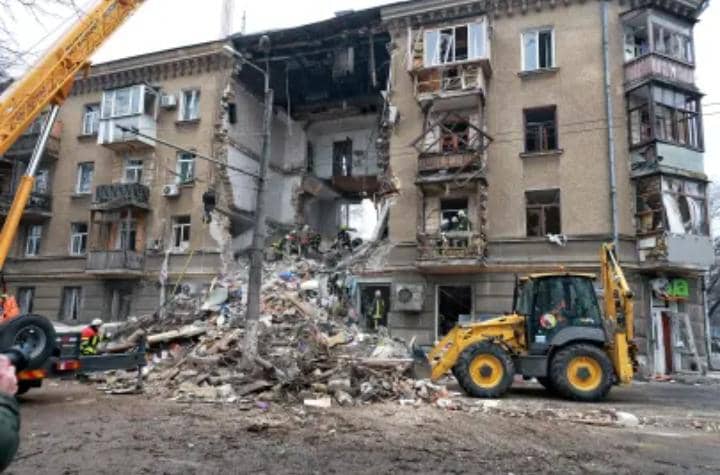
Beskrestnov, who advises Ukraine’s Defense Ministry, said the drones were not limited to battlefield targets but were used against rear and frontline cities, including residential areas.

He described the tactic as the use of civilian communication technology for violent purposes, arguing it blurs the line between commercial innovation and military exploitation.

Starlink, operated by SpaceX, was designed to provide high-speed internet access through a network of low-Earth orbit satellites, particularly in remote or disaster-affected regions.
Ukraine itself has relied heavily on Starlink since the early days of Russia’s full-scale invasion, using the system to maintain battlefield communications and civilian connectivity after infrastructure attacks.
The allegation that Russian forces are now using the same technology marks a troubling shift in the technological balance of the conflict.
Analysts say satellite connectivity gives drones greater operational flexibility by reducing reliance on ground-based control systems that can be jammed or disrupted.
With satellite links, drones can travel longer distances, adjust routes in real time, and potentially reach targets previously considered out of range.
Ukrainian officials warn that this capability could allow Russian drones to approach or even cross into areas near NATO territory, raising broader regional security concerns.
While there is no public evidence that NATO airspace has been violated, defense analysts say the expanded range increases the risk of escalation or miscalculation.
The use of Starlink by Russian forces also raises questions about how the terminals were acquired and whether safeguards are sufficient to prevent misuse.
SpaceX has previously said Starlink services are not authorized for Russian military use and that the company takes steps to restrict access when abuse is identified.
However, experts note that Starlink terminals can change hands through black markets, battlefield capture, or indirect supply routes.
The situation highlights a growing challenge for governments and private companies as commercial technologies become increasingly central to modern warfare.
Civilian tools originally built for communication, navigation, or logistics are now routinely adapted for military purposes, often faster than regulations can respond.
For Ukraine, the alleged use of Starlink by Russian drones adds another layer of urgency to calls for tighter international controls on dual-use technologies.
Western governments are now under pressure to examine how commercial satellite systems are monitored and how misuse can be detected and blocked more effectively.
The controversy also underscores the broader evolution of the war in Ukraine, which has become a testing ground for advanced drone warfare and satellite-enabled combat.
As the conflict continues, the intersection of private technology and state violence is likely to remain a defining issue.
What happens next will depend on how quickly companies, governments, and international partners can adapt rules designed for peace to the realities of modern war.

