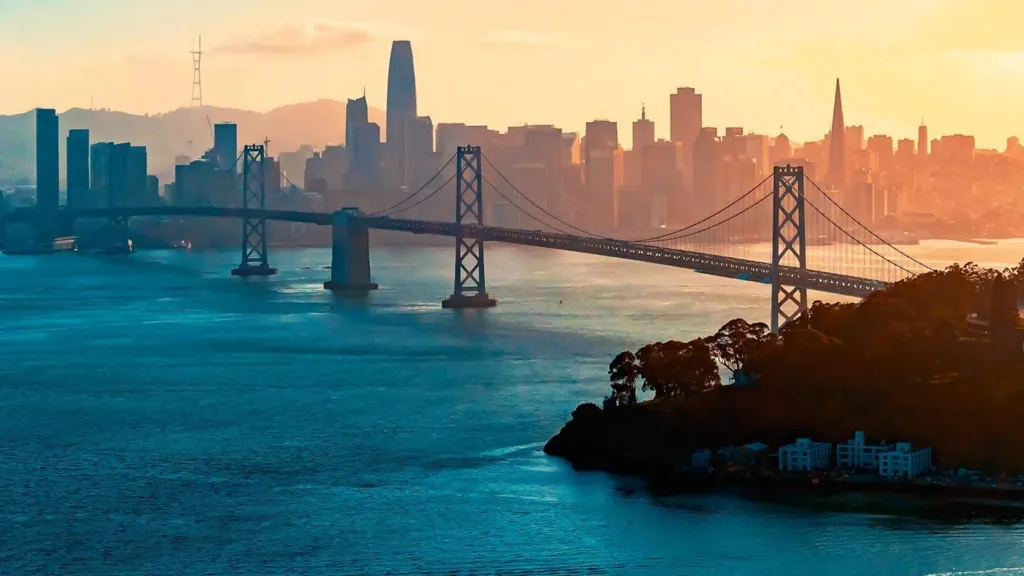
San Francisco is benefiting from AI investment, but an industry downturn could affect local jobs, offices and service businesses.
San Francisco’s AI boom is bringing new business to the city, but it is also raising fears of a painful downturn. Dog-walking firm Paw Perk, for example, has expanded by serving offices at AI start-ups, the BBC reports. Yet the International Monetary Fund has warned that weaker AI investment could trigger a market correction. The city’s dependence on technology, and the limits of that dependence, are central to the debate.
San Francisco’s AI boom reaches local businesses
OpenAI, Anthropic and many smaller AI companies have made San Francisco a hub for the industry. Their hiring, office demand and spending have helped revive parts of a city hit by pandemic-era departures and remote work. The BBC also described rising rents, lower office vacancies and AI adverts as visible signs of expansion. These markers show momentum, but do not establish how durable the boom will be. Anthropic’s shares began trading on Nasdaq on November 19, a recent sign of the sector’s rapid growth.
Some benefits reach businesses beyond technology. The BBC profiled Lauren Goldboss, whose dog-walking company added office services for AI firms and hired workers. Businesses that serve office employees can gain customers when start-ups expand, even if they do not build AI products themselves.
AI market correction: a risk, not a forecast
The IMF’s October financial stability report identified a possible AI-driven market correction as one risk to global markets. It warned that if investment or profits prove weaker than expected, AI-related asset prices could fall. The IMF also described borrowing, leveraged investment and links between companies as factors that could amplify stress.
That warning does not mean the IMF expects an imminent crash. It describes a potential downside scenario, alongside other risks such as higher government bond yields and cyberattacks. The fund says market vulnerabilities could make a shock more damaging, but its warning is not a prediction that AI investment will collapse.
San Francisco’s exposure goes beyond tech firms
A downturn could affect more than start-ups and their investors. The BBC quoted UC Berkeley economist Enrico Moretti warning that reduced hiring and layoffs could cut spending at restaurants, shops and personal-service businesses. Office vacancies could rise again, while weaker demand could pressure rents and home prices.
The scale of that exposure is hard to measure precisely. The BBC cited a study estimating that San Francisco companies received 60% of U.S. venture investment in AI firms from 2023 through 2025. It also reported Moretti’s estimate that the city remained about 35,000 jobs below its pre-pandemic peak. Those figures suggest strong AI concentration alongside a broader recovery that remains incomplete.
“The city’s economy has not been screaming during this AI boom, so I wouldn’t expect it to grind to a halt if there was a slowdown in AI spending.” — Ted Egan, chief economist for the City and County of San Francisco
Egan’s view, reported by the BBC, is that the city may be able to absorb a slowdown. He also noted that the current AI boom has not produced major overall technology job growth. That could limit immediate job losses, though it would not prevent service businesses from feeling a drop in customer spending.
Other industries may cushion a downturn
San Francisco’s fortunes do not depend on AI alone. The city has also been encouraging tourism and healthcare, and its chief economist told the BBC that tourism growth had been healthy. More varied sources of activity could help cushion a drop in technology investment.
Still, the local effects would depend on how severe and prolonged any slowdown became. A sharp fall in company valuations might reduce investment and hiring, but it would not automatically mean the wider economy collapses. The IMF’s concern is about broader financial channels; the BBC’s local reporting describes possible spillovers into jobs, offices and consumer services.
Ultimately, San Francisco is benefiting from AI growth while remaining exposed to its ups and downs. The IMF has outlined what could happen if investment and profits disappoint, not announced that a crash is coming. City leaders and businesses will keep watching employment, office demand and other industries. A more diversified economy could make the next downturn easier to manage.