


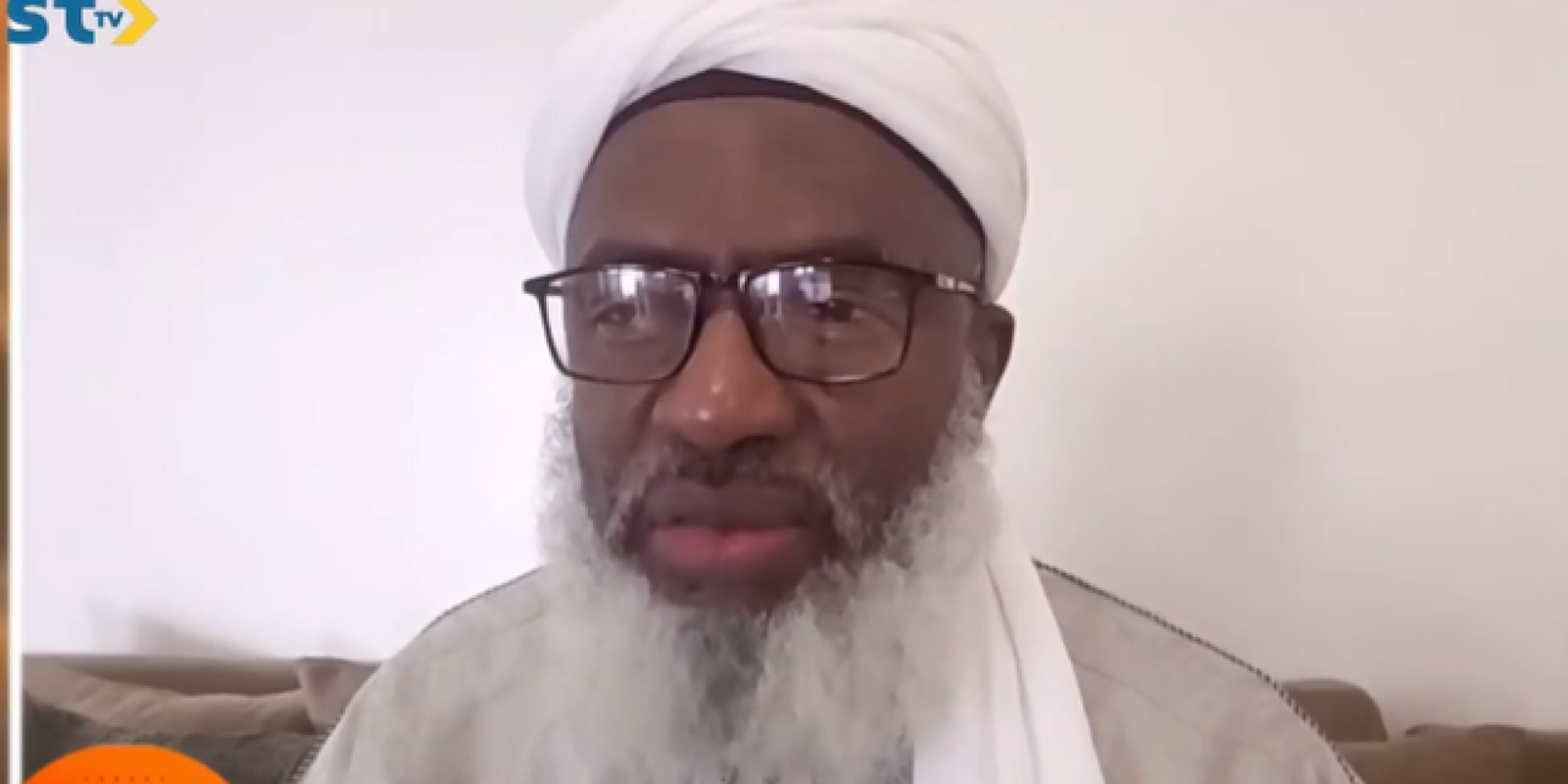
Prominent Islamic cleric Sheikh Ahmad Gumi has reacted to the reported killing of Abu-Bilal al-Minuki, a senior figure linked to the Islamic State network, following a joint counterterrorism operation involving Nigerian security forces and the United States military.
The cleric’s comments came shortly after the Defence Headquarters in Abuja confirmed that al-Minuki was killed during what officials described as a highly coordinated military operation carried out in collaboration with American forces. The announcement has since generated widespread reactions across political, religious, and security circles both within Nigeria and internationally.
In a message posted on his verified Facebook page, Gumi acknowledged that fighting terrorism remains a moral and religious obligation but criticised the participation of foreign powers he accused of having histories associated with civilian casualties in conflict zones.

“It’s a religious obligation to annihilate terrorists, but not with Beelzebub and hands stained with the blood of innocent men, women, and children,” the cleric wrote.
The statement immediately drew attention online, with supporters and critics offering differing interpretations of his remarks. While some viewed the statement as a criticism of Western military intervention, others interpreted it as an attempt to caution against external influence in Nigeria’s internal security operations.
Nigerian Military Confirms Major Counterterrorism Breakthrough
The reaction followed an official statement issued by the Defence Headquarters through Major General Samaila Uba, confirming that Abu-Bilal al-Minuki had been eliminated during a joint operation involving Nigerian and United States security forces.
According to military authorities, the operation was based on months of intelligence gathering, surveillance coordination, and operational planning aimed at tracking one of the most influential extremist figures linked to the Islamic State network in West Africa and the Sahel region.
The military described al-Minuki as a strategic operational commander who allegedly played a key role in coordinating insurgent activities, propaganda networks, and tactical support systems for extremist factions operating across multiple countries.
Officials also stated that the operation represented a significant milestone in regional counterterrorism efforts and reflected growing intelligence cooperation between Nigeria and the United States in addressing insurgency threats across the Lake Chad Basin.
Donald Trump Announces Joint Mission
Former United States President Donald Trump also confirmed the operation through a statement posted on his Truth Social platform, where he said the mission was conducted under his directive and involved extensive planning and coordination between American and Nigerian military personnel.
Trump described the mission as “meticulously planned” and “very complex,” adding that the operation targeted one of the most dangerous terrorist figures linked to ISIS operations globally.
His comments quickly drew international attention, particularly because of the significance attached to al-Minuki’s reported position within the Islamic State command structure.
Alleged Position Within Global ISIS Structure
According to intelligence assessments referenced by Nigerian military authorities, al-Minuki was believed to occupy one of the highest positions within the global ISIS hierarchy.
The Defence Headquarters disclosed that recent intelligence reports suggested he may have been elevated earlier in 2026 to the role of Head of the General Directorate of States within the Islamic State network, effectively making him one of the organisation’s most senior operational leaders worldwide.
Military officials stated that his influence extended beyond Nigeria, with alleged involvement in extremist coordination across West Africa and the broader Sahel region. Authorities also accused him of overseeing propaganda systems, financial coordination, weapons development, and operational planning linked to ISIS affiliated groups.
Security analysts believe that his presence contributed to tactical changes observed in insurgent operations in recent years, including coordinated night raids, increased use of improvised explosive devices, and growing deployment of surveillance drones by extremist factions operating in northeastern Nigeria.
Link to Dapchi Schoolgirls Kidnapping
The Nigerian military also linked al-Minuki to the 2018 abduction of more than 100 schoolgirls from Dapchi in Yobe State, one of the most widely condemned terrorist attacks in Nigeria’s recent history.
The attack drew global outrage and renewed international attention to insecurity in the North East, particularly following the continued captivity of Leah Sharibu, one of the students who remains missing after reportedly refusing to renounce her Christian faith.
Military authorities described al-Minuki as a key operational figure connected to extremist activities during that period, although independent verification of all allegations remains part of ongoing intelligence assessments.
Renewed Debate Over Counterterrorism Strategy
Gumi’s comments have reignited debate about Nigeria’s approach to combating terrorism and the role of foreign military partnerships in domestic security operations.
The cleric has remained a controversial figure in Nigeria’s security discourse over the years due to his previous advocacy for dialogue and negotiation with armed groups operating in northern Nigeria. He has repeatedly argued that military force alone cannot permanently resolve insecurity without addressing social and economic conditions fueling violence.
Critics, however, have frequently accused him of appearing sympathetic toward armed groups, an allegation he has consistently denied.
His latest remarks once again generated mixed public reaction. Some Nigerians criticised the statement as insensitive following the reported elimination of a major extremist commander, while others defended his right to question foreign military involvement and civilian casualty concerns associated with international counterterrorism campaigns.
International Attention on the Sahel Crisis
The operation against al-Minuki also reflects increasing international concern over the deteriorating security situation across the Sahel region, where extremist groups linked to ISIS and Al Qaeda affiliates have expanded activities in recent years.
Countries including Mali, Burkina Faso, and Niger have experienced rising insurgent violence amid political instability and weak state institutions. Western governments increasingly view the region as a major security hotspot with potential global implications.
Security experts note that cooperation between Nigeria and international partners is likely to continue as authorities seek to contain cross border insurgent networks and prevent extremist expansion across West Africa.
While analysts describe the elimination of al-Minuki as a major tactical success, they also warn that long term stability will require sustained intelligence operations, economic development, community rebuilding, and stronger governance structures in vulnerable regions.




