


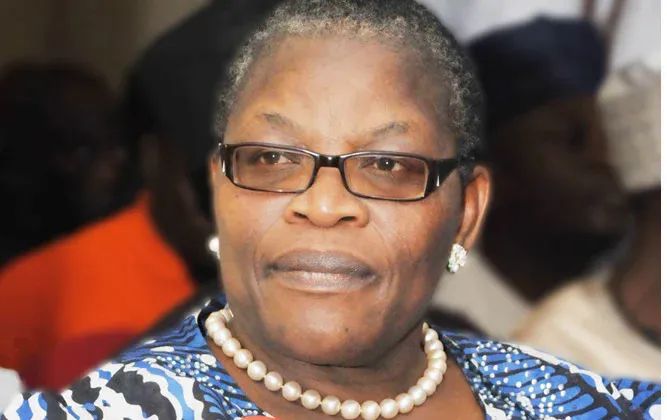
ABUJA, Nigeria — Former Minister of Education Obiageli Ezekwesili has warned that the creation of state police alone will not solve Nigeria’s insecurity crisis, urging instead a comprehensive restructuring of the country’s governance architecture as the only path to lasting solutions.
Ezekwesili made the remarks on Monday during a policy dialogue on national security and federalism held in Abuja. She argued that while state police may address certain operational gaps in the current security framework, it is merely a symptom of a deeper malaise that requires fundamental changes to how Nigeria is governed.
The former minister, who also served as Vice President of the World Bank’s Africa Region, cautioned that proponents of state police often present it as a magic bullet for insecurity. She insisted that without addressing the structural imbalances, fiscal federalism issues, and governance deficits that fuel criminality, decentralising the police force would only create new problems without solving existing ones.
According to Ezekwesili, true security can only be achieved when Nigerians feel a sense of ownership over their government and when states have the resources, autonomy, and accountability mechanisms to respond to the unique challenges of their communities. She noted that the current centralised system concentrates power and revenue at the federal level while leaving states and local governments starved of the means to govern effectively.

The former minister pointed to the disparity between the number of police personnel and Nigeria’s population as one indicator of the problem, but argued that simply splitting the Nigeria Police Force into state commands would not magically increase the number of well-trained, well-equipped, and well-motivated officers on the streets.
Ezekwesili further argued that many of the drivers of insecurity—including poverty, unemployment, inequality, environmental degradation, and communal conflicts—are local in nature and require local solutions. However, under the current structure, state governments lack both the constitutional powers and the fiscal resources to address these root causes meaningfully.
She called for a national conversation on restructuring that goes beyond the creation of state police. This conversation, she said, must include a review of the revenue allocation formula, resource control, devolution of powers, local government autonomy, and the creation of a truly federal system where states can legislate on matters that affect their citizens directly.
The former minister also criticised the federal government’s approach to security, which she described as reactive rather than proactive. She noted that the military and police have been stretched thin across the country, responding to emergencies in the North-East, North-West, North-Central, South-East, and South-South simultaneously, with little coordination and fewer results.
Ezekwesili urged President Bola Tinubu to use his political capital to champion a restructuring agenda, noting that the President has previously spoken in favour of fiscal federalism and devolution of powers. She argued that now is the time to translate those words into concrete actions that will outlast his administration.
The former minister’s comments come amid renewed debate over the establishment of state police in Nigeria. The majority of state governors have expressed support for the idea, arguing that state police forces would respond more quickly to local emergencies and be more accountable to communities. The federal government has indicated openness to the proposal, with Vice President Kashim Shettima recently stating that state police may be inevitable.
However, opponents of state police, including some civil society groups and federal lawmakers, have raised concerns about potential abuse by state governors, particularly in a country where political opponents and minority groups are often targets of state repression. Ezekwesili acknowledged these concerns but argued that proper safeguards, including robust civilian oversight mechanisms, could mitigate such risks.
The former minister concluded her address by calling on Nigerians to demand a comprehensive restructuring agenda from all political leaders, not just piecemeal reforms. She warned that without fundamental change, the country would continue to lurch from one crisis to another, applying temporary fixes to problems that require systemic solutions.
As the debate over state police continues to gain momentum in political and policy circles, Ezekwesili’s intervention adds a critical voice to the conversation. For now, her message to the government and the opposition alike is clear: stop tinkering around the edges and address the structural flaws at the heart of Nigeria’s federal experiment.




