ABUJA, NIGERIA — Nasarawa State Governor, Abdullahi Sule, has highlighted the historical and geographical relationship between his state and the Federal Capital Territory, claiming that Nasarawa contributed more than 90 per cent of the land used to establish Nigeria’s capital.
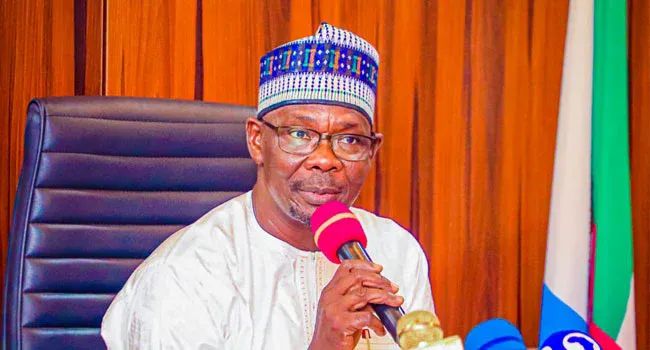
Sule made the statement while speaking at the Global Alliance World Public Relations Forum in Abuja on Wednesday, November 18, 2026, where he called for greater recognition of Nasarawa’s historical contribution to the creation of the Federal Capital Territory.
The governor explained that the territory occupied by present-day Abuja was carved out of areas that previously belonged to Nasarawa, Plateau and Niger states. He described Nasarawa as one of the capital’s closest neighbours, arguing that its geographical connection with Abuja makes the relationship between the two territories particularly significant.
According to him, the state accounted for more than 90 per cent of the territory taken from the former administrative areas to establish the capital.
Sule also used the occasion to draw attention to the close proximity between Nasarawa communities and the Federal Capital Territory, noting that residents and visitors could travel from Abuja into parts of the state within minutes.
His remarks were intended to underscore the importance of recognising the historical relationship between the two territories and strengthening cooperation in areas of shared economic and social interest.
The governor said Nasarawa’s proximity to Abuja presented considerable opportunities for deeper partnerships, particularly in commerce, investment, infrastructure, housing and other activities that connect the capital with surrounding communities.
The relationship between Nasarawa and Abuja has become increasingly important as the Federal Capital Territory continues to expand, attracting residents, businesses and investors from different parts of Nigeria.
Communities in Nasarawa, particularly those within the Karu, Keffi and other neighbouring corridors, have become closely connected to the economic and residential activities of the capital. Their proximity provides opportunities for people who work or conduct business in Abuja to live, invest and access services across the state.
This geographical connection also creates growing demands for coordinated infrastructure, including roads, transportation networks, electricity, water supply, healthcare and urban planning.
For Nasarawa, the relationship presents opportunities to attract investments that could benefit from proximity to the federal capital without necessarily operating within Abuja’s administrative boundaries.
However, the same relationship requires cooperation between the state government and the Federal Capital Territory Administration to address challenges associated with population growth, traffic congestion, housing demand, environmental management and the provision of public services across adjoining communities.
Sule’s comments also come against the background of broader discussions about the historical development of Nigeria’s capital and the administrative changes that accompanied its establishment.
The Federal Capital Territory was created in 1976 following the decision to relocate Nigeria’s capital from Lagos to a centrally located territory. Abuja was subsequently developed as the country’s administrative and political centre, with the transfer of government operations taking place in stages before the formal relocation of the seat of government in December 1991.
The governor’s assertion about Nasarawa’s contribution adds another dimension to discussions about the territorial history of the capital and its relationship with neighbouring states. The specific claim that the state contributed more than 90 per cent of the land was presented as Sule’s account at the forum and would require historical boundary records for independent verification.
Beyond the historical debate, the governor’s message placed emphasis on the need for stronger relations between Nasarawa and the FCT.
As Abuja continues to grow, cooperation with neighbouring states will remain important for managing urban expansion, improving connectivity and ensuring that economic opportunities extend beyond the capital’s administrative boundaries.
Sule’s remarks therefore highlighted his administration’s interest in positioning Nasarawa as a strategic partner in the development of the Federal Capital Territory, while seeking greater recognition of the state’s historical and geographical links with Nigeria’s seat of power.