


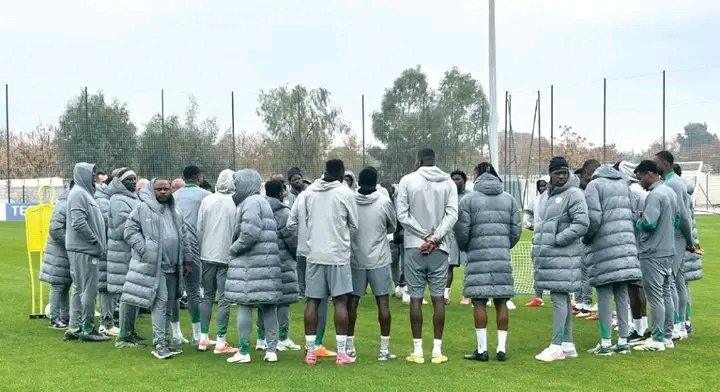
Nigeria’s painful absence from the 2026 FIFA World Cup should become the foundation for a stronger and more determined Super Eagles team as preparations begin for the road to the 2030 tournament.
While football fans around the world celebrated Spain’s victory over Argentina in the World Cup final, millions of Nigerians watched with mixed emotions, wondering what might have been had the Super Eagles secured qualification for football’s biggest competition.
The disappointment remains difficult to accept, especially because the 2026 tournament featured an expanded format with 48 participating nations and a record allocation of 10 automatic qualification places for Africa. Many expected Nigeria, one of the continent’s traditional football giants, to comfortably book a place in the tournament.

Instead, the Super Eagles were forced to watch from home, extending a frustrating period that has left supporters demanding major reforms within the national team and the Nigeria Football Federation.
The team’s official social media account captured the mood of many Nigerians shortly after the World Cup final with a simple message congratulating Spain on winning the title before adding, “See you in 2030.”
Although brief, those words carried enormous significance. They reflected not only hope but also a challenge that now confronts Nigerian football over the next four years.
For that message to become reality, experts believe the Super Eagles must avoid repeating the costly mistakes that derailed their 2026 qualification campaign.
One of the biggest problems identified during the failed campaign was instability in the technical leadership of the national team.
Frequent managerial changes disrupted continuity, making it difficult for the players to develop a consistent style of play. Before Franco-Malian coach Eric Chelle took charge, the Super Eagles experienced uncertainty with previous coaching appointments, preventing the team from building momentum during crucial qualification matches.
Football analysts believe maintaining stability on the coaching bench will be essential if Nigeria hopes to return to the World Cup.
Rather than constantly changing direction, the national team requires a long term project built around clear objectives, tactical consistency and gradual improvement.
Officials at the National Sports Commission have already indicated that discussions have been held with Chelle regarding a long term plan focused on winning the next Africa Cup of Nations and qualifying for the 2030 FIFA World Cup.
According to NSC Chairman Shehu Dikko, Nigeria must begin preparations immediately to ensure the mistakes that undermined the previous qualification campaign are not repeated.
Another lesson from the failed qualification campaign is the need to build greater squad depth.
Throughout the qualifiers, Nigeria struggled whenever key players were unavailable through injury or suspension. Heavy reliance on a small group of established stars exposed weaknesses within the squad and limited the team’s ability to cope with unexpected setbacks.
Looking ahead to 2030, succession planning has become increasingly important.
Several of Nigeria’s current stars, including Victor Osimhen, Ademola Lookman, Wilfred Ndidi, Alex Iwobi and Moses Simon, will be entering the latter stages of their careers by the time the next World Cup arrives.
That reality means the coaching staff must begin integrating younger players capable of carrying the national team into a new era.
Giving emerging talents regular opportunities in international friendlies and competitive fixtures will help ensure Nigeria has a stronger and more balanced squad when qualification begins.
Former Super Eagles captain William Troost-Ekong believes the painful experience of missing the 2026 World Cup can become an important lesson for the next generation.
According to him, setbacks often help players mature, improve mentally and prepare better for future challenges.
His comments reflect a growing belief that Nigeria still possesses enough talent to compete successfully at the highest level if proper structures are put in place.
Beyond football matters, administrative efficiency will also play a decisive role.
Disputes over player bonuses and welfare became recurring distractions during previous campaigns, affecting morale at crucial moments.
Experts insist such issues must be resolved before future qualification matches begin, allowing players to focus entirely on football.
Former Nigerian international Garba Lawal also believes qualification for the 2030 World Cup must become the country’s highest football priority.
According to him, Nigeria belongs among the world’s elite football nations and cannot afford another painful absence from the global showpiece.
Goalkeeper Maduka Okoye echoed similar optimism, insisting the Super Eagles possess enough quality to compete with the best teams in Africa.
He believes the disappointment of missing one World Cup should motivate the players to work harder and return stronger during the next qualification cycle.
The journey to the centenary FIFA World Cup, which will be jointly hosted by Spain, Portugal and Morocco in 2030, presents Nigeria with an opportunity to restore its reputation as one of Africa’s football powerhouses.
Achieving that objective will require careful planning, stable leadership, effective youth development and consistent performances throughout the qualification campaign.
For millions of Nigerian supporters, the disappointment of 2026 remains fresh.
However, football has always been a game of redemption, and the Super Eagles now have four years to transform heartbreak into hope.
If the lessons from the failed qualification campaign are genuinely embraced, Nigeria can once again earn its place on football’s biggest stage and ensure that “See you in 2030” becomes more than just a hopeful slogan. It can become the beginning of a successful new chapter in the history of the Super Eagles.




