


For many years, businesses viewed supply chains primarily through the lens of cost, speed and efficiency. Companies wanted to source raw materials as cheaply as possible, manufacture products at competitive prices and move finished goods to customers as quickly as possible. Environmental concerns were often treated as a separate issue, handled by corporate social responsibility departments rather than integrated into everyday business decisions.
That approach is changing.
Sustainability is increasingly becoming a central part of supply-chain strategy as businesses face pressure from customers, investors, regulators and international partners to understand where their products come from, how they are produced and what environmental and social impact is created along the way.
The modern supply chain is no longer simply about moving products from manufacturers to consumers. It is becoming a complex network in which businesses are expected to understand emissions, energy consumption, waste, packaging, labour conditions, sourcing practices and the environmental risks associated with their suppliers.

For companies operating in global markets, sustainability is rapidly becoming more than a corporate slogan. It is becoming a business requirement.
Why Supply Chains Are at the Centre of Sustainability
A company’s environmental footprint does not necessarily come from its own offices or factories.
A large portion can exist deep within its supply chain.
A fashion company, for example, may not manufacture its own fabric. Its suppliers may purchase fibres from another company, which sources raw materials from yet another producer. Those materials may then travel across several countries before becoming a finished garment.
The same pattern exists across food, electronics, automobiles, construction, pharmaceuticals and consumer goods.
This means a company cannot fully understand its environmental impact simply by examining its own operations.
It must increasingly examine the entire chain.
That is why businesses are paying greater attention to supplier emissions, transportation, packaging, waste management, water use, energy sources and the sustainability of raw materials.
The supply chain is becoming one of the most important places where environmental improvements can be achieved.
Sustainability Is Becoming a Competitive Advantage
One of the biggest misconceptions about sustainable business is that it is primarily an expense.
While implementing greener systems can require significant investment, sustainability can also create opportunities for businesses to reduce costs and become more competitive.
Reducing energy consumption can lower operating expenses. Optimising transportation can reduce fuel costs. Minimising packaging can reduce material expenses. Better inventory management can reduce waste. Recycling and reusing materials can create additional value from resources that would otherwise be discarded.
A sustainable supply chain can therefore become a more efficient supply chain.
Companies are also discovering that sustainability can influence consumer decisions.
Customers are increasingly interested in how products are made, what materials are used and whether businesses operate responsibly. This is particularly important for younger consumers who may research brands before purchasing.
A company that can demonstrate responsible sourcing and transparent production may have an advantage over competitors that cannot explain where their products come from.
Transparency Is Becoming Essential
One of the biggest changes in modern supply chains is the demand for transparency.
Businesses are increasingly expected to know who their suppliers are and what happens beyond the first level of their supply network.
This is challenging because global supply chains can involve hundreds or thousands of companies.
A major manufacturer may know its direct supplier but have limited visibility into the companies supplying that supplier.
That creates what is often called a “hidden” or lower-tier supply chain.
If a company discovers that an important raw material is linked to environmental damage or poor labour practices, it may face reputational and financial consequences even if the problem occurred several steps away from its own operations.
Technology is helping businesses address this challenge.
Digital supply-chain platforms, data analytics, artificial intelligence, satellite monitoring and blockchain-based tracking systems are increasingly being explored to improve visibility.
Businesses can use these technologies to collect information from suppliers, monitor transportation, track materials and identify potential risks earlier.
The objective is simple: know more about the journey of a product before it reaches the customer.
Regulation Is Changing the Conversation
Another major force pushing sustainability into supply-chain management is regulation.
Governments and regional institutions are increasingly introducing rules requiring companies to provide greater information about environmental and social impacts.
The European Union, for example, has introduced several sustainability-related requirements affecting companies operating within or selling into the European market. These developments are forcing businesses to examine emissions, sourcing practices and supply-chain data more carefully.
For companies outside Europe, including African businesses that export goods to European customers, these developments can have significant consequences.
A Nigerian agricultural exporter, for example, may increasingly need to demonstrate where products were sourced, how they were produced and whether relevant environmental and social requirements were satisfied.
This means sustainability requirements can eventually affect market access.
A business that ignores changing standards may find itself struggling to compete internationally, while companies that prepare early can position themselves as reliable suppliers.
Small Businesses Are Not Exempt
Sustainability is sometimes presented as an issue only large multinational corporations can afford to address.
That is changing.
Small businesses are increasingly becoming part of sustainability expectations because they often operate as suppliers to larger organisations.
A large company may introduce sustainability requirements for every supplier it works with. Suddenly, a small manufacturer, farmer, packaging company or logistics provider may need to provide information about energy use, waste management or sourcing practices.
This creates challenges, but it also creates opportunities.
Small businesses that develop sustainable practices can differentiate themselves when competing for contracts.
A Nigerian clothing manufacturer that uses locally sourced materials, reduces fabric waste and adopts reusable packaging could potentially appeal to customers looking for more responsible products.
A food processor that reduces food waste and improves energy efficiency could lower costs while strengthening its brand.
Sustainability does not always require expensive technology.
Sometimes it begins with better processes.
African Supply Chains Have a Major Opportunity
Africa’s supply chains are particularly important in the global sustainability conversation because the continent is rich in agricultural resources, minerals, energy potential and other raw materials required by global industries.
The challenge is ensuring that this opportunity creates long-term economic value without encouraging destructive production practices.
For African businesses, sustainability can become a pathway toward stronger participation in international value chains.
Instead of exporting raw materials with limited processing, businesses can invest in responsible local processing, recycling, manufacturing and value addition.
This can create jobs while reducing unnecessary transportation and improving the economic value retained within local communities.
Nigeria, for example, has opportunities across agriculture, textiles, manufacturing, recycling, renewable energy and food processing.
The businesses that combine these opportunities with responsible production practices could become increasingly attractive to international buyers.
DDM News notes that the sustainability conversation is therefore not simply about protecting the environment. It is also about determining which businesses will remain competitive as global markets demand greater transparency, efficiency and responsible sourcing.
The Rise of Circular Supply Chains
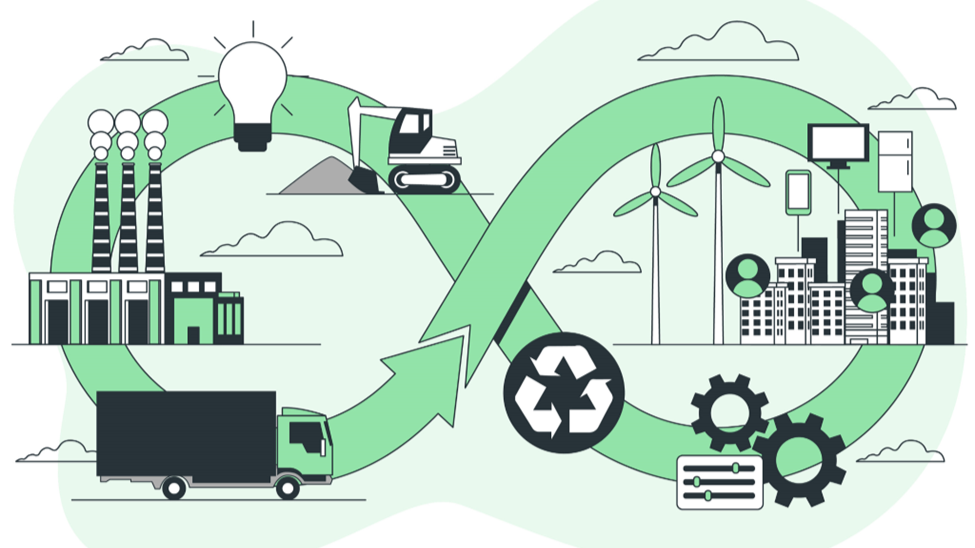
Another major development is the movement from linear to circular supply chains.
The traditional model is straightforward: extract resources, manufacture products, sell them and eventually dispose of them.
The circular model attempts to keep materials in use for as long as possible.
Products can be repaired, refurbished, reused, resold or recycled.
This creates opportunities for businesses that previously did not exist.
Companies can build businesses around product refurbishment, recycling, repair services, reusable packaging and material recovery.
In fashion, for example, clothing companies can explore resale and recycling programmes.
In electronics, businesses can refurbish used devices and recover valuable materials.
In packaging, companies can develop reusable alternatives to single-use materials.
The result is a supply chain designed not only to move products forward but also to recover value after consumption.
Sustainability and Resilience Are Becoming Connected
The global disruptions of recent years have also demonstrated that sustainability and resilience are closely connected.
Companies that rely heavily on a single supplier, region or transportation route can become vulnerable when unexpected events occur.
Diversifying suppliers, sourcing locally where practical, reducing dependence on volatile resources and improving energy efficiency can make supply chains more resilient.
Renewable energy can also reduce exposure to certain energy-price shocks.
Local sourcing can reduce dependence on international transportation.
Better inventory management can reduce vulnerability to shortages.
In this sense, sustainability is not simply about reducing environmental impact. It can also help businesses build systems capable of surviving disruption.
The Future Will Belong to Smarter Supply Chains
The supply chain of the future is likely to be more digital, transparent and accountable.
Businesses will increasingly need to know where materials come from, how they are produced, how much carbon is associated with them and what happens when products reach the end of their useful life.
Artificial intelligence can help analyse supply-chain data and identify inefficiencies. Sensors and connected devices can provide real-time information. Digital platforms can improve communication between suppliers. Renewable energy can reduce emissions. Circular production can reduce waste.
But technology alone will not solve the problem.
Businesses must change how they think about value.
The cheapest supplier may not always be the best supplier if hidden environmental or social risks eventually create financial losses. The fastest delivery may not always be the most efficient if it produces unnecessary waste and emissions. The lowest upfront cost may not represent the lowest long-term cost.
Sustainable supply chains require businesses to consider the full lifecycle of their decisions.
DDM News believes sustainability is becoming one of the defining business issues of the next decade because it sits at the intersection of profitability, regulation, consumer expectations, resilience and global competitiveness.
The businesses that prepare early will have an advantage.
They will know their suppliers better, understand their risks more clearly, reduce unnecessary waste and potentially discover new sources of revenue through recycling, local production and circular business models.
Ultimately, sustainability in supply chains is no longer simply about being environmentally responsible.
It is about building a business that can operate efficiently, survive disruption, satisfy increasingly demanding customers and remain competitive in a world where transparency matters more than ever.
The supply chains that succeed tomorrow will not simply be the ones that move products the fastest or at the lowest price.
They will be the ones that move value responsibly, efficiently and intelligently from the beginning of production to the end of a product’s life.




