tech-nevada-tech-regulators-clear-tesla-paid-robotaxis
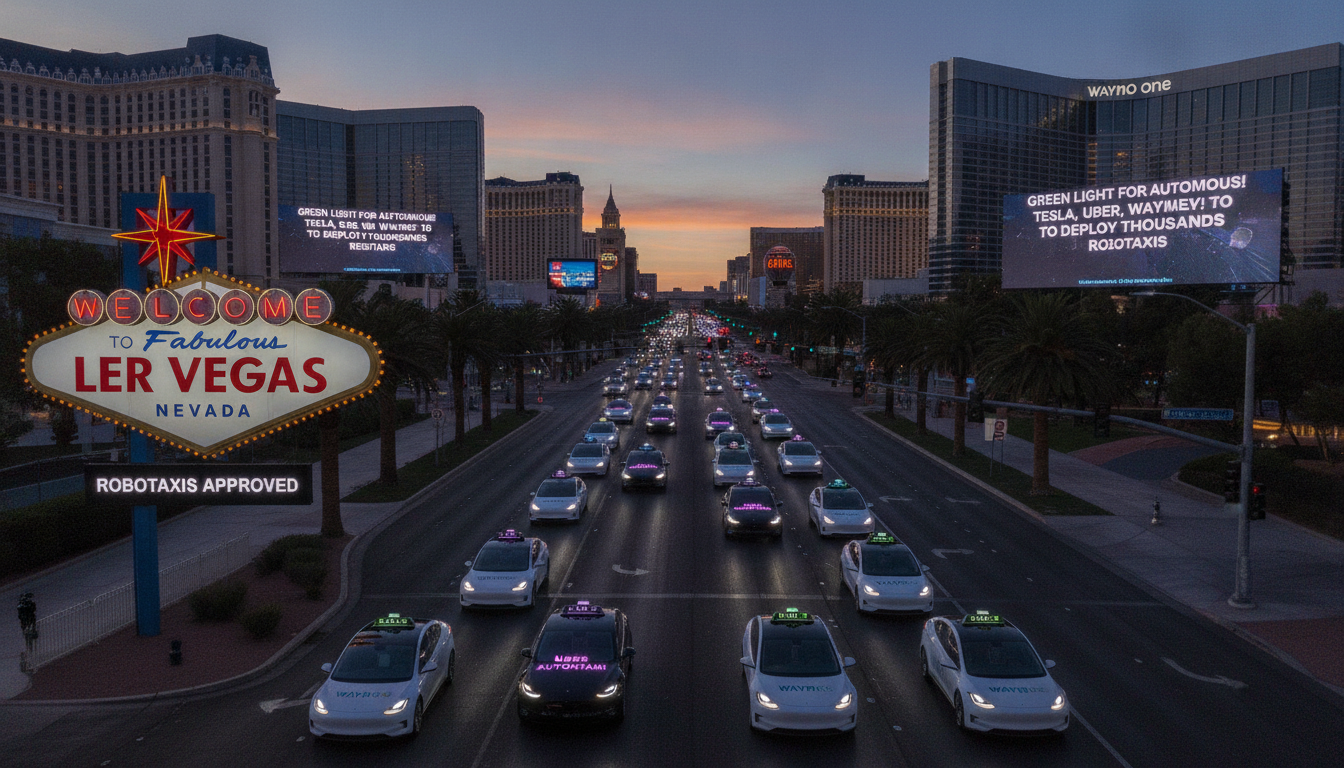
Nevada Tech Regulators Clear Tesla Paid Robotaxis The Nevada Transportation Authority just approved Tesla, Waymo, and Uber to deploy thousands of commercial driverless cars. This regulatory tech green light will launch paid autonomous rides across Las Vegas completely within a year. Nevada officials have officially approved Tesla, Uber, and Waymo tech to operate thousands of paid robotaxis on Las Vegas streets this year.
Specifically, a major regulatory shift has just changed the autonomous driving landscape. Nevada officials approved new tech permits for top giant companies. They will soon launch paid robotaxi services in Clark County. This includes the busy streets of Las Vegas.
The New Robotaxi Permits
Specifically, the Nevada Transportation Authority held a major session on Thursday. Consequently, regulators granted full autonomous network permits to three giant companies. Therefore, Tesla can now deploy up to 5,000 autonomous vehicles. Furthermore, both Uber and Waymo received permission to run 1,000 cars each. Meanwhile, these new tech permits replace much stricter older limits. Ultimately, Tesla previously held a tiny ten-vehicle limit in July.
Additionally, this new approval covers all of Clark County entirely. However, the companies must complete several routine administrative steps first. For example, they must finalize vehicle inspections and insurance filings quickly. Consequently, the commercial paid rides should start within thirty days. Indeed, Uber plans to rely on its vast existing user base. As a result, riders can book self-driving cars directly through apps.
The Battle For Las Vegas
Simultaneously, Las Vegas has become a major testbed for autonomous vehicles. Therefore, multiple brands want a piece of this lucrative market. Specifically, Waymo already started testing fully driverless cars in July. Additionally, Amazon owned Zoox is also operating its own robotaxis there. In contrast, Tesla claims to use vision-based AI for its cars. Through this, Elon Musk wants to redefine modern urban mobility completely.
Furthermore, this move aligns with broader global tech automation trends. For example, AI is creating new ways to make money everywhere today. Meanwhile, companies are rushing to scale their autonomous tech services fast. However, Tesla executives note they will not deploy 5,000 cars instantly. Instead, they aim to place 2,500 active robotaxis by next year. Ultimately, a slow rollout helps ensure public safety on crowded streets.
Safety Rules And Limits
However, regulators still enforce strict rules for these self-driving fleets. Specifically, all autonomous cars must feature clear robotaxi labels outside. Additionally, passengers must know they are riding in a driverless car. Furthermore, trips still require some form of remote human oversight. Indeed, safety remains the highest priority for the Nevada Transportation Authority. Consequently, companies must report any accidents or sudden system failures quickly.
Additionally, the state demands full transparency regarding all trip fares. Therefore, companies must submit their pricing structures before launching services. In contrast, older pilot programs often gave free rides to testers. Consequently, the shift to paid fares changes the entire business model. Indeed, regulators want to protect consumers from sudden price surges. Ultimately, clear pricing rules help build strong trust with local riders.
Meanwhile, Tesla must work closely with local law enforcement teams. For example, they are making training videos for local first responders. Therefore, emergency crews will learn how to handle driverless vehicle crashes. In contrast, critics still question the safety of vision-only driving systems. Specifically, bad weather can sometimes blind standard optical vehicle cameras easily. As a result, regulators will watch this tech deployment very closely.
Expanding Future Tech
Ultimately, this Nevada decision sets a huge precedent for other states. Therefore, more regions might soon approve paid autonomous driving services. Consequently, the tech race will move beyond simple pilot testing programs. Indeed, commercial deployment offers a real path to actual company profits. Furthermore, Tesla plans to expand its robotaxi reach into Texas next. Specifically, they want to serve half the country by next year.
Simultaneously, the autonomous vehicle market faces intense global competition now. For example, Uber is launching driverless rides in Dubai soon. Meanwhile, Chinese firms are also expanding their own automated fleet operations. As a result, American companies must innovate quickly to stay ahead. Therefore, swift regulatory approvals remain vital for domestic technology growth. Specifically, this fast progress will reshape public transit systems forever.
To conclude, the self-driving future is arriving faster than many expected. However, operators must balance rapid growth with strict safety protocols. Therefore, the next twelve months will test these ambitious deployment plans. Ultimately, Las Vegas residents will soon share their roads with robots.