
President Bola Tinubu declined to meet a South African delegation in Abuja on Monday, directing the envoys instead to hold talks with the Minister of State for Foreign Affairs, Ambassador Ojo Enikanolaiye, as diplomatic tensions over the recent wave of attacks on Nigerians in South Africa continue.
Presidency sources said the delegation, sent by South African President Cyril Ramaphosa, had initially arrived at the Presidential Villa on Friday without prior notice. After seeking the President’s approval, they were asked to return on Monday.
However, on the scheduled day, Tinubu reportedly instructed the delegation to meet with Enikanolaiye, who would brief him on the outcome of the discussions.
“They came on Friday without prior notice. We sought the President’s approval, and he agreed to see them on Monday. But when Monday came, he directed them to meet the Minister of State for Foreign Affairs instead,” one Presidency source said.
A second official confirmed that the meeting with Tinubu would no longer take place, while another said it was not included in the President’s schedule.
The South African delegation reportedly remained in Abuja throughout the weekend after arriving on July 24 with a message from President Ramaphosa.
Sources also disclosed that Minister of Foreign Affairs Bianca Odumegwu-Ojukwu, who is currently attending official engagements in Addis Ababa, advised against a presidential meeting while attacks on Nigerians and their businesses in South Africa were still ongoing.
Welcoming the delegation, Enikanolaiye said Tinubu had directed him to engage the envoys on finding a solution to the crisis, stressing that decades of friendship between Nigeria and South Africa should not be undermined by attacks on African migrants.
He described the recurring violence against Nigerians as deeply troubling, noting that similar incidents had been recorded in 1995, 1998, 2006, 2015, 2016, 2019, 2021, 2024 and 2026.
According to the minister, at least 98 Nigerians have been killed in mob and hate-related attacks since 2022, adding that the victims have largely been African migrants.
Enikanolaiye also recalled Nigeria’s support for South Africa during the anti-apartheid struggle, saying the attacks were inconsistent with the longstanding ties between both countries.
While reaffirming that Nigeria does not condone criminality, he insisted that anyone accused of offences should be prosecuted through the legal system rather than subjected to mob violence.
He expressed concern that many victims were law-abiding Nigerians living legally in South Africa and alleged that, in some instances, security agencies appeared unable or unwilling to stop the attacks.
The minister described the humanitarian impact as devastating, recalling the evacuation of nearly 1,500 Nigerians from South Africa after previous outbreaks of violence. He said many of those evacuated returned home traumatised after losing their homes, businesses and personal belongings.
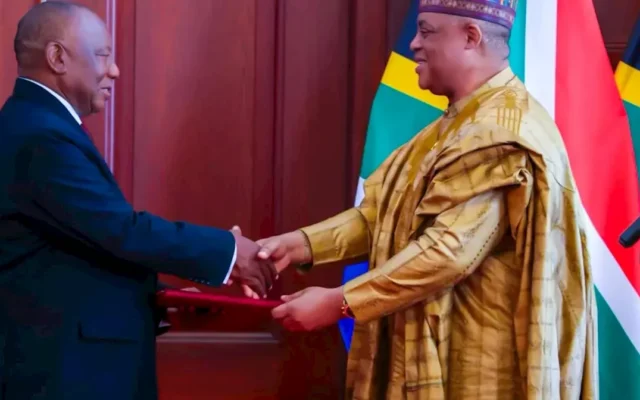
Responding on behalf of the South African government, Minister of International Relations and Cooperation Ronald Lamola said President Ramaphosa had sent him as a special envoy to deliver a message to Tinubu and reaffirm South Africa’s opposition to xenophobia, racism and all forms of discrimination.
Lamola, however, maintained that South Africa would continue to enforce its immigration laws and tackle criminal activities within its borders, while stressing that migration remains a continental challenge requiring cooperation between African countries.
He expressed optimism that the discussions in Abuja would strengthen bilateral relations and help both countries address the crisis through sustained dialogue.
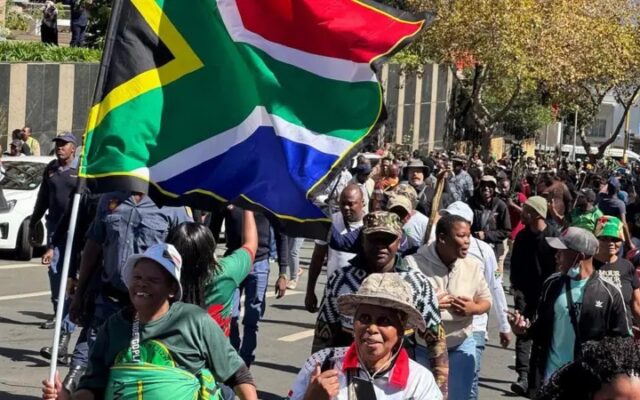
Relations between Nigeria and South Africa have come under renewed strain following a wave of xenophobic attacks that erupted across several South African provinces in April 2026. The violence prompted the Nigerian government to evacuate more than 1,000 citizens from the country and consider further diplomatic measures, while the National Assembly also called for stronger action against South African interests in Nigeria.