


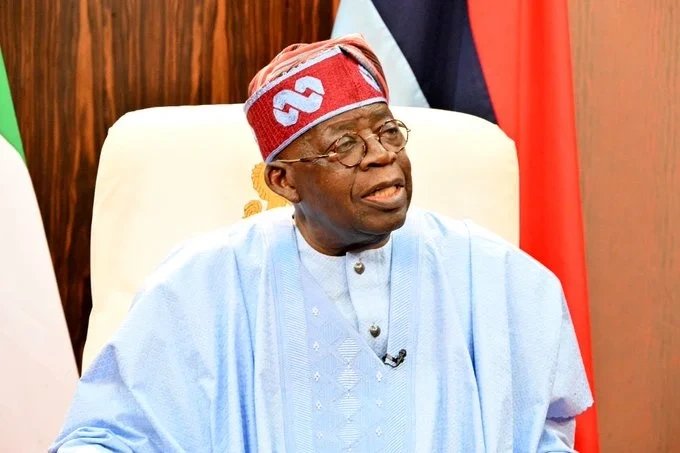
ABUJA, NIGERIA — President Bola Ahmed Tinubu has said the operationalisation of new Nigerian Army formations in Zamfara, Kebbi, Oyo and Osun states will strengthen the military’s ability to respond to security threats and protect vulnerable communities.
Tinubu disclosed this in a statement shared on his social media accounts on Sunday, saying the new formations would bring troops closer to communities and enable faster responses when threats emerge.
Troops Moved Closer To Communities
According to the President, the Nigerian Army operationalised the new formations during the week as part of efforts to expand its operational presence across the country.
“Our troops are now closer to vulnerable communities in these areas, strengthening our ability to respond swiftly and decisively when our people are threatened,” Tinubu said.

The development follows a broader restructuring of the Nigerian Army. In July, Tinubu approved the creation of four additional divisions, expanding the Army’s structure from eight to 12 divisions to improve command, operational coordination and response to emerging security challenges.
Army Expands Operational Structure
The Army has been progressively activating the new formations as they attain operational readiness.
In Zamfara, for instance, three new infantry battalions were operationalised in Bakura, Kaura Namoda and Anka in September. The Army said the units would expand its coverage and improve rapid response across their respective areas of responsibility.
The broader restructuring also includes newly established divisions in areas such as Ilorin, Jalingo and Makurdi, alongside adjustments to existing command responsibilities. The Army said the expansion was intended to improve force projection and operational effectiveness.
New Barracks And Depots
Tinubu also announced that the Federal Government was accelerating construction of new military barracks and depots in Abuja, Ekiti, Ebonyi and Kogi states.
He said facilities in Osun State had already been completed.
The President linked the projects to the welfare and working conditions of military personnel and their families, saying the government needed to provide adequate support as it demanded more from members of the Armed Forces.
“As we demand more from our men and women in uniform, we must do more to support them and their families,” he said.
Military Pay Increase
Tinubu also highlighted the recent salary increase for members of the Armed Forces, saying personnel had shared positive feedback about its impact on their families.
The President said the government recognised that military deployments affect not only servicemen and women but also their families.
“Every deployment is a sacrifice made by a family too,” he said.
The Federal Government previously approved a significant increase in military personnel salaries, with the revised pay package raising the annual salary bill for the Armed Forces from about ₦660 billion to ₦924 billion, according to Punch.
Security Challenges Persist
The expansion of military formations comes amid continuing security challenges in several parts of Nigeria, particularly in the North-West, where banditry, kidnapping and attacks on rural communities remain concerns.
Kebbi, one of the states included in the latest expansion, has also announced plans for a military base in Bagudo Local Government Area following deadly attacks attributed to bandits. The state government said the proposed base would strengthen security and support the return of displaced residents.
The government’s strategy combines expansion of military formations, improved troop welfare and additional infrastructure with ongoing security operations.
Tinubu said his responsibility as Commander-in-Chief was to ensure that the Armed Forces had the resources and support required to protect Nigerians.
“As our Armed Forces stand watch over Nigeria, my duty as Commander-in-Chief is to ensure they have the resources and support to do their job, and that Nigeria stands firmly behind the families waiting for them at home,” he said.
The effectiveness of the expanded military structure will ultimately depend on how quickly the new formations become fully operational and how effectively they coordinate with other security agencies and affected communities.




