



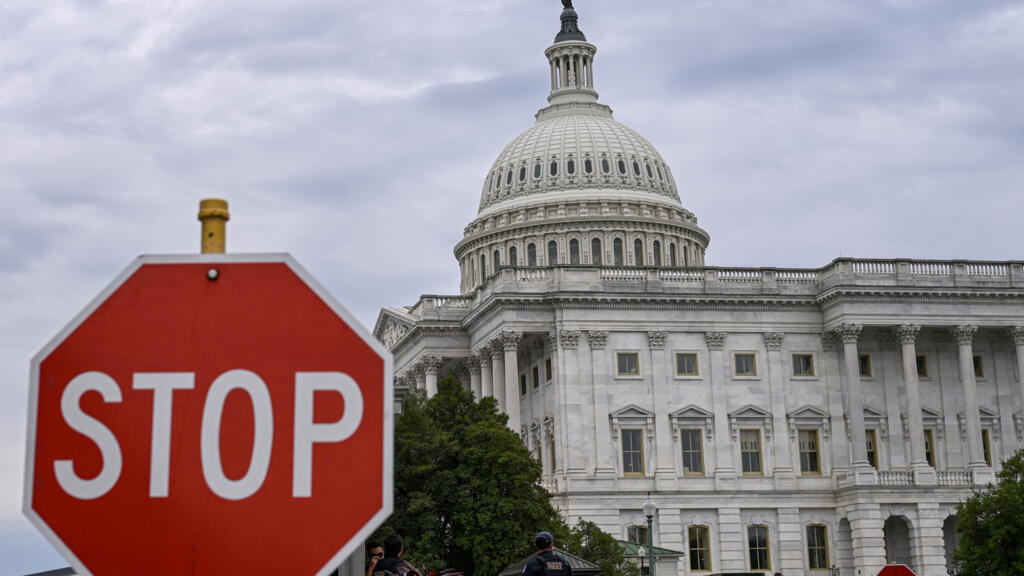
A partial shutdown of the US federal government is increasingly likely after Senate Democrats blocked a key procedural vote on Thursday, stalling efforts to keep major government departments funded amid a growing standoff over President Donald Trump’s immigration enforcement policies.
The failed vote halted progress on a six-bill spending package that would fund more than three-quarters of the federal government.
If no agreement is reached, a shutdown is expected to begin after midnight on Saturday.
Although lawmakers were expected to hold a second vote on a revised package, the process remains complicated by timing.

Even if the Senate passes an updated bill, it must still be approved by the House of Representatives, which is not scheduled to return from recess until Monday more than two days after the deadline.

Under congressional rules, both chambers must pass identical bill text before it can become law.
If the shutdown occurs, it would be the second government stoppage since Trump took office a year ago.
However, there are hopes it may be limited to the weekend, unlike last summer’s 43-day shutdown, the longest in US history.
Democrats have insisted they will not support the spending package unless the Department of Homeland Security (DHS) funding is separated and renegotiated to impose new restrictions on Immigration and Customs Enforcement (ICE), which is currently the most heavily funded federal law enforcement agency.
Senate Democratic Minority Leader Chuck Schumer accused ICE of operating outside acceptable standards, saying Congress has both the authority and responsibility to intervene.
Schumer later said the White House had agreed to a temporary framework addressing Democrats’ concerns, though US media reported that a vote on the arrangement had been delayed until Friday.
Trump urged lawmakers from both parties to back the proposal, calling for bipartisan support in a social media post.
A prolonged shutdown would likely place hundreds of thousands of federal employees on leave or require them to continue working without pay, potentially triggering economic disruption beyond Washington.
The dispute has intensified during a politically sensitive midterm election year, with Democrats and Republicans clashing over immigration enforcement, a major issue expected to influence voters as the entire House and about a third of the Senate head into reelection campaigns.
The funding confrontation has been further inflamed by outrage over recent incidents involving immigration enforcement agents.
The immediate flashpoint occurred in Minneapolis on Saturday, where an intensive care unit nurse, Alex Pretti, who was monitoring and recording a deportation operation, was shot dead by federal border agents.
The incident reportedly followed another fatal shooting weeks earlier involving an activist, Renee Good, who was killed by immigration officers nearby.
Democrats say they are willing to pass the remaining five spending bills immediately covering departments such as defense, health, education, transportation and financial services but want major changes to DHS funding legislation.
Their proposed measures include ending roving ICE patrols, tightening warrant rules, enforcing a universal use-of-force code, banning officers from wearing masks, requiring body cameras, and ensuring visible identification for agents.
However, the temporary White House agreement does not include these provisions.
Instead, it gives lawmakers two weeks to rewrite the DHS funding bill before the department itself risks a separate shutdown.
Lawmakers from both parties have warned that a lapse in DHS funding could affect critical agencies, including the Federal Emergency Management Agency (FEMA), as severe winter weather continues across large parts of the country.

